Your backyard renovation’s worth depends on smart choices and your local market. A well-maintained lawn can return up to 352%, while wood decks recoup about 83%. Outdoor kitchens and entertaining spaces perform well—properties with them sell roughly 3.1% above comparable homes.
But avoid above-ground pools and overly personalized features that narrow buyer appeal. The real payoff? You’ll actually enjoy your space while protecting your investment. Stick around to discover which specific projects deliver the best returns for your neighborhood.
How Much Value Do Backyard Renovations Really Add?
Ever wonder if that backyard makeover you’re dreaming about will actually pay for itself when you sell?
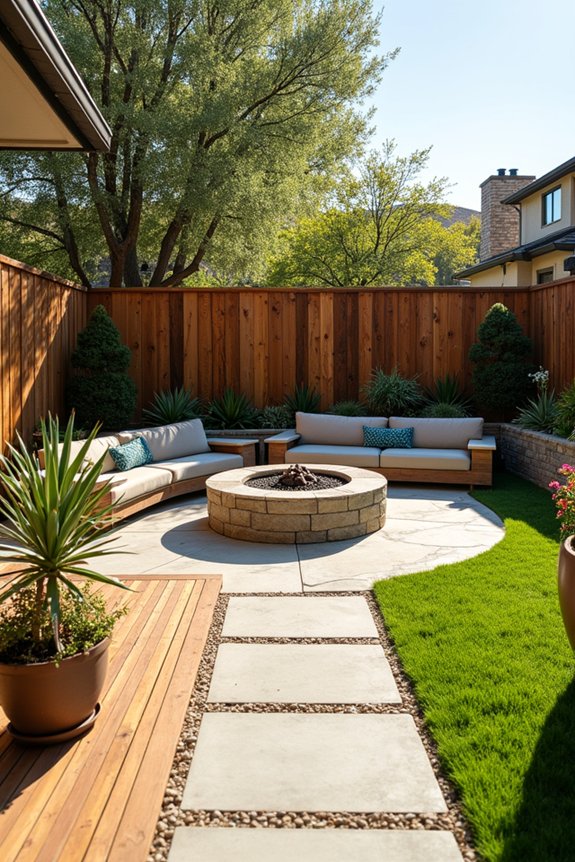
The truth? It depends. I’ve learned that backyard renovations can boost your resale value—but not all improvements are created equal. Landscaping, for instance, offers impressive ROI, sometimes reaching 80%. A well-maintained lawn in a modest backyard? That’s potentially 352% return. Fire pits recoup roughly 70% of costs, while pools add $30,000 to $95,000 in high-demand areas.
Here’s the catch: these numbers are hyper-local. Your neighborhood matters enormously. What increases value in one area might barely move the needle elsewhere. Before diving into major projects, chat with a local real estate agent about comparable homes. They’ll give you honest insights about what actually resonates with buyers in your community.
Which Backyard Improvements Maximize ROI?
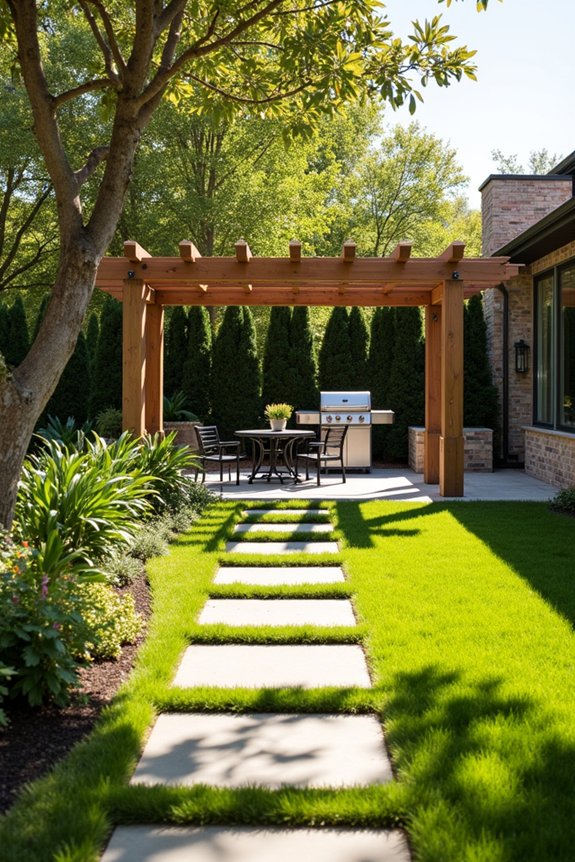
When you’re planning your backyard upgrade, you’ll want to focus on improvements that actually bring money back—and I’ve found that wood decks and outdoor entertaining spaces lead the pack, with wood recouping about 83% of costs. Things like outdoor kitchens and fire pits with seating create those gathering spots that make homes feel alive, potentially recovering 55% to 200% depending on your area. The key is matching these upgrades to what your neighbors value, because a functional kitchen won’t help much if backyard entertaining isn’t the norm in your market.
Outdoor Entertaining Spaces
What turns a backyard from unused square footage into the heart of your home’s appeal? Outdoor entertaining spaces do. I’ve watched buyers respond positively when they see a thoughtfully designed patio where friends naturally gather.
| Feature | ROI Recovery |
|---|---|
| Standard Patio | 60–70% |
| Upgraded Decking | 60–70% |
| Outdoor Kitchens | 55–200% |
| Fire Pits | Substantial |
| Multi-use Areas | Maximized |
The real value emerges when you blend multiple elements. A concrete patio anchors your space. Add an outdoor kitchen, and suddenly you’re cooking where guests congregate. Throw in a gas fire pit? You’ve created the ambiance people want. These versatile areas outperform single-purpose features because they invite real living. You’re not just improving your home—you’re creating a place where people want to be. Properties with these entertaining spaces sell about 3.1% above comparable homes. That’s real value.
Cost Recovery Benchmarks
Wood decks recover about 83% of your investment. Patios recoup 60%–70%, especially concrete slabs that remain clean and weed-free. Outdoor kitchens are unpredictable, ranging from 55%–200% depending on your market and design choices.
Professional landscaping boosts resale value by 15%–20%, with some markets seeing larger long-term gains. Gas-powered fire pits recoup roughly 70%.
When planning outdoor renovations, prioritize projects with proven cost recovery rates. Strategic choices will benefit your finances at resale.
Backyard Projects That Could Hurt Your Home’s Value
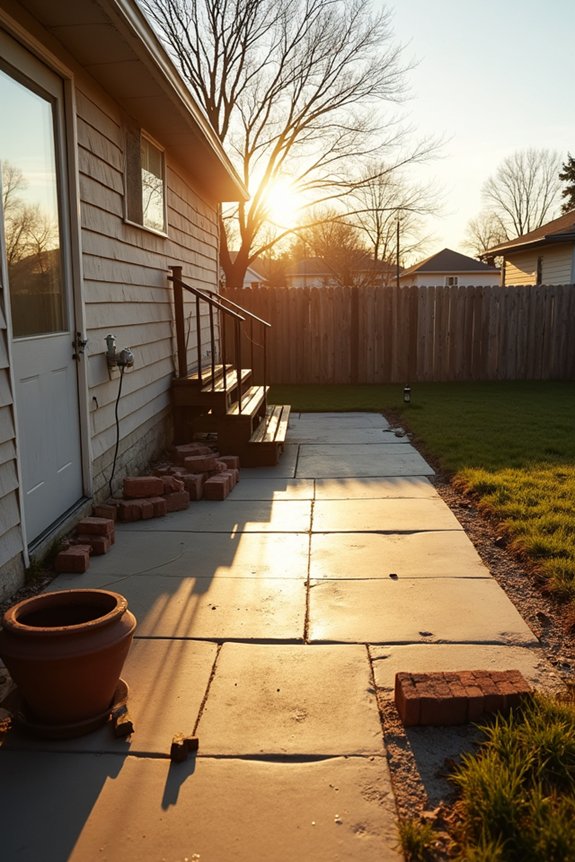
I’ve seen homeowners pour money into features that felt perfect for their lifestyle—only to watch them become expensive liabilities at resale. That above-ground pool? It eats up yard space buyers crave. Your niche landscaping masterpiece might confuse rather than impress potential owners. Even beehives, which I totally respect, can scare off nervous buyers who worry about safety.
These personal touches narrow your audience significantly. You’re betting that the next owner shares your exact vision. They rarely do.
Personalized home features shrink your buyer pool. You’re gambling that the next owner wants exactly what you do—they usually don’t.
The real problem? Removing or modifying these features before listing costs serious money. You’re paying twice—once to build it, again to undo it. That’s not the investment return you want.
Stick with versatile upgrades instead.
Budget-Friendly Backyard Renovations That Deliver Real Returns
So here’s the good news: you don’t need a six-figure budget to make your backyard work harder for your home’s value.
I’ve found that simple landscaping projects deliver impressive return on investment. Fresh mulch, clean edging, and strategic lighting improve your outdoor living space at minimal cost. These DIY-friendly touches boost your property’s appearance noticeably.
Consider affordable additions like a fire pit seating area or bistro lights. They create evening ambiance that buyers value, and they cost very little. Patio updates typically recover 60-70% of costs—solid numbers for any renovation.
The key? Stick with versatile, low-maintenance features. Skip over-the-top improvements that don’t match your neighborhood. Talk with local agents before starting. Smart landscaping projects align your vision with realistic returns, creating outdoor spaces that genuinely enhance your home’s appeal and value.
Plan Your Renovation: Budget, Climate, and Maintenance
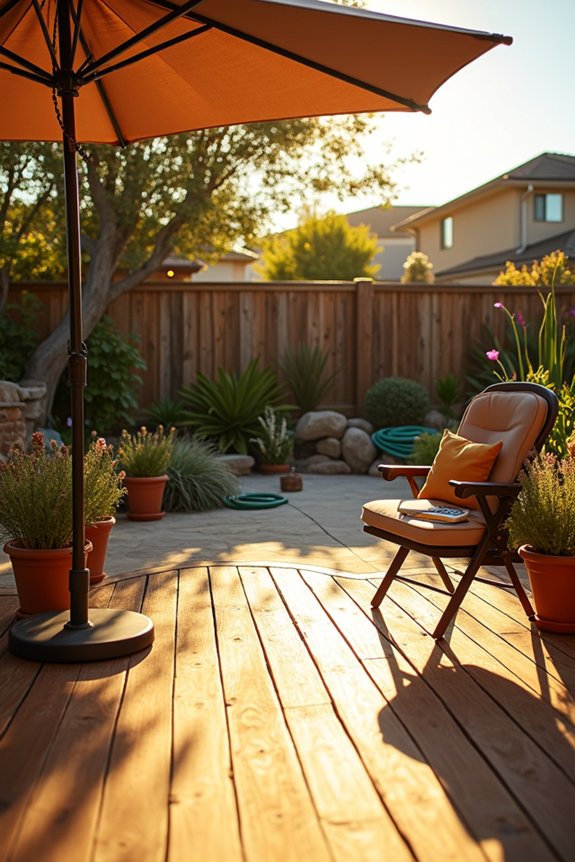
I learned the hard way that your backyard’s success depends on three things working together: a realistic budget with breathing room, design choices that actually fit your climate, and materials that won’t eat up your weekends with maintenance. When I planned my patio renovation, I budgeted $8,000 but set aside an extra $1,600 (that essential 20% cushion) because—spoiler alert—my contractor found rotted wood underneath the old deck. The difference between a smart renovation and a money pit comes down to honest planning before you swing the first shovel.
Budget Without Overspending
Most backyard renovations spiral in cost—not because homeowners are reckless, but because they skip the budgeting fundamentals that actually keep projects on track.
I learned this the hard way. You’ll want to set a realistic budget first, then add a 10-20% contingency fund for surprises. It’s boring, but it works.
Focus your spending on high-ROI outdoor features like patios, decks, and landscaping. Skip niche elements that won’t appeal to future buyers—your wallet (and resale value) will thank you.
Here’s my honest advice: talk to a local real estate agent. They’ll tell you exactly what outdoor features matter in *your* market, not some national average.
Finally, consider financing through a home equity loan if you’re tackling something big. Lower rates, potentially tax-deductible interest. Smart budgeting isn’t glamorous, but it’s absolutely worth it.
Climate-Specific Design Choices
Your backyard’s success depends on where you live. I’ve learned this the hard way—planting water-hungry flowers in my drought-prone area meant constant irrigation bills and dead plants by July. That’s when I switched to drought-tolerant plants and climate-appropriate materials that actually thrive where I am.
Here’s what I’ve discovered works:
- Choose native, water-wise plants for your region
- Install hardscape instead of thirsty lawns
- Add shade structures for summer cooling
- Plan windbreaks for winter protection
- Budget for seasonal maintenance tasks
Your climate shapes everything. Those gas-powered fire pits? They’re reliable year-round with minimal upkeep. Seasonal maintenance—leaf cleanup, mulching, irrigation adjustments—protects your investment long-term. When you work with your climate instead of against it, your backyard becomes worth the effort and expense.
Maintenance-Free Material Options
Once you’ve settled on plants and structures that match your climate, selecting materials that won’t drain your wallet—or your weekends—with constant upkeep becomes the priority.
I’ve learned that maintenance-free materials like composite decking and sealed stone are worth the investment. Sure, they cost more upfront, but here’s the thing: they actually *improve your ROI* by slashing ongoing labor and repair costs.
Think about it. Low-maintenance composites resist fading and cracking. Sealed brick won’t stain easily. These durable choices preserve property appearance without endless maintenance cycles.
Your climate matters here too. Choose materials proven to handle your local weather—intense sun, heavy rain, freezing temperatures. This prevents premature wear and extends the lifespan of your materials.
The payoff? More time enjoying your backyard instead of fixing it.
Your Backyard Renovation Checklist: 5 Key Questions Before You Start
Before you break ground on that dream patio or tear out the tired shrubs, here’s what I’ve learned: asking yourself the right questions now saves you money, frustration, and regret later.
I’ve watched neighbors pour thousands into backyard projects only to wonder if they’d recoup their investment. That’s why I’ve created this checklist to keep you grounded:
- What’s my upfront cost? Get detailed quotes and add 10–20% for contingencies.
- What ROI can I expect? Patios recover 60–70%; decks reach 68–83%.
- Does this match my neighborhood? Local real estate agents reveal what buyers actually want.
- How will this improve my property’s appeal? Strong landscaping attracts potential buyers immediately.
- Does my front yard need attention first? Front projects often deliver better returns than backyard upgrades.
These questions keep your investment smart and strategic.