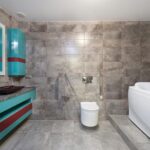
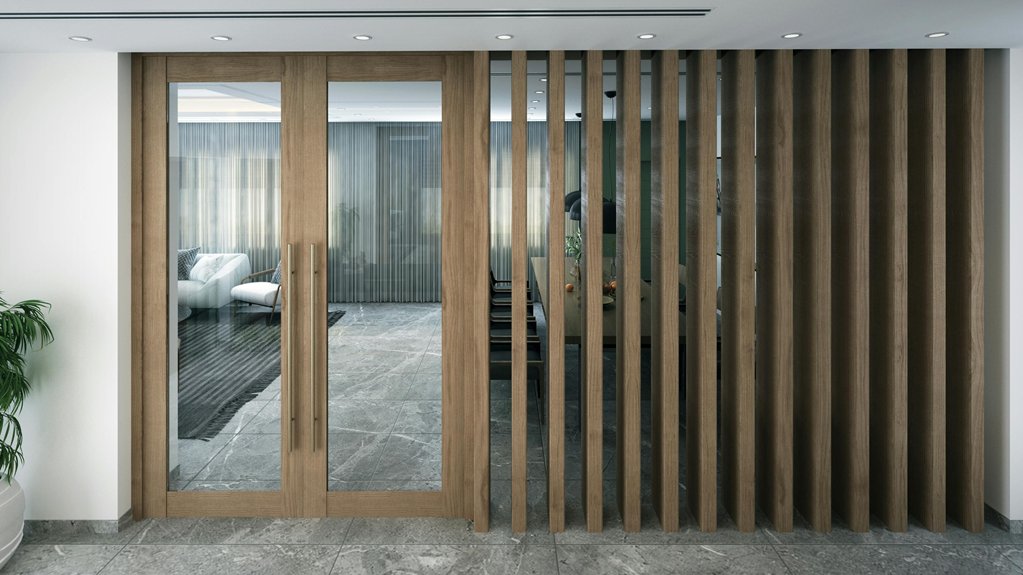
Yes, bathroom doors are typically narrower than bedroom and hallway doors—and plumbing’s the culprit. While bedrooms and hallways use 28–36 inches, bathrooms often squeeze into 24–30 inches because toilets, sinks, and cabinets eat up swing space. It’s a practical trade-off: designers prioritize usable floor area over door width in tight quarters. If you need wheelchair or walker access, though, you’ll want at least 32 inches. Pocket doors solve this neatly by sliding into the wall rather than swinging outward. Consider this option when upgrading your bathroom opening.
Yes: And Here’s Why Bathroom Doors Typically Run Narrower Than Hallway and Bedroom Doors
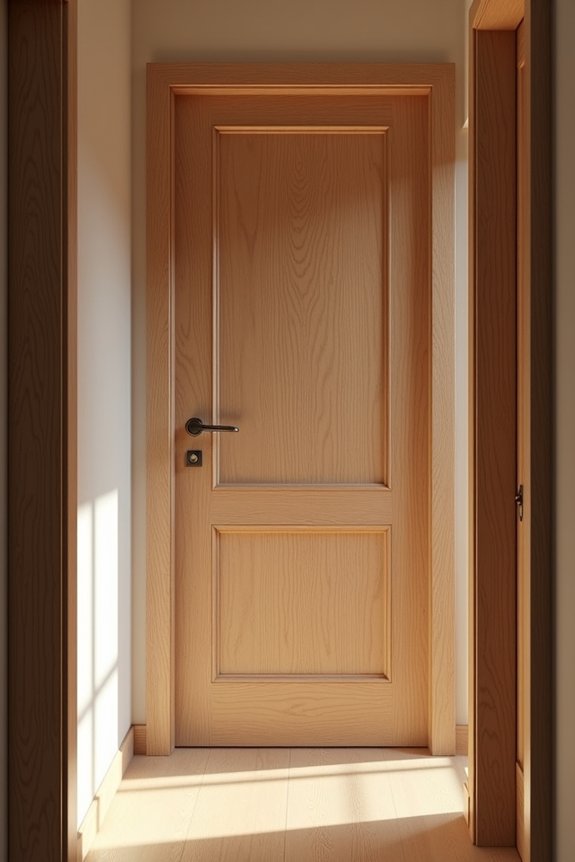
Why do bathroom doors seem narrower compared to the ones leading into your bedroom or down the hallway? It’s not your imagination. Most bathroom door width measurements clock in at 24 to 28 inches, while bedroom and hallway doors typically reach 32 to 36 inches. Here’s the thing: bathrooms are usually tight spaces, so narrower doors make sense.
But there’s more to it. Accessibility opening width requirements influence decisions differently than larger rooms. You’ll often see space-saving doors like pocket doors or sliding options in bathrooms—choices rarely needed elsewhere. These solutions maximize your usable floor area without sacrificing door clearance or function.
The strategy balances privacy and practicality. Narrower bathroom door width simply works smarter within constrained layouts, letting you reclaim precious inches while meeting all the essentials.
Standard Bathroom Door Widths Versus Bedroom and Passage Door Sizes
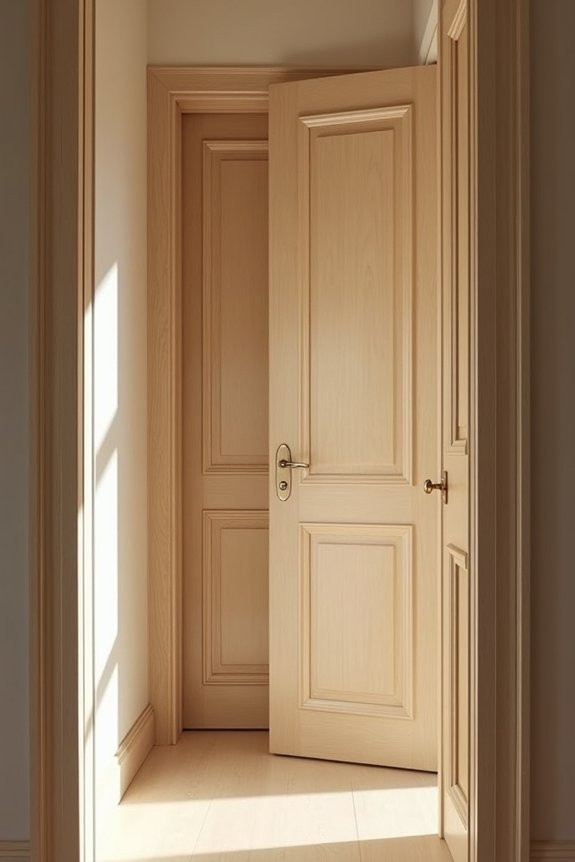
| Door Type | Typical Width |
|---|---|
| Bathroom Door | 24–30 inches |
| Bedroom Door | 28–36 inches |
| Passage/Hallway Door | 28–36 inches |
| Accessibility Standard | 34–36 inches |
| Pocket Door Option | 24–32 inches |
Standard interior doors—including bedrooms and hallways—typically range from 28 to 36 inches wide. Bathroom door widths cluster at the narrower end, usually 24 to 30 inches. When accessibility matters, bathroom doors can match bedroom sizes at 34 to 36 inches, providing a 32-inch clear opening. The distinction isn’t absolute. Your home’s layout, hallway space, and design choices all influence these measurements. You’re not limited to narrow bathroom doors—they’re simply the practical default for most installations.
How Plumbing Layouts and Fixture Placement Force Smaller Door Openings
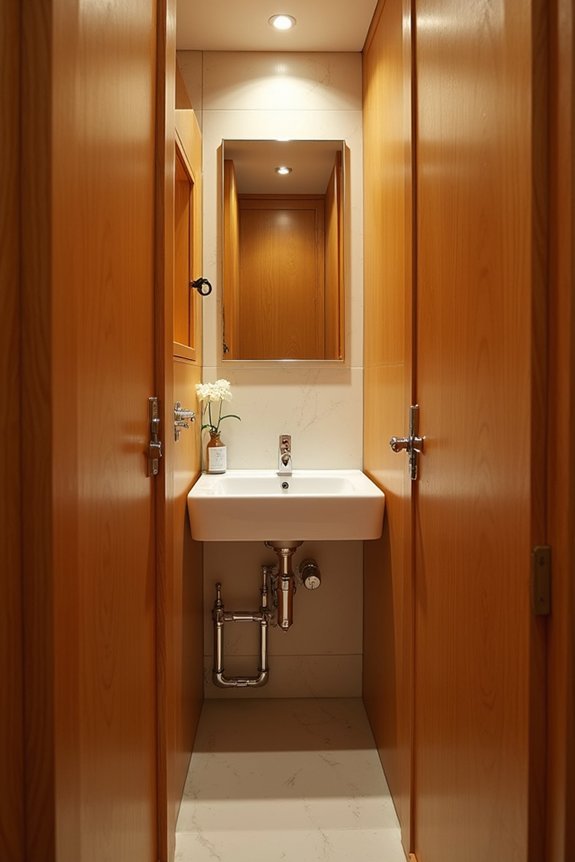
When I renovated my bathroom last year, I quickly realized that plumbing isn’t just hidden behind walls—it’s a silent architect deciding how wide your door can actually swing open. Toilets need clearance, sinks demand space, and suddenly that standard 32-inch door you’d use in a bedroom becomes impractical when a cabinet or pipe is eating up precious real estate. This is why you’ll often find bathroom doors smaller than their bedroom counterparts: the plumbing layout isn’t negotiable, but your door width absolutely is.
Plumbing Constraints And Door Width
How’d you like to install a standard 32-inch bathroom door only to discover your plumbing’s already claimed that space?
I’ve seen it happen countless times. Pipes, valves, and plumbing chases create real constraints that force smaller door widths. When you’re dealing with tight spaces, that beautiful swing clearance you imagined? Gone. Your toilet needs floor space. Your sink needs clearance. Suddenly, you’re looking at 24–28 inches instead.
Here’s what I’ve learned: plumbing constraints aren’t just inconveniences—they shape your options. Standard bathroom door size often gets sacrificed because fixtures come first. The solution I recommend? Consider pocket doors. They eliminate swing clearance problems entirely, fitting perfectly alongside plumbing runs.
Your bathroom layout determines everything. Work *with* your plumbing, not against it. That’s when doors actually fit.
Fixture Placement Limits Opening Size
Your toilet’s in the way.
I’ve learned that fixture placement dramatically shrinks bathroom doors. When you’re squeezing a sink, toilet, and plumbing runs into a compact space, door widths shrink to 24–28 inches. It’s not random—it’s survival.
Here’s what happens: You need roughly 21 inches of clearance in front of your toilet. Your sink demands its own space. Suddenly, that standard 32-inch door won’t fit without blocking everything. Corner cabinets and wall-mounted fixtures steal more swing space.
That’s why designers like me choose narrower bathroom doors strategically. We’re not being difficult; we’re maximizing your usable floor area. Sometimes pocket doors or sliding doors become useful alternatives, sliding along walls instead of eating into precious space.
Fixture placement isn’t just about aesthetics—it’s about making tight bathrooms actually work.
The Accessibility Trade-Off: Wider Doors Versus Cramped Bathroom Spaces
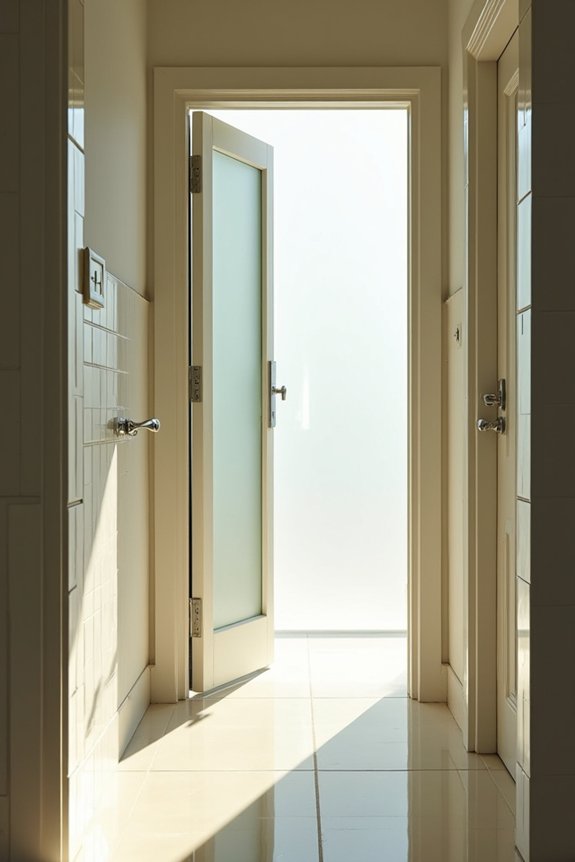
Why’s it that the moment you try to make a bathroom more accessible, the whole room suddenly feels like a sardine tin?
I’ve watched this struggle play out countless times. You want wider doors for accessibility—that 32-inch clear opening makes sense for wheelchairs and walkers. But here’s where space planning gets tricky:
- Wider doors need swing space you might not have
- Fixtures get pushed closer together, limiting comfort
- Cramped layouts compromise usability for everyone
- Door sizes create cascading design problems throughout the room
The real talk? Most bathrooms weren’t designed with accessibility in mind. So designers face a genuine dilemma: accommodate broader door sizes or maintain functional fixture placement. Many choose pocket or sliding doors instead, sidestepping the swing clearance issue entirely. It’s not perfect, but it’s practical—honoring both accessibility *and* livable spaces.
Building Codes Don’t Mandate a Minimum: But Guidelines Push Toward 32 Inches
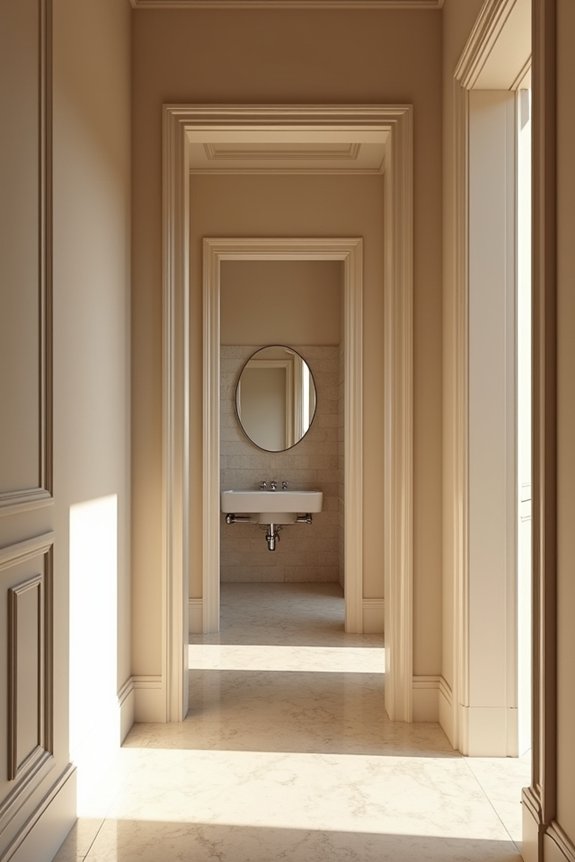
Your local building code probably doesn’t spell out an exact bathroom door width, which means interpretation falls to whoever’s reviewing your plans—and that can vary widely depending on where you live. What does push designers toward those 32- to 36-inch openings is accessibility guidelines, which recommend at least 32 inches of clear passage space so wheelchairs and walkers can actually fit through. The code sets a floor, but aging-in-place thinking and ADA standards are quietly nudging everyone toward planning bigger, safer openings—even when no one’s technically forcing your hand.
IRC Guidelines And Local Interpretation
When I started researching bathroom door widths, I discovered that the International Residential Code—the standard that builders rely on across most of the country—doesn’t actually specify a minimum bathroom door width.
That’s where local interpretation comes in. Here’s what I found:
- The IRC leaves it blank – No official mandate exists, giving communities flexibility
- The 32-inch clear opening – Most jurisdictions gravitate toward this accessibility standard
- ADA guidelines suggest 36 inches – Wheelchairs and walkers need this wider space
- Aging-in-place thinking – Local authorities increasingly push for wider doors in bathrooms
Your local building department interprets these guidelines differently. Some enforce stricter accessibility requirements than others. That’s why your neighbor’s bathroom door might differ from yours. Understanding your area’s specific codes helps you make informed decisions about renovations or new builds.
Accessibility Standards Override Code Minimums
Why does this matter? Standard interior doors often max out at 28–30 inches wide. But when you prioritize accessibility standards, you’re following code requirements that serve real people. A wider door accommodates wheelchairs, walkers, and stretchers. These minimums represent individuals navigating their homes with dignity and independence.
Space Constraints Versus Safety Standards
Building codes don’t actually mandate a specific minimum door width. However, accessibility guidelines and ADA standards point toward practical measurements:
- A 32-inch clear opening works best for most people, including those using walkers or wheelchairs
- You’ll need a 34-inch door to achieve that 32-inch clear opening
- Space-saving options like pocket doors and sliding doors let you maintain accessibility without reducing floor space
- The ADA recommends 36 inches when possible, but 32 inches is your practical target
The tension between space constraints and safety standards has workable solutions. Smart design choices—like pocket or sliding doors—allow you to create an accessible bathroom while maintaining your home’s overall functionality. You’re not choosing between comfort and accessibility; you’re simply planning with both priorities in mind.
When a 24- or 28-Inch Door Makes Sense and When It Doesn’t
How do you know if squeezing a smaller bathroom door into your space is actually the right call?
A 24-inch door works well in cramped bathrooms where space is genuinely tight. I’ve seen them work in tiny powder rooms or guest baths where nobody lingers long. But here’s where it gets tricky: they’re pretty narrow for anyone using walkers or wheelchairs.
A 28-inch door splits the difference—slightly better for accessibility without eating up your whole bathroom floor. Consider space-saving solutions like pocket doors or bi-fold options instead of swinging doors.
Skip the smaller bathroom door sizes if someone in your home has mobility needs. That’s when you’ll want 32-inch or wider openings. Really, it comes down to who uses your bathroom and how much square footage you’ve actually got.
Pocket and Sliding Doors: The Space-Saving Alternative to Standard Swings
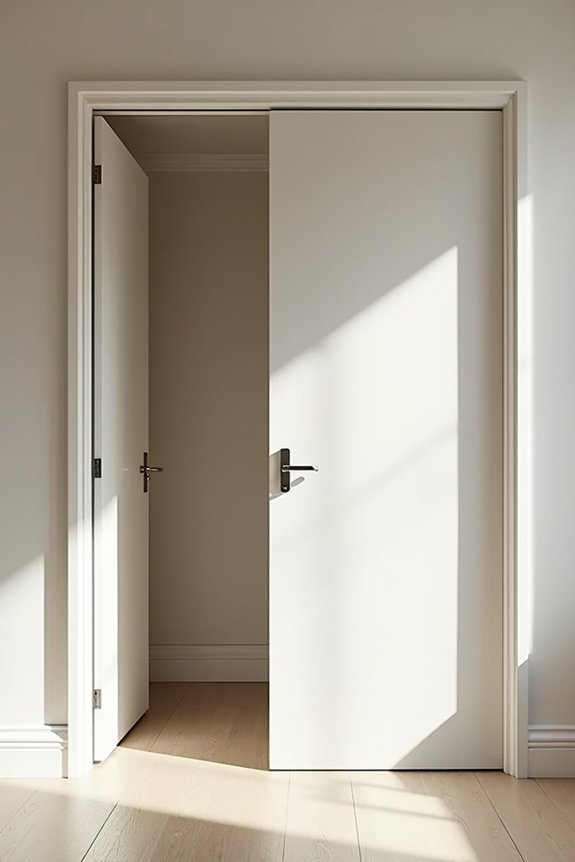
If you’re dealing with a bathroom so tight that even a 28-inch door feels like a luxury, there’s a practical solution: pocket and sliding doors.
Here’s why they work:
- They slide into the wall pocket instead of swinging out, freeing floor space
- Standard door widths still apply (28–36 inches), so you’re not sacrificing openness
- The rough opening requires interior wall framing to house the track system properly
- Accessibility and layout flexibility improve in cramped bathrooms
Installation takes more work than hanging traditional hinged doors. The benefit is clear: your bathroom has more usable floor space, and that wall pocket becomes storage area you didn’t have before. Many homeowners have found this to be a practical alternative worth the effort.
Moisture Resistance Matters More in Bathrooms Than Other Interior Doors
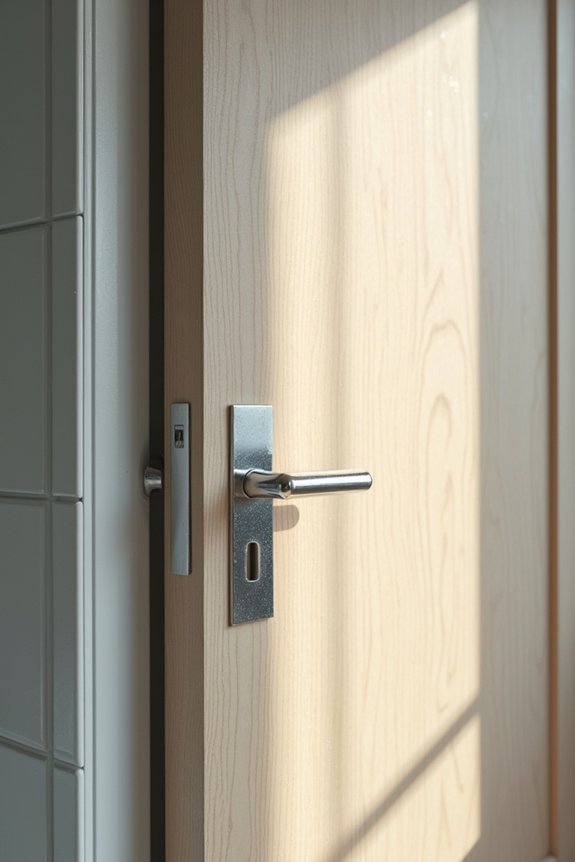
I’ve learned the hard way that your bathroom door faces challenges your bedroom or hallway door simply doesn’t encounter—constant humidity, steam from hot showers, and splash zones that’d make other rooms jealous. Unlike a living room door that might see moisture once in a blue moon, a bathroom door battles daily moisture exposure, which means you can’t just grab any interior door off the shelf and expect it to hold up. That’s why choosing the right material—fiberglass, solid-core composite, or enamel-coated options—actually matters for keeping your door from warping, swelling, or falling apart after a few years of steamy showers.
Why Bathrooms Demand Protection
Why’re bathroom doors treated like they’ve got to survive a tropical monsoon? Because they basically do. Bathrooms demand serious protection that other rooms don’t need.
Here’s what makes bathrooms different:
- Constant humidity – Steam from showers creates moisture that attacks regular doors
- Condensation buildup – Water droplets settle on surfaces, causing swelling
- Moisture intrusion – Without proper seals, water sneaks into hollow spaces
- Ventilation challenges – Even with fans running, dampness lingers
I’d never use hollow-core doors in a bathroom. Instead, I choose solid-core or fiberglass materials that actually resist moisture. These door materials handle the damp conditions without warping or deteriorating. Proper bathroom ventilation helps, but your door does the real heavy lifting. Think of it as armor protecting your home’s integrity. That’s why bathroom doors deserve special attention.
Material Selection For Moisture
Your door material significantly impacts moisture performance. Hollow-core doors warp quickly in humid conditions. Solid-core, fiberglass, or eco veneer are better alternatives. Fiberglass doors resist humidity effectively with low maintenance requirements. Eco veneer provides natural wood aesthetics while delivering solid moisture protection.
| Material | Moisture Resistance | Best For |
|---|---|---|
| Fiberglass | Excellent | High-humidity bathrooms |
| Eco veneer | Very good | Style + protection |
| Solid-core | Very good | Durability |
| Hollow-core | Poor | Avoid completely |
| Enamel-coated | Excellent | Extreme humidity |
Your climate affects material choice. Coastal Florida requires moisture-resistant options and regular maintenance. The investment pays off in door longevity and performance.
Durability Beyond Other Rooms
Bathroom doors face a unique challenge that bedroom and hallway doors never do—they’re basically fighting a daily battle against moisture. Here’s why durability matters so much more in bathrooms:
- Moisture-resistant materials like fiberglass and solid-core composites prevent warping that’d ruin regular doors
- Humidity exposure demands hardware rated for wet environments, not standard interior specs
- Door materials must handle steam and splashes without swelling or rotting
- Moisture protection requires sealants on jambs and proper air flow clearance
I’ve seen hollow-core doors buckle in bathrooms within months. Not fun. Your bathroom door sizes may match other interior doors, but that’s where similarities end. You’re investing in durability that actually lasts. Solid-core options cost more upfront, but they’ll outlast cheaper alternatives by years. That’s real peace of mind.
Designing Visual Consistency When Your Bathroom Door Differs From the Rest of the Home
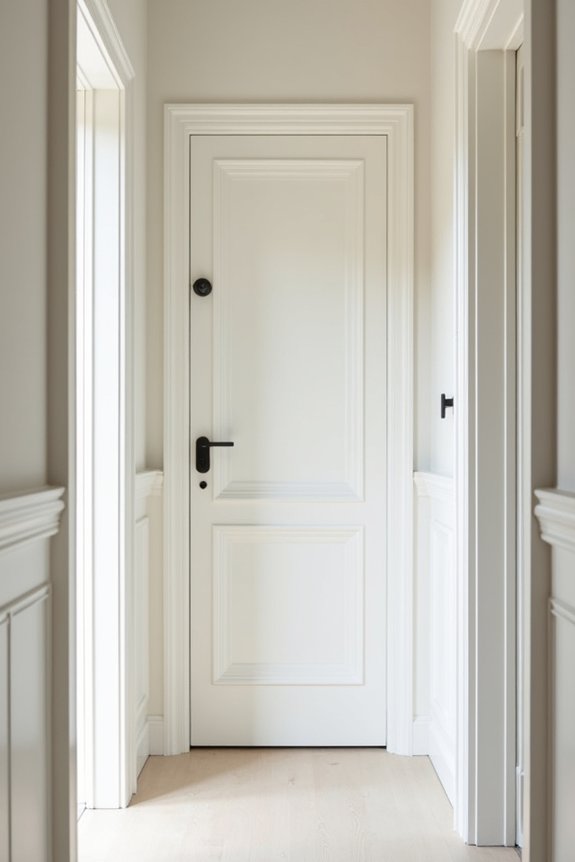
How do you keep your home feeling cohesive when one door’s gotta be different?
I’ve learned that matching door hardware and finishes matters more than matching sizes. If your bathroom needs a narrow door for space constraints, you’re not stuck with a mismatched appearance.
Here’s what works: consistency in trim, casing width, and paint color across all doors creates visual flow. Select moisture-resistant materials like fiberglass or enamel for durability while maintaining that unified look.
For pocket and sliding alternatives, choose the same material family and color palette as your other doors. Even when sizes shift, harmonized hardware preserves your home’s visual rhythm.
The key? People notice the overall feeling rather than specific measurements. When everything appears deliberate and coordinated, different sizes simply become design choices rather than oversights.
Measuring and Upgrading an Undersized Bathroom Door Opening
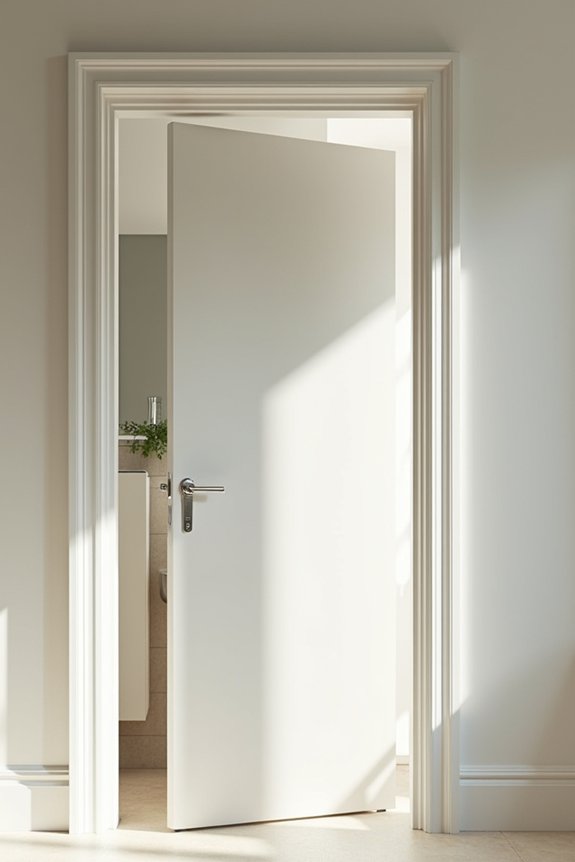
When’s the last time you actually measured your bathroom door opening?
I discovered mine was undersized, and I’m guessing yours might be too. Here’s how I tackled it:
- Measure at three points—top, middle, bottom of the rough-opening
- Account for flooring thickness to avoid costly misfits
- Determine your clear opening need—standard door size requires 32 inches minimum
- Explore upgrade options like pocket doors or sliding doors
A standard door width runs 24–36 inches, but an undersized opening needs serious attention. I upgraded to 34 inches for proper clearance. If you’ve got tight quarters, consider a pocket door—it saved me precious bathroom space while maintaining accessibility standards.