No. Decorator’s caulk’ll crumble in your bathroom—I’ve watched white caulk lines turn black with mold within months. It can’t handle the constant moisture, temperature swings, or tile movement bathrooms demand. You need silicone sealant instead. It stays flexible, resists water and mold, and lasts years instead of failing repeatedly. Spending a few extra dollars now saves you from messy replacements and hidden water damage later. Here’s exactly which silicone works best.
What Is Decorator’s Caulk and How It Differs From Silicone Sealant
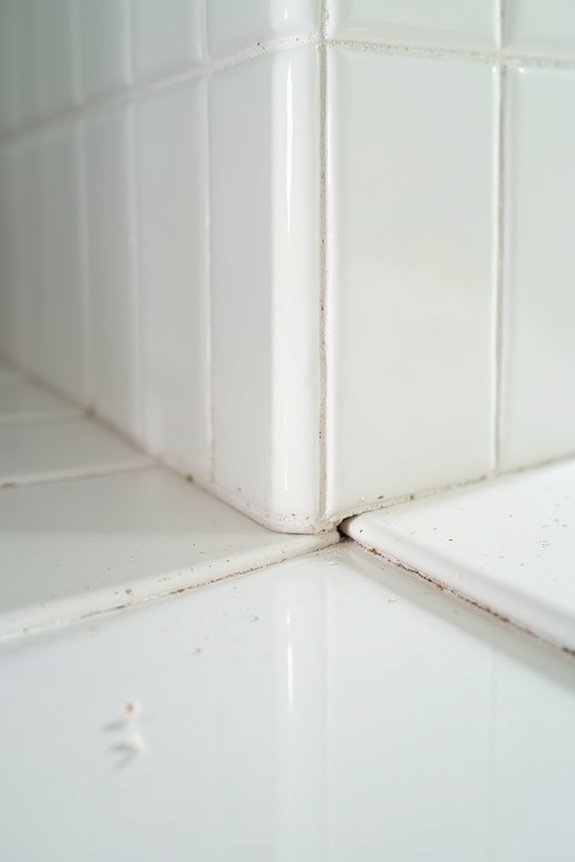
Ever grabbed the wrong caulk at the hardware store and wondered if it’d still work in your bathroom? I’ve been there. Here’s the honest truth: decorator’s caulk and silicone sealant aren’t the same thing, and bathrooms demand the right stuff.
Decorator’s caulk is a flexible acrylic filler that’s paintable and works well for filling gaps in non-wet areas. It dries faster but with *less* flexibility than silicone sealant.
Silicone sealant, though, stays flexible longer and resists moisture effectively. It’s ideal for bathrooms because it resists water, mold, and movement.
Think of it this way: decorator’s caulk handles furniture gaps and baseboards well. But for bathroom sealing around tubs and tiles? Silicone wins every time. The difference matters when water’s involved.
Why Decorator’s Caulk Fails in Wet Bathroom Environments

Now here’s where things get real. I’ve watched decorator’s caulk fail spectacularly in bathrooms, and honestly, it breaks down faster than you’d expect. Here’s why it simply can’t handle your wet environment:
- Poor moisture resistance means water seeps behind the seal
- Low flexibility causes cracking when tiles expand and contract
- Quick deterioration happens in showers and high-humidity zones
- Mold and mildew thrive in gaps where water intrudes
- Repeated failure occurs with temperature swings and humidity spikes
Your bathroom’s constant moisture assault—showers running daily, steam rising everywhere—proves too much for acrylic filler. Decorator’s caulk pulls away from joints around tubs and windows. That’s when water sneaks in, causing real damage.
Switching to a silicone sealant? It actually *stays put*, protecting your bathroom long-term. The difference is clear and measurable.
Silicone Sealants: The Superior Choice for Bath and Shower Areas
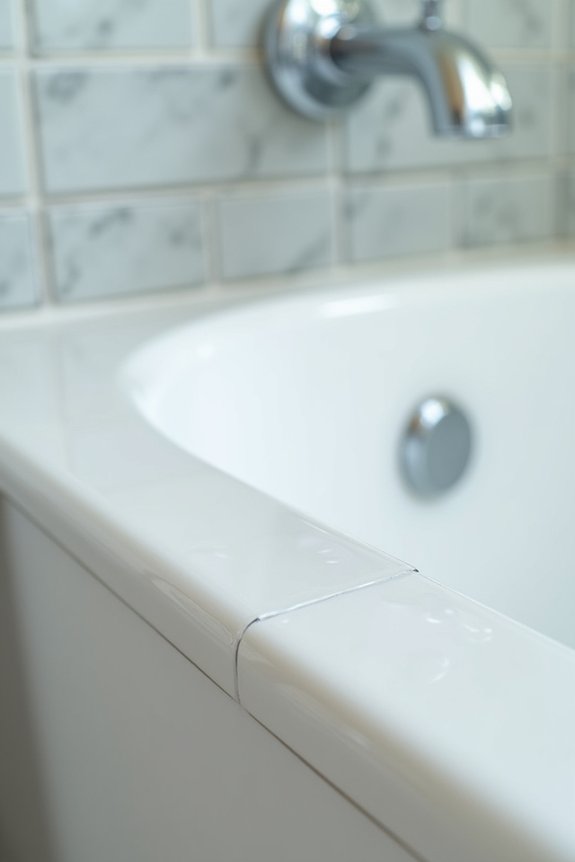
Because decorator’s caulk simply can’t handle what your bathroom throws at it, silicone sealants are the real answer. Silicone sealants offer measurable advantages over standard caulk.
Here’s what makes silicone sealants different. They’re flexible, water-resistant, and actually fight mold—three things decorator’s caulk fails at. When you’re shopping, grab silicone labeled specifically for bath/shower applications. That label matters.
Worried about that chemical smell? Odorless options exist. Modified silicone or low-odor varieties eliminate those harsh fumes.
The payoff? Your seals last years longer. That’s practical value you can count on.
Choosing the Right Silicone Sealant for Your Bathroom
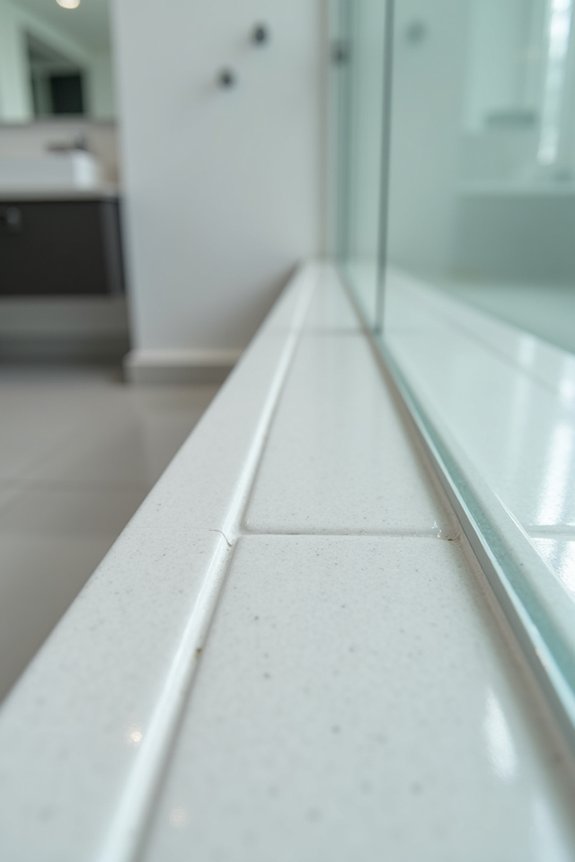
When you’re selecting a silicone sealant, focus on these essentials:
- Sanitary-specific labeling – Look for “bath/shower use” on the package
- Water and mold resistance – Required for wet environments
- Color options – Off-white or cream tones blend comfortably
- Odor reduction – Solvent-free formulas minimize that vinegar smell
- Reputable brands – MAPESIL SOLVENT-FREE delivers reliable performance
A quality sanitary sealant costs slightly more upfront but saves you from messy repairs later. Grabbing the cheapest bathroom sealant may seem economical until it fails. You’re investing in durability and a bathroom that actually stays sealed.
Flexibility: Why Bathroom Sealants Need to Move With Walls and Fixtures
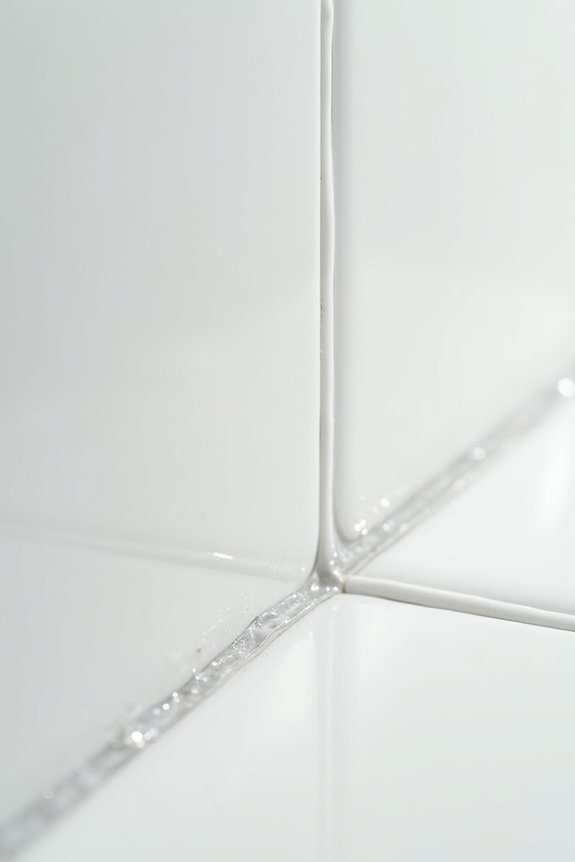
Your bathroom’s walls and fixtures aren’t standing still—they’re constantly expanding and contracting with temperature changes and moisture, kind of like how your jeans fit differently depending on the season. When you use a rigid sealant like decorator’s caulk, it can’t handle this movement, so it cracks and fails (I’ve watched this happen in my own bathroom within months). That’s because you need a flexible silicone sealant that actually moves *with* your bathroom instead of fighting against it.
Thermal Expansion And Contraction
Ever notice how your bathroom grout seems fine one season, then suddenly cracks appear the next? That’s thermal expansion and contraction at work. Your bathroom walls, fixtures, and tiles shift constantly as temperatures and humidity change throughout the year.
Here’s what happens:
- Hot showers create moisture that causes materials to swell
- Cold seasons make everything contract and tighten
- These constant movements stress your sealant
- Rigid caulk can’t handle the strain and cracks
- Silicone’s elasticity absorbs this movement without breaking
Decorator’s caulk lacks the flexibility you need. When walls move, rigid caulk stays put—then snaps. Silicone stretches with the movement, maintaining that watertight seal. I’ve learned this the hard way: choosing the right sealant prevents costly water damage later. Your bathroom needs a sealant that moves with it, not against it.
Movement Tolerance In Bathrooms
Why do bathroom sealants need to flex like a gymnast instead of staying rigid like concrete? Your walls and fixtures constantly shift—especially in moisture-rich environments where humidity fluctuates daily. Rigid sealants simply can’t handle this movement.
Here’s where a quality silicone sealant performs well. Unlike decorator’s caulk, which cracks under pressure, silicone maintains its flexibility after curing. Your bathroom sealant must accommodate these natural shifts without developing gaps that invite leaks.
Think of it this way: decorator’s caulk is like a stiff board—it breaks under stress. Silicone? That’s your reliable friend who bends without snapping.
Movement tolerance matters because:
- Walls expand and contract seasonally
- Moisture causes materials to swell
- Fixtures settle over time
Choose high-grade sanitary silicone for bath and shower joints. You’ll avoid costly water damage and maintain that watertight seal your bathroom needs.
Why Bathrooms Need Water-Resistant Sealants
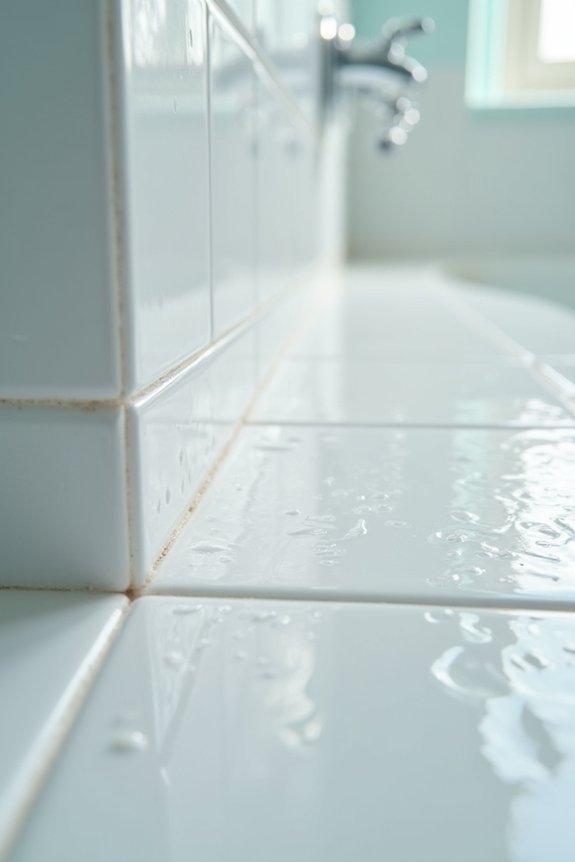
Bathrooms aren’t just rooms that happen to get wet—they’re fundamentally moisture factories running 24/7.
Bathrooms aren’t just rooms that get wet—they’re moisture factories running 24/7, demanding serious protection.
When you shower, steam rises. When you brush your teeth, water splashes. That constant dampness demands serious protection. I’ve seen what happens when homeowners skip this step—mold creeps in, joints fail, and suddenly you’re facing expensive repairs.
Your bathroom sealant needs to handle:
- Daily moisture exposure from showers and baths
- High humidity levels that encourage mold growth
- Temperature fluctuations that stress materials
- Joint movement from shifting structures
- Years of relentless wet conditions
A sanitary silicone sealant provides the water resistance your bathroom sealant actually needs. Decorator’s caulk simply won’t cut it here. You need protection that lasts.
Why Decorator’s Caulk Grows Mold and Mildew

Decorator’s caulk soaks up moisture like a sponge because it’s not formulated to resist damp conditions, creating the perfect breeding ground for mold and mildew. Unlike bathroom-specific silicone sealants, decorator’s caulk lacks built-in mold inhibitors, so once moisture settles in, those nasty black spots aren’t far behind. I learned this firsthand when I used it around my shower and watched it develop into a fuzzy science experiment within months.
Moisture Absorption Properties
Unlike silicone sealants that repel water, decorator’s caulk is fundamentally an acrylic filler—and that impacts bathroom performance in wet conditions.
Here’s what happens: acrylic caulk absorbs moisture like a sponge. I’ve watched it happen firsthand. Your bathroom’s humidity doesn’t just sit on the surface; it penetrates deep into the material itself.
Why This Matters:
- Higher porosity means water seeps in easily
- Moisture gets trapped inside the caulk
- Steam and condensation accelerate absorption
- Trapped moisture becomes a breeding ground for mold
- Unlike moisture resistance of silicones, acrylic offers minimal protection
That absorbed water creates the perfect environment for mold spores to thrive. You’re actively inviting trouble when you use decorator’s caulk in wet areas. Silicone alternatives actually repel moisture, keeping your bathroom safer and cleaner long-term.
Lack Of Mold Resistance
The real trouble starts when you realize decorator’s caulk doesn’t fight mold—it invites it. Unlike specialty bathroom sealants, this product lacks antimicrobial properties that prevent fungal growth. Here’s what happens: moisture seeps in, gets trapped behind the paintable surface, and you’ve got a mold problem in your bathroom.
I’ve seen it firsthand. That innocent white caulk line turns black within months. The culprit? Decorator’s caulk can’t resist the damp environment bathrooms create naturally. It doesn’t have the defensive chemistry that silicone sealants possess.
The reality: if mold appears on your decorator’s caulk, you’ll need to remove it completely and replace it with a proper bathroom sealant. Prevention beats replacement every time.
Poor Bathroom Environment Suitability
Now here’s where the real problem becomes crystal clear: decorator’s caulk simply isn’t built for bathroom life. I’ve watched it fail in moisture-prone areas countless times, and that’s why it struggles:
- Low flexibility causes cracking when bathroom surfaces shift and move
- Poor water resistance means constant moisture seeps into gaps
- Lack of mold resistance invites unwanted growth faster than you’d expect
- No sanitary protection compared to silicone sealants designed for bathrooms
- High maintenance requires frequent replacement instead of lasting years
Your bathroom’s humid environment is basically kryptonite for decorator’s caulk. It wasn’t formulated to handle the daily shower steam, splashes, and dampness we all create. That’s why I’d strongly recommend switching to silicone sealants labeled for sanitary use. They’re specifically engineered to protect moisture-prone areas and keep mold at bay. Your bathroom will function better with the right materials.
Which Bathroom Areas Must Use Silicone Sealant
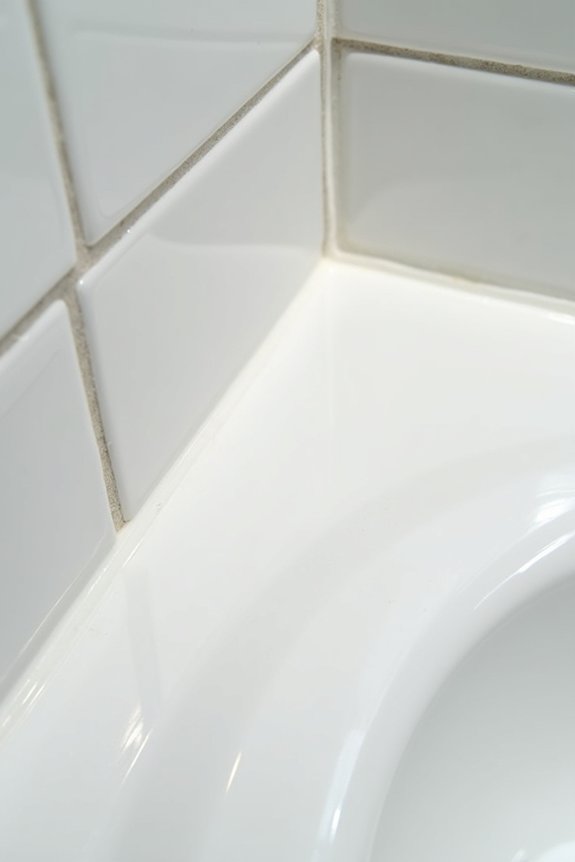
Where exactly should you reach for silicone instead of decorator’s caulk in your bathroom?
I’ve learned the hard way that certain spots demand silicone sealant. Your bath/shower joints are ground zero—these areas face constant moisture and temperature swings. Decorator’s caulk? It’ll crack and fail within months, letting water sneak behind tiles. Not ideal.
Bath and shower joints demand silicone sealant—decorator’s caulk cracks within months, letting water damage tile.
Windows near your shower need silicone too. The water resistance you get with proper silicone keeps moisture from rotting your frames. I’ve seen it happen to neighbors who tried cutting corners.
Tile-to-ceiling gaps also require silicone, not decorator’s caulk. These joints flex and move, making silicone’s flexibility necessary. The mold resistance is something you’ll notice during humid summers.
These strategic spots protect your bathroom’s structure. Invest in quality silicone here—your future self will appreciate it.
How to Remove Old Decorator’s Caulk Before Resealing
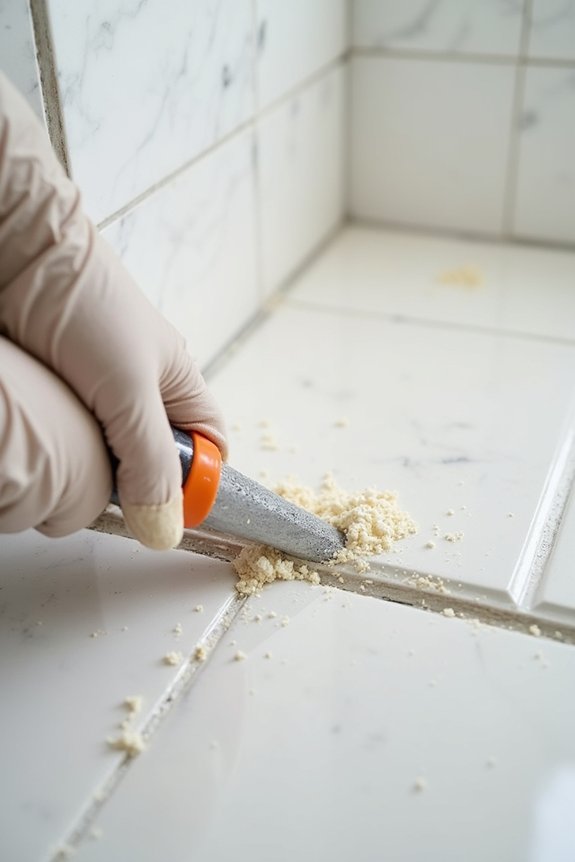
Why does old caulk cling so stubbornly to your bathroom joints? Because it’s meant to stay put—but when you’re ready to upgrade to a silicone sealant, you’ve got to get it out completely.
I’ll walk you through caulking removal:
- Use a caulk removal tool or old putty knife to pry out loose pieces
- Apply heat with a heat gun to soften stubborn old caulk
- Scrape thoroughly until the joint’s completely clear
- Wipe down with a damp cloth to remove debris and dust
- Let it dry fully before applying new silicone sealant
Doing this right means your new sealant actually sticks around. No shortcuts here—proper prep work saves you from redoing this job next year. Your future bathroom self will benefit from the effort.
Prepping Bathroom Surfaces Before Applying Sealant
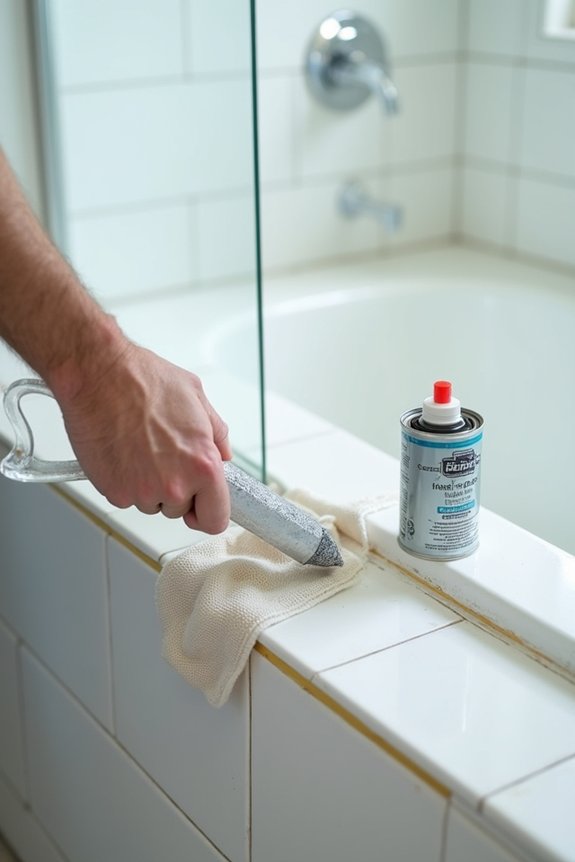
Before you even think about squeezing that tube of new sealant, your bathroom joints need serious prep work—and I mean serious. I’ve learned this the hard way.
Surface Cleaning Comes First
Start by wiping everything down with a mildew-resistant cleaner. This removes soap scum and buildup that’ll sabotage your new seal. I always follow up with isopropyl alcohol—it helps your sealant adhere properly.
Tackle Mold Treatment
Spot any dark spots? Hit them with bleach or hydrogen peroxide. Mold loves bathrooms, but you’re stronger.
The Drying Phase
Here’s where patience matters. Your surfaces must be completely dry and dust-free. Moisture is the enemy of good caulk preparation.
Mask It Off
Painter’s tape creates those crisp, professional edges we all want. This step improves your results.
Applying Silicone Sealant Around Tubs and Showers
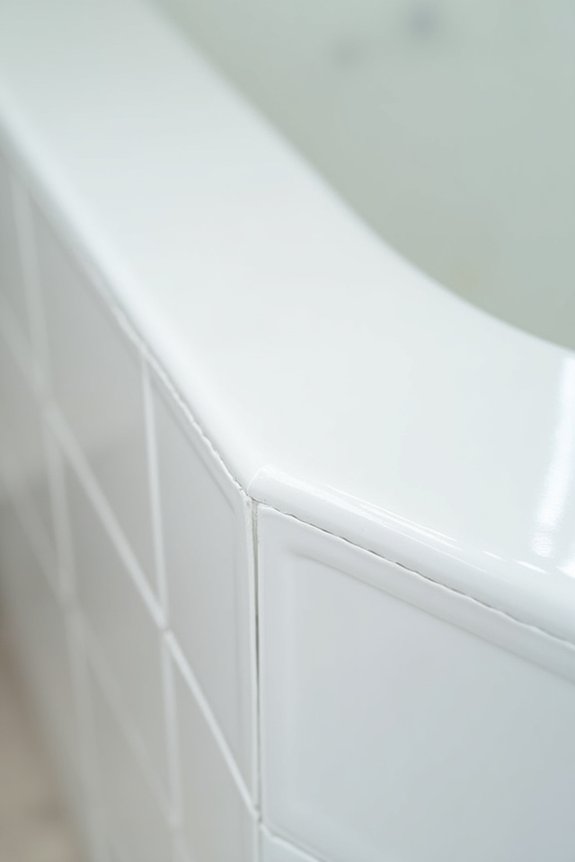
Once you’ve prepped those surfaces—and skipping this step is like painting over dirt—you’re ready to apply your silicone sealant with a caulking gun, laying down smooth, even beads along every joint where water loves to sneak in. I learned the hard way that a damp finger or caulk tool finishing those edges produces a professional-looking seal rather than one that appears amateur. Here’s the important part nobody wants to hear: you’ve got to let that silicone cure completely before any water touches it, or you’ll be doing this whole job over again in six months.
Preparing Surfaces Properly
How you prep your bathroom surfaces affects your results—I learned this after watching fresh caulk fail within months.
Before you touch that bathroom sealant, do these essentials:
- Clean with mildew-resistant cleaner to remove soap scum and grime
- Let everything dry completely—moisture ruins your application
- Remove old caulk entirely. Don’t skip this step
- Mask adjacent areas with painter’s tape for crisp edges
- Inspect for mold or discoloration that needs addressing
Your surface preparation determines whether your silicone sealant lasts years or weeks. I’ve seen people rush this phase and regret it. Take your time here. The actual caulking becomes straightforward when you’ve done the groundwork properly. Those extra minutes prevent problems later.
Applying Even Beads
Why does a messy caulk line bug me so much more than a messy paint job?
I learned the hard way that applying an even bead of silicone is worth the effort. When I’m sealing around my tub, I apply a smooth, consistent line—not too thick, not too thin. This even bead creates that flexible, watertight barrier we’re after.
Here’s my technique: I load my caulk gun, hold it at a 45-degree angle, and move steadily along the joint. I don’t rush. One continuous motion beats stop-and-start applications every time.
The tooling part matters. After laying down my silicone bead, I dampen my finger and gently smooth the line. This creates those clean, rounded edges that actually resist mold buildup.
That polished result? It’s worth every careful second.
Curing Before Water Exposure
After you’ve laid down that perfect bead and smoothed it to silky perfection, here’s where patience becomes your best friend. I know the urge to shower is real, but rushing this step sabotages everything you’ve accomplished.
Your caulk cure time matters tremendously. Most bathroom silicone needs 24–48 hours before water touches it. Here’s what works:
- Allow a moisture-free surface during initial curing
- Keep humidity low to prevent mold growth
- Resist using quick-dry formulas if water resistance matters
- Choose solvent-free products for better longevity
- Check manufacturer specs—they’re your roadmap
That waiting period feels like forever, I get it. But skipping it invites water behind your sealant, creating gaps and damage. Give your bathroom silicone proper time. Your future self—and your bathroom—will thank you.
How Long Silicone Sealant Takes to Cure
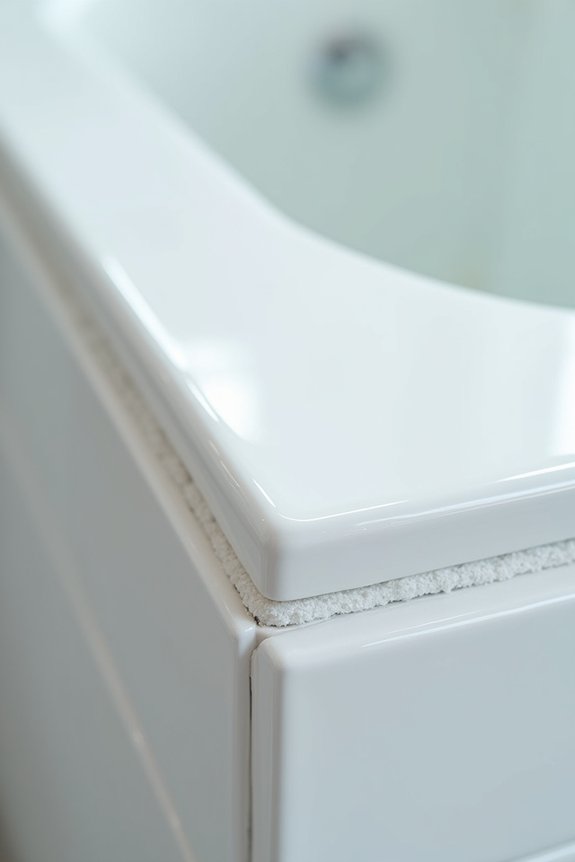
Wondering when you can actually use that freshly caulked bathroom without ruining all your hard work?
Most silicone sealant takes 24 to 48 hours for full cure time, though you might handle it sooner. Here’s the thing: your bathroom’s humidity and temperature play significant roles. Warmer, more humid conditions? Your cure time speeds up. Cold, dry air? You’ll wait longer.
I’ve learned this the hard way. Rushing that shower after caulking my tub surround was a mistake I won’t repeat.
Quick cure timeline:
- Light handling: 2-8 hours
- Full waterproofing: 24-48 hours
- Maximum strength: 7 days
Check your product’s instructions—they’re specific for a reason. That patience upfront saves serious headaches later.
Matching Sealant Colors to Bathroom Fixtures
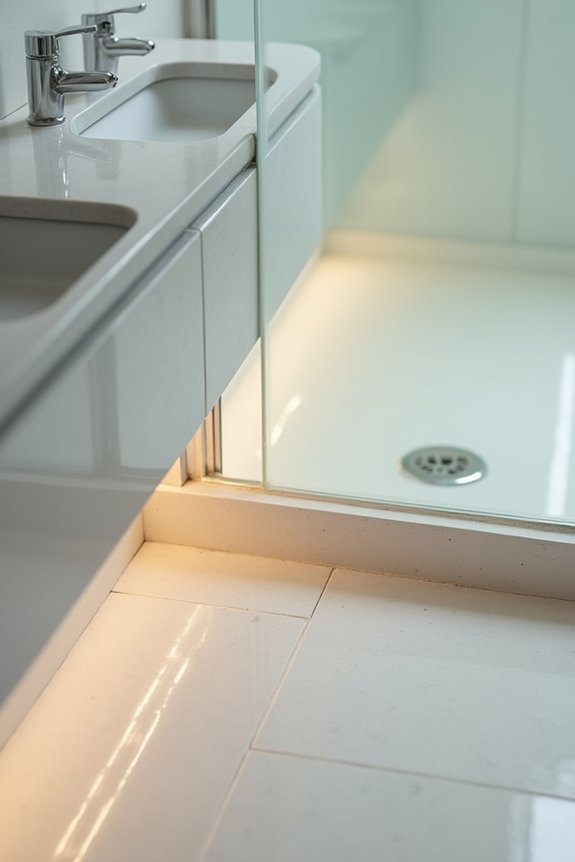
How many times have you stood in a home improvement store staring at rows of white caulk, wondering if they’re all actually the same?
Choosing the right color matters more than I initially thought. Here’s what I discovered about matching sealant colors:
- Decorators caulk comes in limited colors and won’t hide well in bathrooms
- Silicone sealants offer superior moisture resistance for wet areas
- Color-matched silicone options blend in with existing tiles and grout
- Off-white and cream silicones work well for most bathroom fixtures
- Sanitary silicones labeled for bathrooms provide long-term performance
I’d recommend investing in a color-matched, solvent-free sanitary silicone. You’ll notice how it disappears into your grout lines rather than standing out like a sore thumb. Your bathroom benefits from products designed specifically for moisture-heavy environments, not generic decorators caulk.
Common Mistakes When Sealing Bathroom Fixtures With Silicone
I’ve watched too many bathroom projects go wrong because people skip the prep work or grab the wrong product off the shelf. You’ll run into three major pitfalls: skipping surface cleaning (leaving soap scum and moisture behind), choosing decorator’s caulk instead of sanitary silicone, and rushing the application without smoothing the bead properly. Each mistake compounds the others, turning what should be a watertight seal into a breeding ground for mold and water damage within months.
Surface Preparation Oversights
Why do so many bathroom caulking jobs fail within months? I’ve learned the hard way that skipping proper caulk preparation sabotages everything that follows.
Here’s what I wish I’d known:
- Wet surfaces ruin adhesion—moisture prevents silicone from bonding properly
- Old residue blocks new caulk—leftover material stops fresh application from curing completely
- Dirty tiles create gaps—dust and soap scum interfere with sealing
- Acrylic caulk won’t survive—decorators caulk fails on moisture-prone surfaces within months
- Trapped water breeds mold—incomplete surface drying causes hidden growth
I’ve experienced the frustration of redoing work because I rushed prep work. Clean and completely dry surfaces aren’t optional—they’re required. When tackling moisture-prone surfaces, silicone vs acrylic isn’t really a choice. Choose silicone. Your bathroom deserves better than quick fixes that crumble.
Incorrect Product Selection
Most of us have stood in the caulk aisle, staring at tubes that all look pretty much the same, thinking “they’re all caulk, right?” Wrong.
I learned this the hard way. Decorator’s caulk might seem budget-friendly, but it’ll cost you later. Here’s why: decorator’s caulk lacks bathroom moisture resilience. It cracks, shrinks, and invites mold when exposed to constant dampness.
| Product | Best For | Moisture Resistance | Flexibility |
|---|---|---|---|
| Decorator’s Caulk | Walls, baseboards | Poor | Low |
| Silicone Sealant | Tubs, showers, windows | Excellent | High |
| Modified Silicone | Bathrooms | Very Good | High |
| Standard Acrylic | Non-wet areas | Weak | Limited |
Your bathroom needs a silicone sealant. Choose high-grade sanitary silicone or modified silicone with odor-reduction. It adheres properly to wet surfaces and handles moisture effectively. Investing in the right product now prevents costly repairs down the road.
Improper Application Techniques
You’ve picked the right silicone sealant—now here’s where most people stumble.
I’ve watched countless bathroom projects fail because the *caulking technique* wasn’t executed properly. Even the best moisture-safe sealant won’t protect your bathroom if you skip critical steps.
Here’s what derails most DIYers:
- Skipping surface preparation leaves dust and old caulk residue that prevents adhesion
- Overfilling the bead creates messy squeeze-out that requires extra cleanup
- Forgetting masking tape results in jagged, uneven edges that trap moisture
- Neglecting to smooth with a damp finger produces rough joints prone to failure
- Poor tooling leaves gaps where water infiltrates, causing hidden mold growth
Your moisture-safe sealant only works when you prep surfaces thoroughly, apply evenly, and finish smoothly. These aren’t optional steps—they’re your defense against costly water damage and mold problems behind your fixtures.
Best Silicone Sealant Brands for Long-Lasting Bathroom Protection
When I’m standing in front of the caulk aisle at the hardware store, I’m faced with a choice that’ll impact my bathroom for years: Should I grab the cheapest option, or invest in a silicone sealant that’s actually built for wet environments?
The caulk aisle choice will impact your bathroom for years—cheap or quality silicone built for wet environments?
I’ve learned the hard way that quality matters. Brands like MAPESIL SOLVENT-FREE and Hippo Prestige deliver real bathroom protection because they’re specifically designed for sanitary use. They resist mold and moisture way better than decorators caulk ever could.
Here’s what I look for: silicone formulations marked “neutral-cure” or “solvent-free”—these skip that awful vinegar smell. Color-matching options? That’s a bonus that makes joints look intentional, not like an afterthought.
Your bathroom deserves a sealant that won’t fail you. Spending a bit more now beats replacing failed caulk later.