
Kitchen desks are surging back because they’re solving open-plan chaos. You get a dedicated workspace for bills, planning, and remote work without sacrificing your cooking zone. They reduce counter clutter, create natural boundaries, and blend into your kitchen’s aesthetic using warm wood tones and smart placement. Whether tucked under an elevated counter or extending your island, a well-designed desk keeps you organized and focused—while staying connected to family life. Discover exactly where yours fits best.
Kitchen Desks Solve the Open-Plan Organization Problem
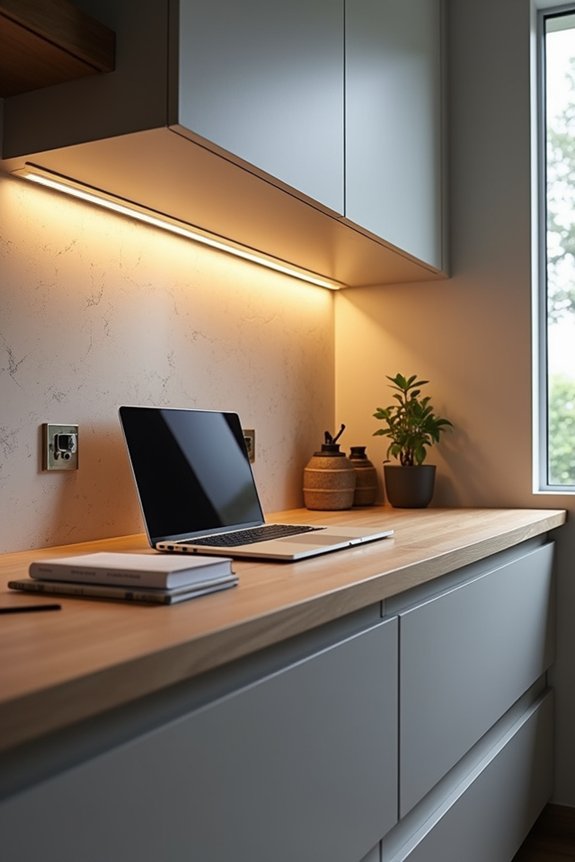
I get it. Your open-plan kitchen’s become a landing pad for mail, laptops, and half-finished to-do lists. A kitchen desk changes that. This multifunctional workspace carves out a dedicated zone—separate from your cooking area—where meal planning, bills, and remote work actually belong.
Here’s what I’ve noticed: a kitchen desk creates natural organization without cluttering countertops. You’re establishing boundaries. Your desk houses notepads, pens, and charging stations in one spot. Suddenly, your main kitchen functions properly again.
The benefit? It’s zoning done right. You’re not sacrificing cooking space; you’re reclaiming it. When everything has a home—especially your paperwork—your whole kitchen works better. That’s the outcome we’re all looking for: a kitchen that actually works *for* us.
Create Work Zones Without Walls
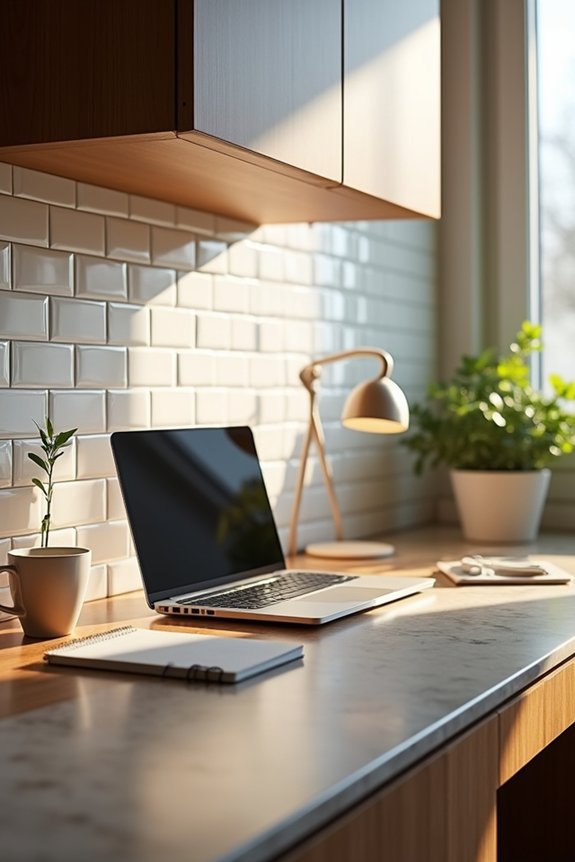
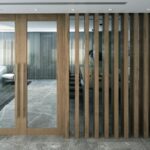
I’ve found that you don’t need to build actual walls to carve out a functional kitchen desk area—smart design choices do the heavy lifting instead. Think glass partitions, a strategically placed bookshelf, or even a curved counter that visually separates your workspace while keeping that open, airy feel intact. You get the focused work zone you want and stay connected to the kitchen’s flow, which honestly feels better than working behind a closed door.
Dedicated Workspace Integration
Since remote work’s become part of how we live, your kitchen doesn’t have to choose between being a cooking hub and a productivity zone—it can be both.
A well-placed integrated desk changes how your kitchen functions. Position your workstation near a window for natural light and better focus. Pair it with accessible outlets—you’ll need them for your devices.
Your dedicated workspace benefits from flexible storage solutions. Think rolling carts, wall-mounted shelves, and drawer dividers. They keep clutter hidden when you’re hosting dinner.
Matching your desk finishes to your cabinetry creates visual cohesion. Swivel chairs let you spin from spreadsheets to stovetop. Concealed cable management maintains a clean appearance.
You’re not renovating permanently. You’re creating rhythm—smooth transitions between work, cooking, and living. That’s the real comfort.
Open Layout Flexibility
When you’re juggling work calls and dinner prep in the same room, you don’t need four walls to feel focused—you just need smart boundaries. That’s where zoning comes in. Instead of building solid walls, partial dividers, glass panels, or strategically placed furniture create distinct work zones while keeping your space feeling open and connected.
Think of it like creating invisible rooms. A tall bookshelf behind your desk. An arch marking where the office ends and kitchen begins. Plants clustering around your workspace. These elements define areas without blocking visibility or making everything feel cramped.
The advantage? You maintain light and flow while establishing practical separation. Your family sees you’re working without feeling completely isolated. Everyone gets what they need. That’s the modern kitchen desk approach.
Zone Definition Without Barriers
| Zone Element | Purpose |
|---|---|
| Designated beverage station | Separates refreshment from focus |
| Open shelving divider | Visual boundary, maintains sightlines |
| Movable island | Flexible work zones you control |
| Prep area layout | Distinct homework or task space |
| Soft divider screen | Gentle separation, easy to adjust |
Using flexible work areas through furniture placement and soft dividers rather than permanent walls keeps your kitchen feeling connected while providing psychological separation. You’re claiming your space without closing yourself off—belonging in your home while staying productive.
How Kitchen Desks Minimize Visual Clutter
I’ve found that a dedicated kitchen desk works like a magnet for all those cables, papers, and devices that’d otherwise scatter across your countertops. When you’ve got one compact zone designed specifically for work—with built-in cable management and hidden storage behind cabinetry—your kitchen stays visually calm instead of looking like an office exploded there. The result? You get clear surfaces and a cleaner aesthetic that makes cooking and living in the space more enjoyable.
Designated Zones For Organization
How do you stop your kitchen from becoming a catch-all for every task under the sun? A designated kitchen desk brings order to disorder.
I’ve discovered that designated zones work effectively. When you carve out a specific spot for paperwork, meal planning, and bills, everything else stays off your counters. Your brain knows exactly where things belong.
Storage-backed design amplifies this benefit. Pull-out file organizers and labeled bins keep supplies contained within arm’s reach. No more hunting through drawers.
The practical benefit? Organization becomes automatic. Your coupon planning stays separate from cooking prep. Recipe indexing has its own corner. Bill payment doesn’t creep onto dining surfaces.
This clutter reduction means your kitchen finally functions as intended—organized, purposeful, and ready for whatever you need. You’re not just organizing; you’re reclaiming your space.
Clear Surfaces, Cleaner Aesthetics
What keeps a kitchen feeling calm? Clear surfaces. When I can see my countertop, I can think straight.
Kitchen desks in 2026 prioritize this minimalist approach. They reduce visual noise that makes spaces feel chaotic. Here’s how they work:
| Feature | Benefit | Result |
|---|---|---|
| Integrated storage | Hidden supplies | Uncluttered counters |
| Concealed wiring | No cable mess | Clean aesthetic |
| Neutral tones | Seamless blend | Cohesive kitchen |
| Soft materials | Warm feeling | Inviting workspace |
| Designated zone | Defined area | Focused work |
Why Kitchen Desks Enable Quiet, Focused Work
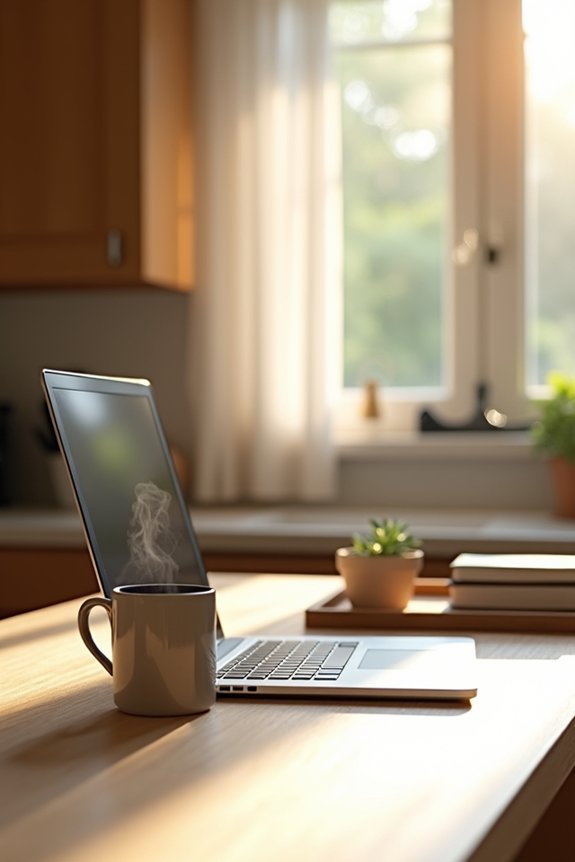
Ever notice how the kitchen’s become the heart of everything—laundry decisions, bill-paying, homework help—all happening at once?
Kitchen desks change that. They carve out a dedicated zone right where you need it most. You’re close to your coffee (essential), but removed from the chaos of cooking and meal prep.
Here’s what makes them work:
Integrated desks sit smoothly in your kitchen layout. They don’t feel like an afterthought. Instead, they blend with your cabinets and counters.
Quiet work actually happens when you’re separated from main kitchen activity. That slender desk surface becomes your sanctuary for focused tasks—answering emails, planning menus, handling paperwork.
Work zones eliminate distractions without isolating you completely. You’re still connected to family life, just in your own little corner. That’s the benefit: belonging without interruption.
Design a Desk That Shifts Between Work, Meals, and Gathering
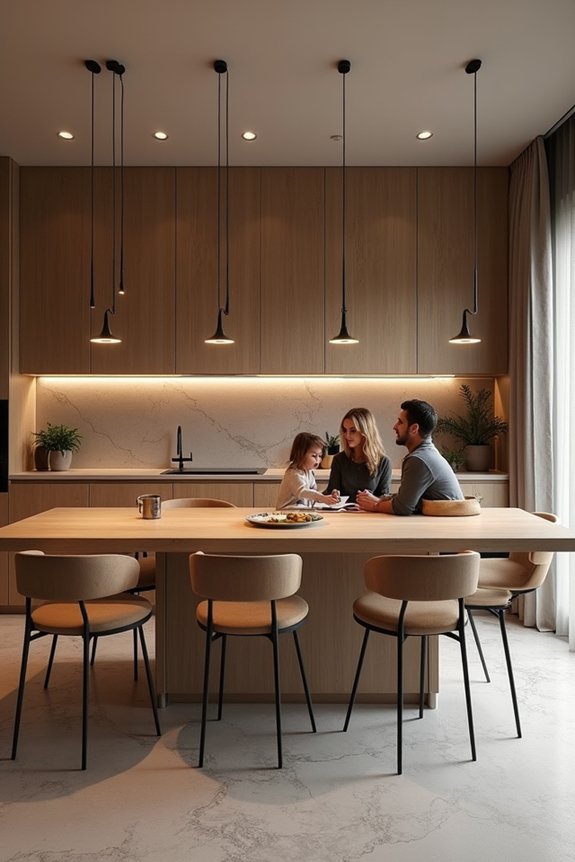
Your kitchen desk stops being just a desk when it adapts to multiple purposes. Adjustable-height surfaces let you move between typing emails and prepping dinner at the same spot without rearranging.
Multi-use zones work best with built-in charging stations that hide cords. Pull-out meal prep areas slide smoothly between work and cooking. Beverage stations keep clutter out of sight during focused hours.
Integrated storage is essential. When guests arrive, compartments tuck away papers and cables instantly. The desk maintains clean sightlines while supporting your actual life—work, meals, conversation.
Choose warm woods paired with soft neutrals. Your kitchen desk becomes furniture that belongs in the space, blending with cabinetry.
Match Your Kitchen Desk to 2026’s Warm, Natural Aesthetic
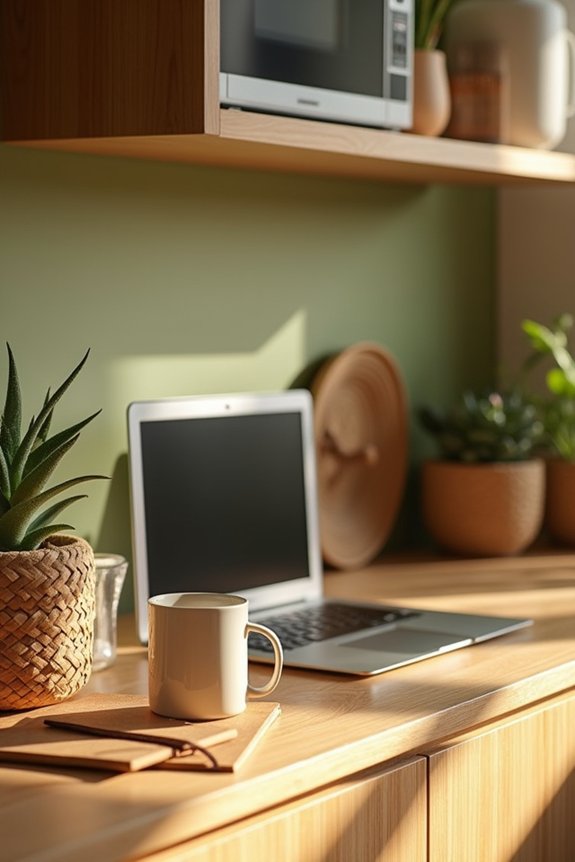
How do you create a kitchen desk that feels like it’s always belonged there? The answer lies in embracing warm wood tones and natural materials.
Start with oak or walnut desks that echo your cabinetry. These wood tones create warmth and a sense of belonging. Layer in stone-look surfaces or textured backsplashes—they’re not just beautiful; they ground your workspace in authenticity.
Don’t shy away from mixed finishes. Pair natural wood with brass hardware for subtle elegance. Add soft green or taupe accents that harmonize with your kitchen’s palette.
Your desk works best when it doesn’t announce itself. Keep yours seamless with hidden hardware and flat-panel styling, letting it blend into your kitchen’s cohesive design. Your desk becomes part of your home’s story, not a separate intrusion.
How to Fit a Kitchen Desk Into Your Des Moines Remodel
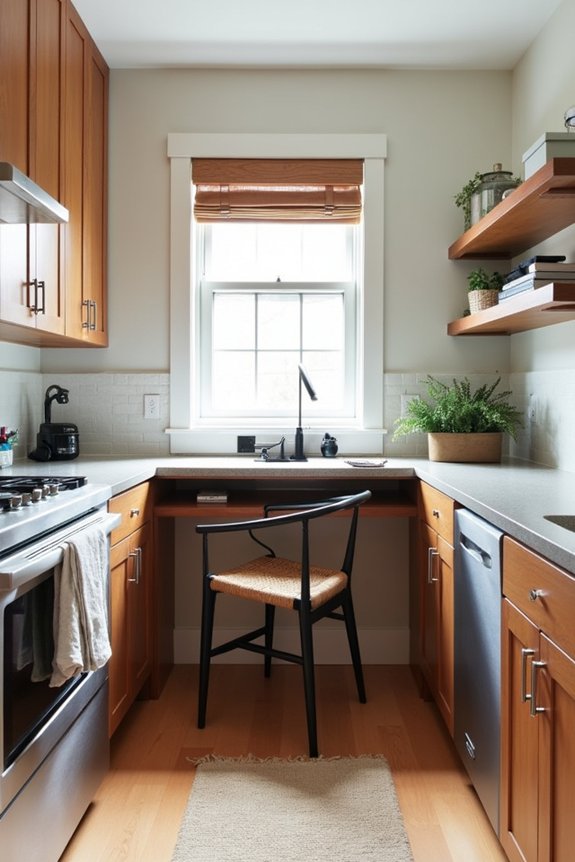
Where you place your kitchen desk in a Des Moines remodel matters just as much as how it looks. The best spots blend smoothly into your existing space without disrupting your cooking flow.
Kitchen desk placement in your Des Moines remodel should blend seamlessly into your space without disrupting your cooking flow.
Consider these placement options:
- Tucked under an elevated counter – This saves floor space while keeping your home office within arm’s reach
- Along a dining-adjacent wall – Perfect for those who want their desk separate yet connected to kitchen life
- As a multifunctional island extension – Maximizes workflow by combining work and prep areas naturally
The key is positioning your kitchen desk near beverage stations or prep zones. You’ll appreciate having coffee close by during those early morning work sessions. This thoughtful placement means you’re not constantly walking back and forth, interrupting your cooking rhythm. Smart positioning makes your Des Moines remodel work well for your needs.