Kitchen islands aren’t the must-haves designers once claimed. They’re blocking traffic flow in open-plan homes, eating up precious floor space, and complicating your sightlines. Two-tier islands? Visual nightmares. Cluttered countertops packed with pot racks? Over it. Smart homeowners like you are pivoting toward sleek worktables, built-in cabinetry, and rolling carts instead—designs that actually work with your space rather than against it. The shift toward minimalist, functional layouts is real, and there’s plenty more to discover about what’s replacing them.
Oversized Kitchen Islands Obstruct Traffic Flow in Open-Plan Homes
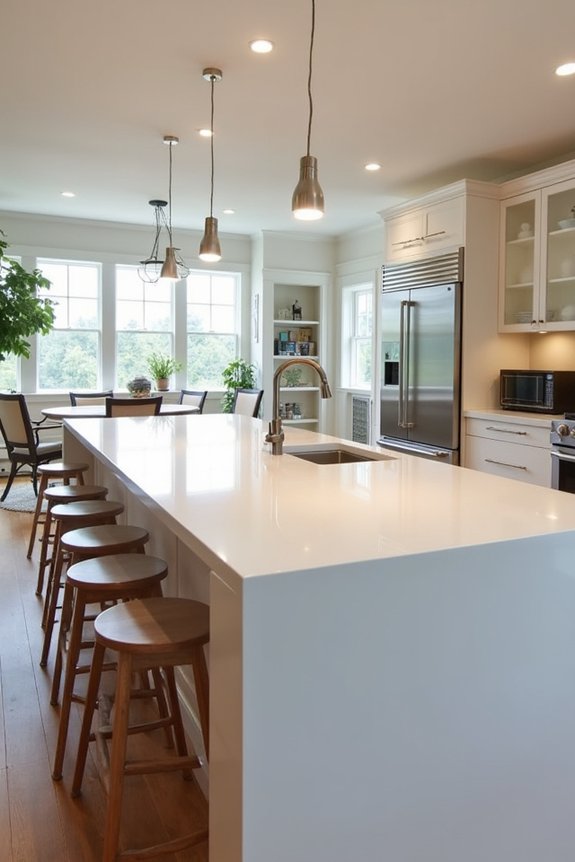
Why do so many beautiful kitchen islands end up feeling like kitchen traffic jams?
Beautiful kitchen islands often become obstacles when their size disrupts natural traffic flow and sightlines throughout open-plan spaces.
I’ve watched it happen countless times. That impressive oversized island looked perfect in the showroom. But once installed in an open-plan home? It becomes an obstacle course. Your island size matters enormously for circulation.
The Real Problem
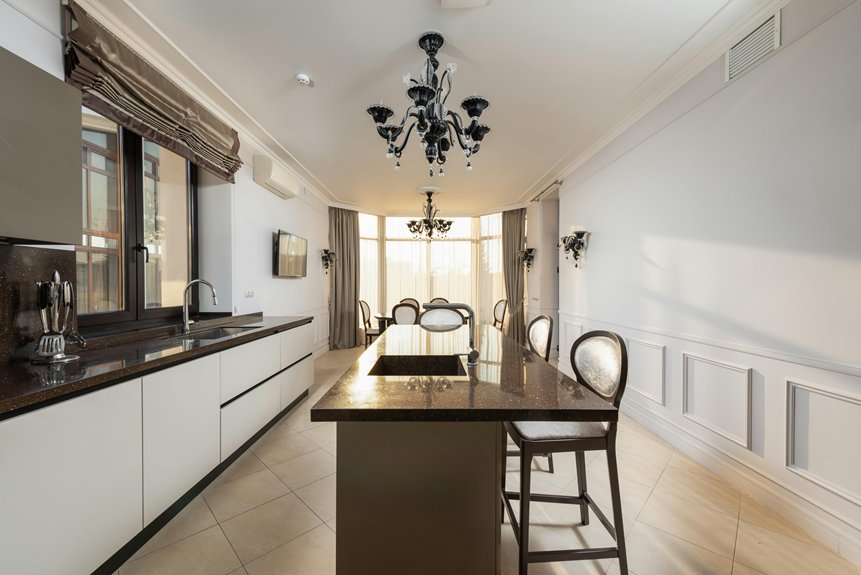
Large islands disrupt traffic flow between your kitchen and living spaces. They block sightlines. They make movement awkward around cabinets and appliances. That “Manhattan-sized” island? It complicates accessibility to seating and work zones dramatically.
What’s Shifting
Designers now favor intentional, smaller-to-mid-sized islands that integrate naturally with surrounding rooms. They work *with* your space, not against it. The trend recognizes that functional ease outweighs impressive bulk every single time.
Why Two-Tier Kitchen Islands Break Visual Lines and Complicate Styling?
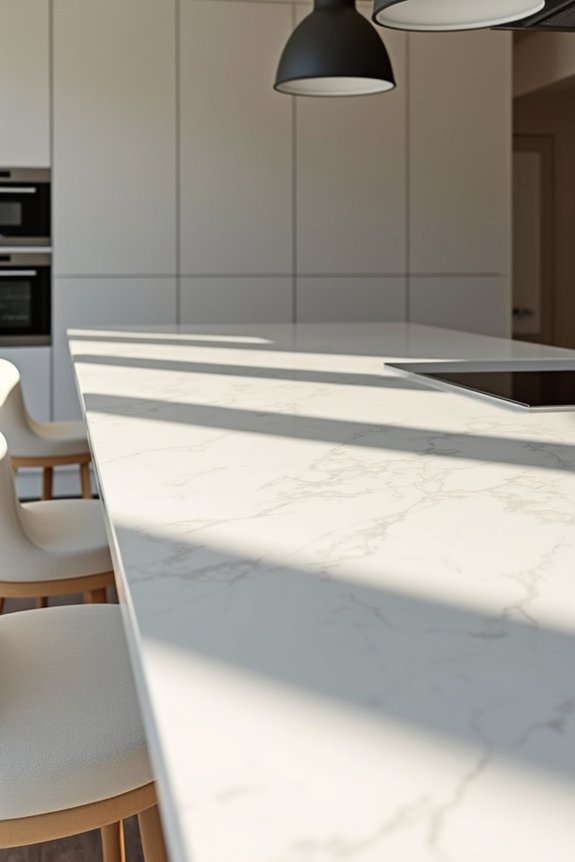
Two-tier islands create a visual puzzle that’s tougher to solve than it sounds. I’ve watched homeowners struggle with these dual-height designs—they interrupt your kitchen’s natural flow and disrupt what designers call “visual lines.” When you’ve got different levels, your eye doesn’t know where to land.
The styling headaches are real. Coordinating stools, lighting, and countertop materials across two planes? It’s complicated. You’re decorating two separate surfaces that should function as one unified piece. Materials that work beautifully on top don’t necessarily translate below.
Cleaning becomes annoying too. Crumbs hide in transitions. Textures don’t match smoothly.
For 2025, many of us are favoring flat, single-height surfaces instead. They read as one architectural form—cleaner, simpler, and just easier to work with.
Homeowners Are Choosing Multifunctional Worktables and Built-In Cabinetry Instead
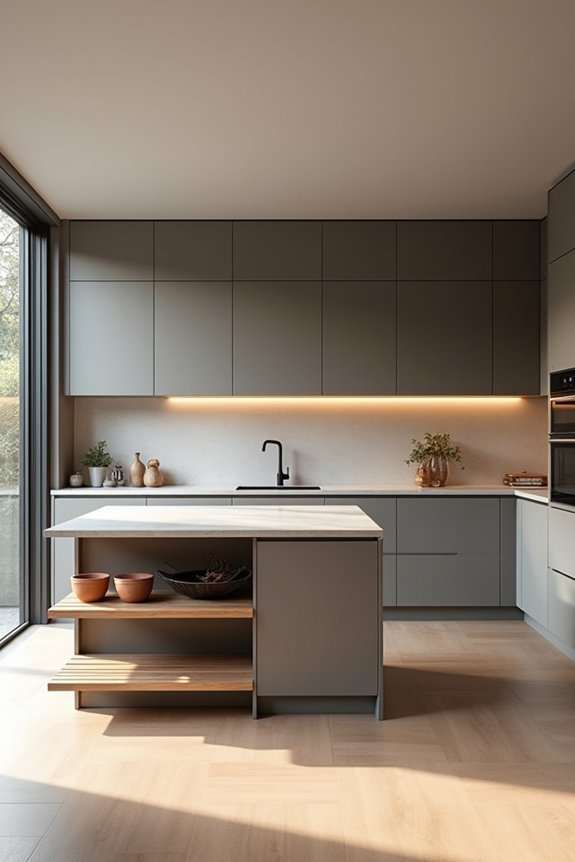
I’ve noticed more homeowners ditching those massive islands for worktables and freestanding cabinetry—and honestly, it makes sense when you’re tired of that bulky centerpiece cramping your kitchen’s style. Worktables bring farmhouse charm with open shelving and actual flexibility, meaning you can rearrange your space without calling a contractor, while built-in cabinetry tucked along walls gives you serious storage without the visual weight. It’s the difference between furniture that owns your room and pieces that work *with* your kitchen’s flow instead of against it.
Worktables Over Traditional Islands
How’s this for a kitchen shift: the farmhouse worktable—that charming, open-shelved cousin of the traditional island—is gaining traction.
I’ve watched homeowners ditch bulky islands for freestanding worktables that actually *work* for their lives. These versatile pieces offer farmhouse appeal without feeling boxed-in. They’re practical replacements for traditional islands, especially in smaller kitchens where space feels tight.
What makes worktables different? They’re less boxy, more functional. You pair one with your existing cabinetry and suddenly your kitchen has room to breathe. Built-in storage keeps clutter hidden while open shelving displays your favorite dishes.
The real advantage? You’re not locked into permanence. If your style shifts, your worktable shifts with you. Just remember: maintain 36–42 inches of clearance around it, choose durable surfaces, and invest in materials built to last.
This isn’t just following trends. It’s practical living.
Built-In Cabinetry Advantages
While worktables bring flexibility to your kitchen, built-in cabinetry is where you really solve the storage puzzle—and homeowners are starting to see that pairing the two actually works better than choosing sides.
Here’s what I’ve noticed: built-in cabinetry keeps your kitchen organized without eating up floor space. You’re getting durable surfaces that handle prep work while keeping clutter hidden behind closed doors. This matters because a contained kitchen actually feels bigger.
The real advantage? Better workflow. When your storage lives along the perimeter and integrates with your worktable, you’re moving efficiently—not zigzagging around the room. Built-in cabinetry also gives you that classic, unified look that worktables alone can’t quite achieve.
It’s not about abandoning flexibility. It’s about combining smart storage with adaptable elements for a kitchen that truly works for your life.
Multifunctional Design Integration
What if you need all the benefits of a kitchen island without the permanent commitment?
That’s exactly what multifunctional design integration offers. I’ve watched homeowners embrace freestanding cabinetry and worktables that shift with their needs. Unlike permanent islands, these pieces move around. Need extra prep space today? Pull your worktable forward. Hosting tomorrow? Slide it to the side.
This approach gives you adaptable layouts that evolve as your life changes. Open shelving on worktables provides farmhouse charm while keeping things visible and accessible. Freestanding consoles deliver style without the permanence of built-in islands.
The benefit? You’re prioritizing flexibility over rigidity. You’re choosing what works for *your* space, not forcing your space to work around outdated design rules.
Minimalist Design Replaces Cluttered Kitchen Islands With Clean Surfaces
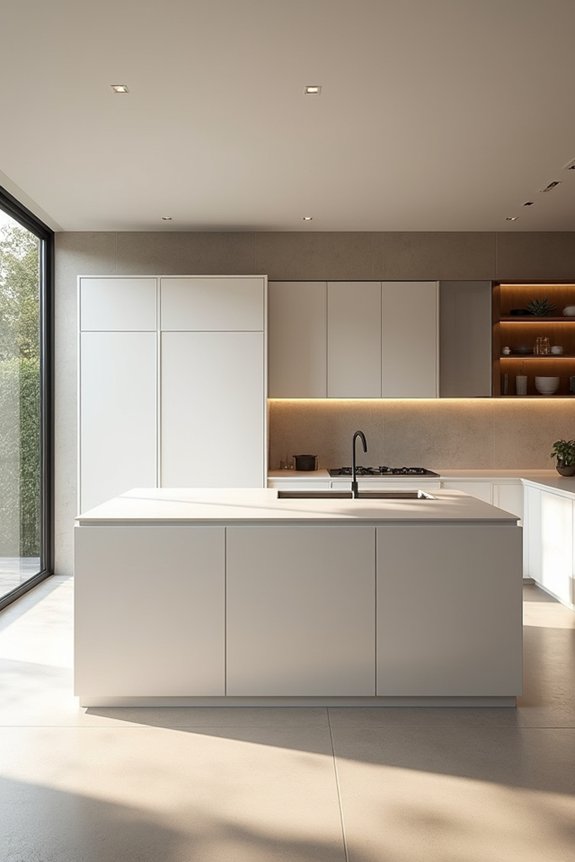
I’ve noticed something striking in modern kitchens lately—those overstuffed islands with dangling pot racks, open shelving crammed with colorful dishes, and countertops buried under kitchen gadgets are fading fast. Instead, designers and homeowners like you are embracing clean, streamlined islands that whisper rather than shout, trading closed cabinets hidden away for purposeful open shelving that actually holds just what you need. It’s refreshing; walking into your kitchen reveals smooth surfaces, matte finishes, and uncluttered sightlines that make the whole space feel bigger and calmer.
Decluttered Island Aesthetics Emerge
How’d we end up with kitchen islands that look like junk drawers with legs?
I’ve noticed something shifting. We’re ditching those chaotic countertops cluttered with appliances, mail, and mystery items. Instead, *decluttered island aesthetics* are taking over—and honestly, it feels like breathing room.
Minimalist islands now feature integrated storage that tucks everything away. Hidden bins replace visible clutter. Matte finishes and two-tone schemes swap out glossy surfaces that scream “high-maintenance.”
What’s interesting? These islands actually work *better*. They’re smaller, more purposeful worktables rather than focal points. Your kitchen flows easier. You can actually cook without navigating an obstacle course.
This isn’t about perfection—it’s about function meeting calm. We’re embracing islands that support our lives, not complicate them.
Open Shelving Replaces Closed Storage
Instead of hiding everything behind cabinet doors, we’re putting our best stuff on display—and it’s changing how islands work. I’ve noticed this shift toward open shelving in kitchens everywhere. Your beautiful dishes and cookbooks become part of the decor instead of locked away in a cabinet.
This minimalist approach means you’re deciding what you show. No more cramming random items into closed storage. Everything visible has to serve a purpose. Your kitchen feels lighter and more open.
The practical benefit? Easy access to what you use daily. Your favorite mug sits right there. Those serving bowls you actually use? On display. This storage style works because it combines function with beauty, making your kitchen feel purposeful and distinctly yours.
Island vs. Built-In Cabinetry: Which Works Better for Your Kitchen?
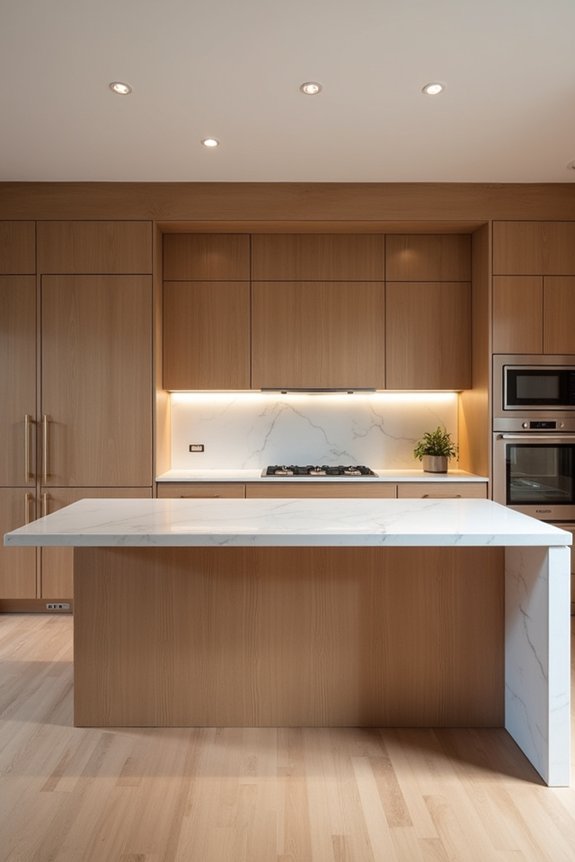
When you’re redesigning your kitchen, you’re really asking one fundamental question: do you want flexibility or permanence?
Islands work as multifunctional hubs. They handle prep work, offer dining space, and house appliances all in one spot. You get storage without sacrificing style. But here’s the thing—they demand space.
Built-in cabinetry takes a different approach. These permanent fixtures keep your perimeter walls clean and tidy, integrating appliances seamlessly into your design.
For smaller kitchens, skip the bulky island. Instead, consider rolling carts or freestanding work tables. They give you flexibility without eating up room.
The real choice depends on what matters to you. Need adaptability? Choose an island. Prefer streamlined permanence? Built-ins win. Neither’s going anywhere soon.
Peninsula and Console Alternatives Maximize Movement and Flexibility
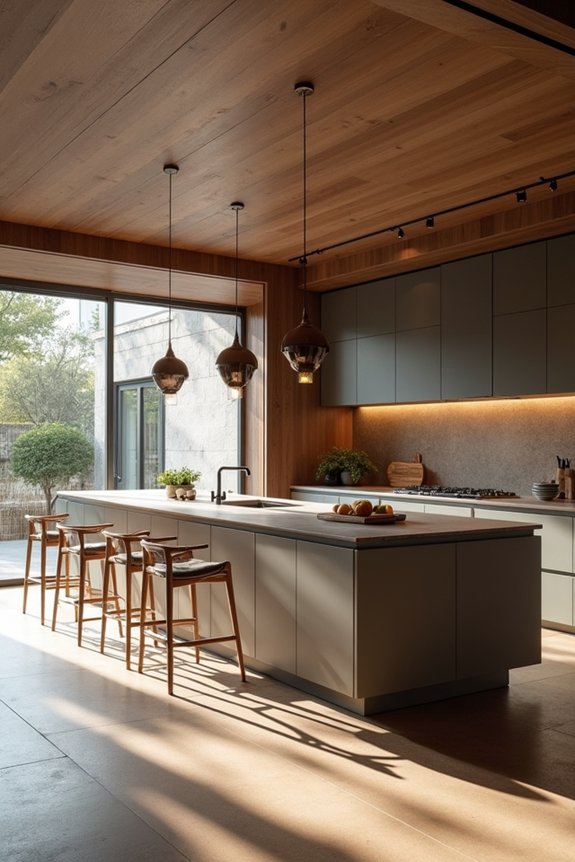
If an island feels too commitment-heavy for your space, you’ve got better options—and honestly, they might work harder for you.
Peninsula alternatives and freestanding consoles give you serious movement flexibility without the permanence. I’ve watched kitchens adapt when families ditched fixed islands for these smart swaps.
Peninsulas work beautifully in tighter layouts, offering integrated function without that “built-in forever” feeling. Freestanding consoles? They’re style chameleons. Add one, rearrange it, remove it. No regrets.
The secret is maintaining 36–42 inches of clearance around these pieces. That breathing room matters. Your kitchen becomes livable again.
Worktables bring farmhouse charm with open shelving. Everything’s accessible. Everything serves a purpose.
These alternatives suit U-shaped or smaller kitchens perfectly. You’re choosing flexibility *and* function. That’s the modern kitchen approach.
Rolling Kitchen Carts for Small Spaces and Rental Kitchens
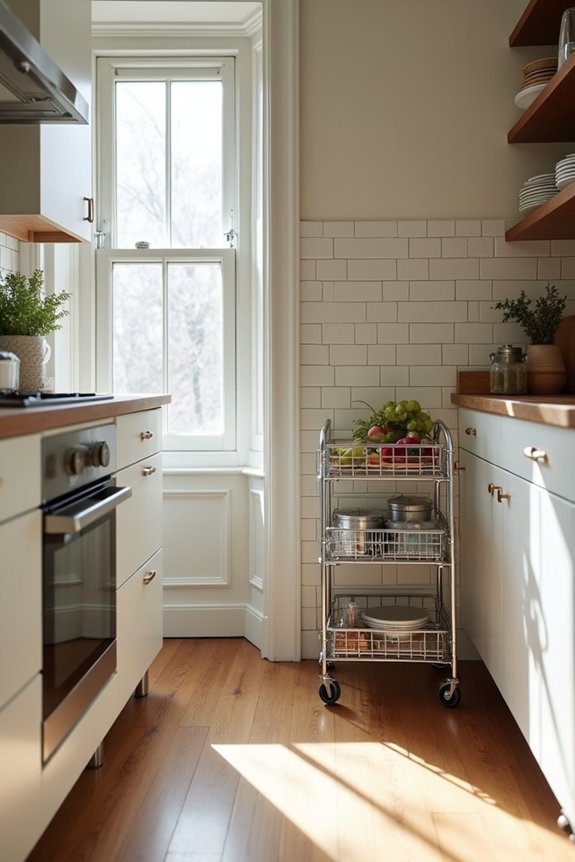
What’s the simplest way to add function without permanent commitment? A rolling cart.
Add function without permanent commitment—rolling carts adapt to your lifestyle and move with you.
I discovered this approach when I moved into my first apartment. Unlike traditional islands, these mobile workhorses adapt to your lifestyle. You’ll gain instant prep surface and built-in storage through shelves or drawers—exactly what rental kitchens need.
Here’s what works: you’re not stuck. Lockable wheels let you reposition effortlessly, maximizing flexibility in galley layouts or tight corners. When you move, it moves with you.
Before buying, measure your doorways. Seriously. I learned this the hard way.
Rolling carts won’t replace full-size islands in spacious kitchens, but for apartments? They’re practical. You get function without permanent commitment, belonging without roots. That’s modern living.