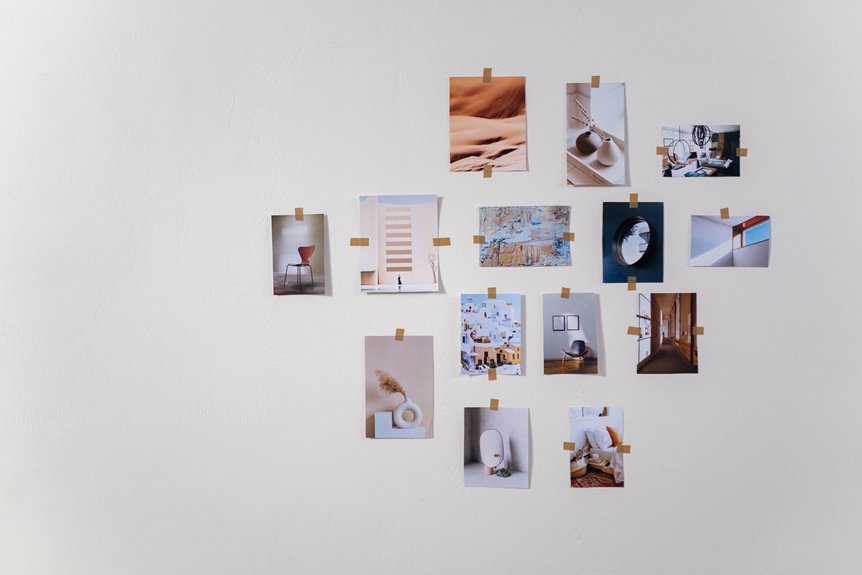
Start with a strong anchor—your sofa sets the tone for everything else. Layer in functional zones: a conversation area near your fireplace or art wall, a cozy reading nook, plus display shelving for your collections.
Then comes warm lighting, throw pillows with personality, and greenery to bring life to the space. Window treatments and strategic color complete the picture. Each element works together to create a room that’s yours—with plenty more to discover about making it all work smoothly.
Map Out Functional Zones: Conversation, Relaxation, and Display
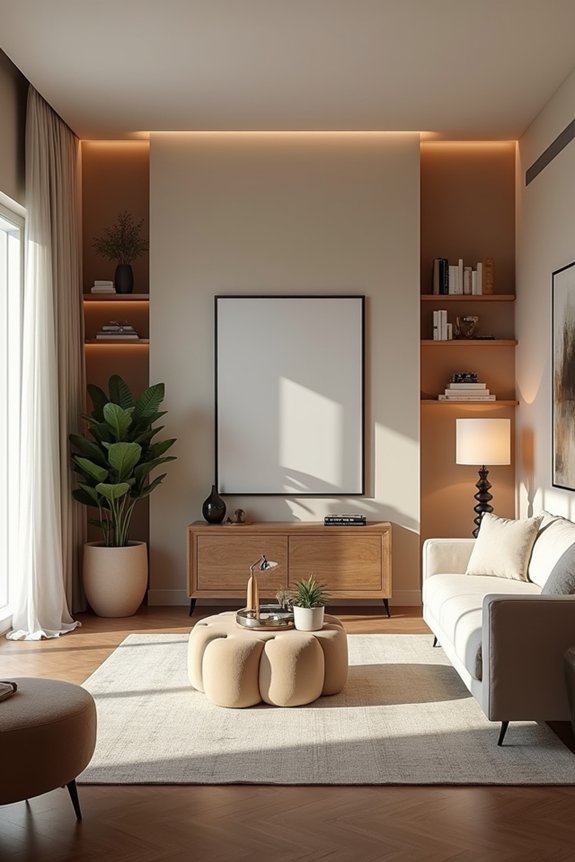
I’ve learned that strategic zoning arranges a living room layout from basic to functional. You don’t need walls—just intentional placement.
Create three distinct areas:
- Conversation zone: Arrange your sofa facing the fireplace or TV, positioning a sofa table behind it for remotes and drinks
- Relaxation nook: Tuck a comfy chair and ottoman into a cozy corner
- Display zone: Use modular shelving flanking your fireplace to showcase art and collections
Area rugs and lighting naturally separate these spaces while keeping sightlines open. Low-profile furniture prevents clutter. When each zone serves its purpose, your living room works as it should—a place where everyone fits in, doing exactly what makes them happy.
Choose Your Sofa: It Anchors Comfort and Layout
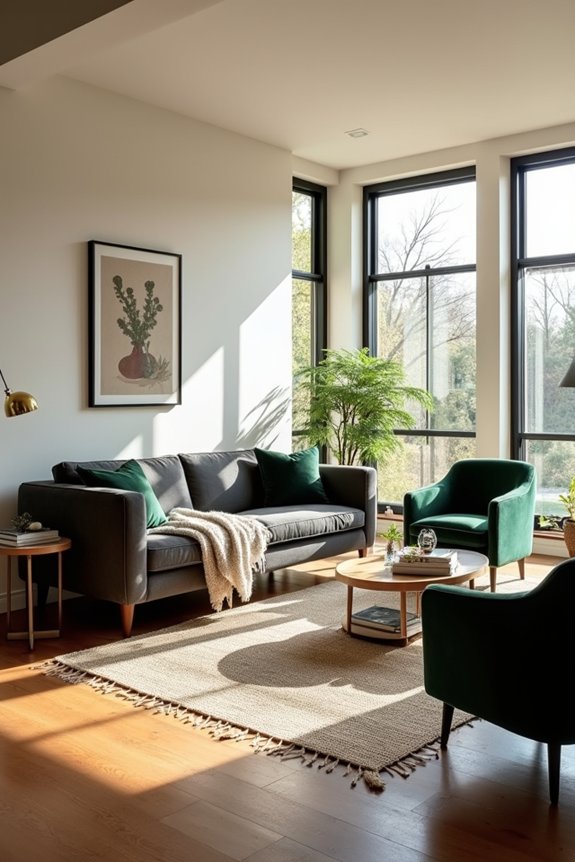
Everything in your living room radiates out from the sofa.
Your sofa sets the tone for everything—comfort, style, and how people actually use the room. I’ve learned that choosing wisely shapes your entire layout.
Consider these essentials:
- Size matters. A large sofa provides extra seating without crowding your space. It’s the difference between comfortable gatherings and feeling cramped.
- Color counts. Neutral tones work well with mid-century modern or farmhouse styles. Bold colors work in contemporary spaces.
- Shape shapes conversation. Corner sofas? They work well. They naturally face different areas, making chatting easier and more natural.
Your sofa anchors both comfort and layout. It’s not just furniture—it’s where memories happen. Pick one that feels right, and your living room will come alive.
Select a Living Room Focal Point (Fireplace or Art Wall)
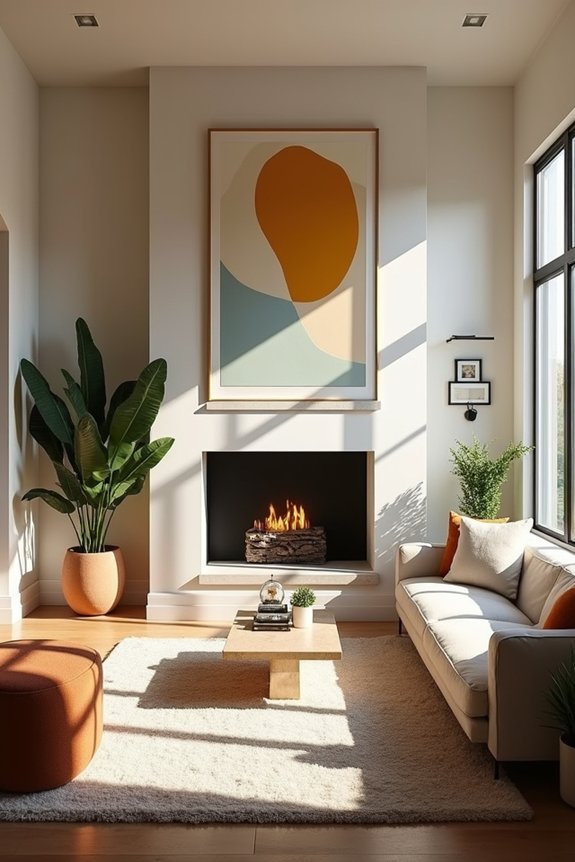
Once you’ve anchored your room with a great sofa, it’s time to pick what your eye naturally lands on—and I mean really lands on. Whether you choose a fireplace that radiates warmth and coziness or a gallery wall that makes a bold statement, this point becomes the heart your whole room orbits around. Everything else—your seating angles, accent pieces, even where you hang your favorite lamp—flows naturally from this one decision, creating a space that feels deliberate rather than randomly thrown together.
Fireplace As Warm Anchor
I’ve noticed how a fireplace grounds a space. It anchors your entire décor around its positioning and style. When you arrange seating facing the fireplace, you’re creating comfort and connection. Everyone naturally gathers there.
What makes it work:
- Modern updates refresh old brickwork while preserving warmth
- Wood paneling, brick, or tile styling strengthens the feature
- Positioning art above or building out the surround emphasizes its importance
- Sightlines allow everyone to view it comfortably
Your fireplace isn’t just pretty. It’s the visual anchor that makes your living room feel deliberate, warm, and distinctly yours.
Gallery Wall Statement Impact
Why settle for blank walls when you can turn them into a personal museum? A gallery wall works well as a focal point when you arrange varied framed works with intention. Mix prints, posters, and photos that represent who you are.
Creating Your Curated Space
I arrange mine using a simple grid system to maintain cohesion. This keeps everything feeling planned rather than random. Your gallery wall doesn’t compete with other focal points—like a fireplace—it actually *balances* them. Think of it as giving your room multiple conversation starters.
The Magic Element
Consider an exposed brick backdrop. It adds texture and visual interest that makes your artwork stand out. The key? Choose pieces that speak to you personally. When your gallery wall reflects your story, guests will recognize your home’s warmth and authenticity.
Focal Point Room Organization
When you’re arranging your living room, everything hinges on choosing one strong anchor—either a fireplace or an art wall—that’ll pull the whole space together.
Your focal point becomes the room’s heartbeat. I learned this organizing my own space: once I picked my fireplace, furniture arrangement clicked into place naturally. Every chair angled toward it. The comfortable vibe followed.
| Focal Point | Room Organization Impact |
|---|---|
| Fireplace | Creates warmth; seating faces it naturally |
| Art Wall | Sets mood; draws eyes upward |
| Fireplace | Influences wall color and styling choices |
| Art Wall | Uses gallery arrangements for texture |
| Both | Need complementary lighting and rugs |
Position seating to face your chosen anchor point. Layer lighting around it. Add a rug beneath. These elements work together, reinforcing what makes your room feel like *home*—a place where you belong.
Layer Lighting to Set Mood and Support Daily Tasks
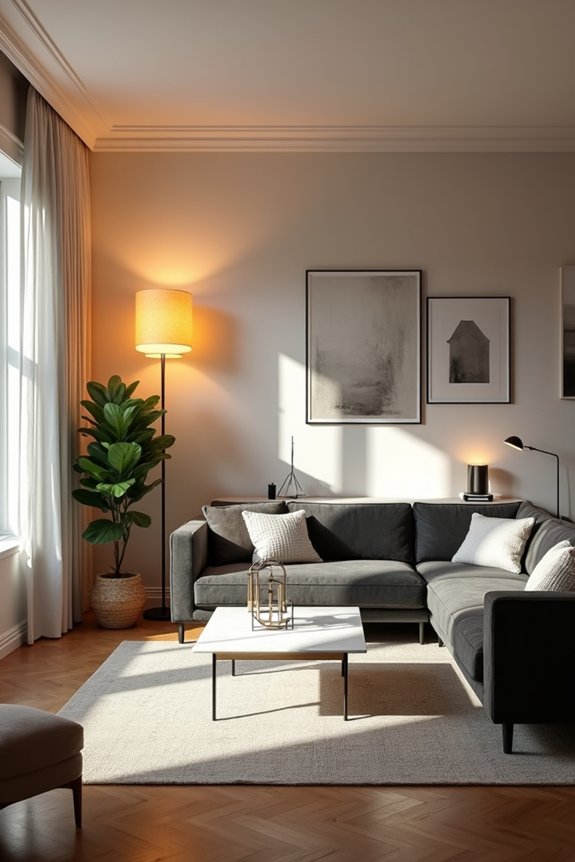
I’ve learned that the right lighting matters—it’s not just about brightness, but about creating spaces that work *for you* throughout the day. You’ll want to blend natural light streaming through your windows with layered artificial lighting: ambient fixtures that gently illuminate the whole room, plus task lights for reading or working, so you’re not squinting at your phone at 8 p.m. The benefit comes when you can dim your overhead lights, flip on a table lamp near your favorite chair, and suddenly your living room shifts from “productive workspace” to “relaxing retreat” in seconds.
Natural Light Enhancement Strategies
How’s your living room feeling right now—bright and energizing, or a bit dim and cave-like?
I’ve discovered that maximizing natural light makes a real difference. Here’s what actually works:
Layer Your Window Treatments
Combine sheer and opaque fabrics. Sheers filter harsh rays while letting daylight flood in. You get privacy *and* brightness—the best of both worlds.
Amplify with Mirrors
Position mirrors opposite windows. They bounce daylight around, making your space feel larger and more welcoming right away.
Boost Daylight Diffusion
Paint walls in light colors. Add reflective surfaces like glass tables or metallic accents. This spreads existing natural light throughout your room, making everything glow without extra effort.
Consider Skylights
Overhead windows introduce light without sacrificing wall space for art or shelves.
These strategies work together, creating the bright, inviting space you’ve been wanting.
Ambient And Task Lighting
Natural light gets you halfway there, but aside from that—even the brightest room needs lighting that works for you, not just at you. I’ve learned that layering different light sources creates the right ambiance for whatever you’re doing.
What works in a space:
- Combine fixtures strategically—ceiling lights, wall sconces, and floor lamps work together to eliminate dark corners and set mood
- Install dimmers everywhere—adjust brightness for cozy evenings or focused reading without switching between rooms
- Match color temperatures—warm bulbs (2700–3000K) feel inviting, while cooler task lighting (3500–4000K) sharpens focus for work zones
Place sconces at eye level beside fireplaces or art to frame what matters. Position lights to skip glare on screens while highlighting textures like exposed brick. This balanced approach means your living room works for both relaxation and productivity.
Introduce Color and Pattern With Rugs and Throw Pillows
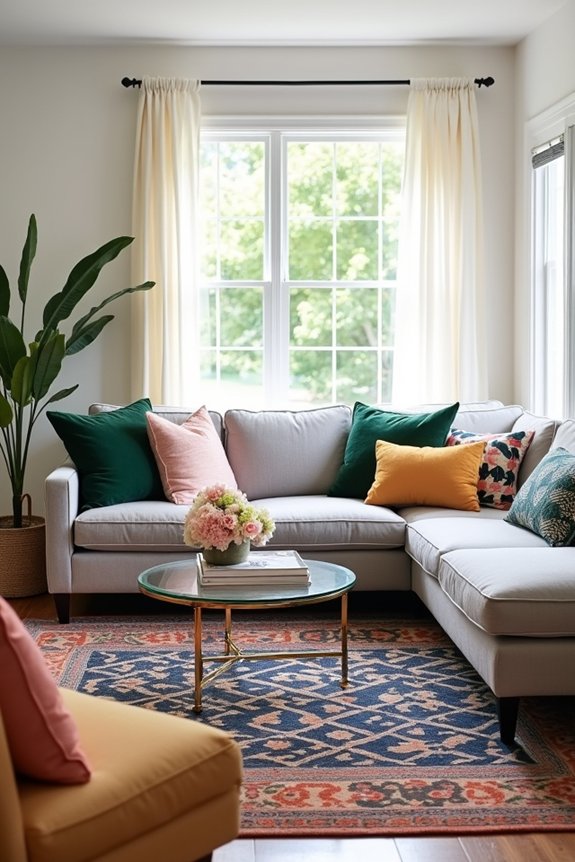
One of the quickest ways to refresh your living room is through rugs and throw pillows—they’re like the outfit change your space has been waiting for.
I’ve learned that rugs anchor a room while adding softness and texture. They’re affordable, forgiving, and they instantly influence mood. Throw pillows? They’re your strategic asset for personality.
| Element | Benefit | Best For |
|---|---|---|
| Rugs | Define spaces, add softness | Creating cozy zones |
| Throw pillows | Express style, comfort | Personalizing seating |
| Patterns | Visual interest, depth | Breaking monotony |
| Bold colors | Emotional warmth | Making statements |
| Textures | Tactile richness | Inviting touch |
Together, they let you experiment without commitment. Mix mustard yellow with grey tones. Layer different textures. Watch your space come alive. This combination moves past bland into something that feels like *yours*.
Transform Your Walls: Bold Colors, Moody Tones, or Wallpaper
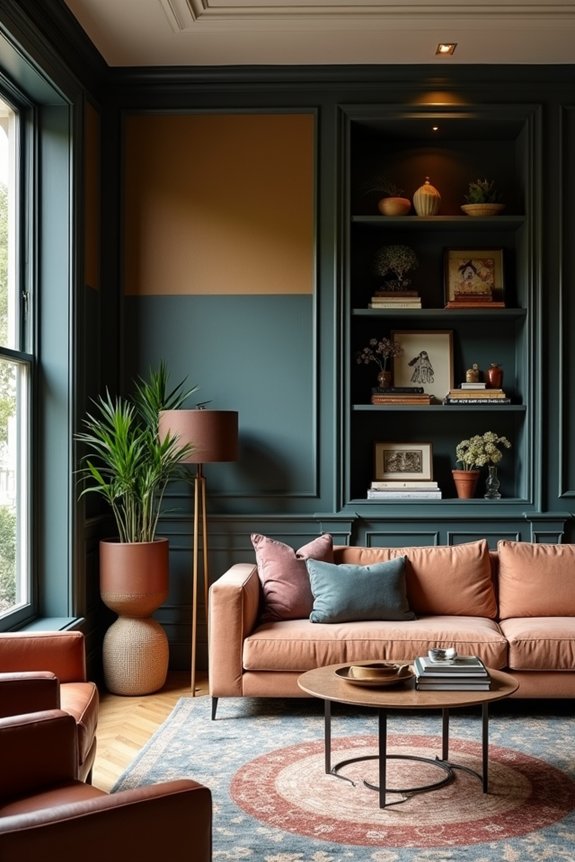
Your walls are a canvas—and right now, they’re probably playing it safe.
Let’s change that. I’ve discovered three powerful ways to decorate your walls:
- Bold colors: A mustard yellow accent against grey creates instant contrast and energy. It’s like adding personality to a blank page.
- Moody tones: Deep inky blues such as Black Blue No.95 paired with complementary hues create atmospheric depth. I find these calming yet sophisticated.
- Wallpaper: This gives you decorating freedom that paint simply can’t match. Varied patterns and textures let your interests come through.
Exposed brick is worth considering too—it brings visual interest and becomes a natural focal point. Soft pinks and muted neutrals work beautifully as well, creating consistency across walls and baseboards. Your walls deserve to tell your story. Make them count.
Mix Oversized Pieces With Statement Furniture for Visual Impact
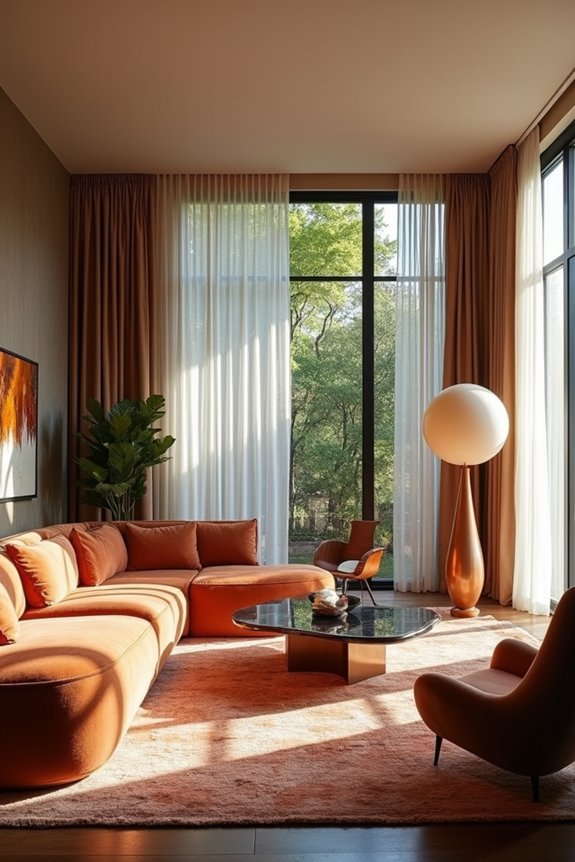
Once you’ve set the stage with a bold wall color or pattern, it’s time to fill that canvas with furniture that commands attention. Oversized pieces create immediate visual impact when paired thoughtfully with other furniture selections.
A large sofa anchors your seating zone, but here’s the trick: balance it with slimmer, lower-profile accents. Think skinny side tables or delicate chairs. This prevents that cramped, heavy feeling nobody wants.
The key? Open layouts work best. Your oversized pieces define areas without blocking doorways or windows.
Match materials and finishes to your color palette—this keeps everything feeling deliberate, not random. When done right, you’re not just decorating. You’re creating a space where you genuinely want to gather with people you love.
Style Shelves and Walls With Custom Art and Collections
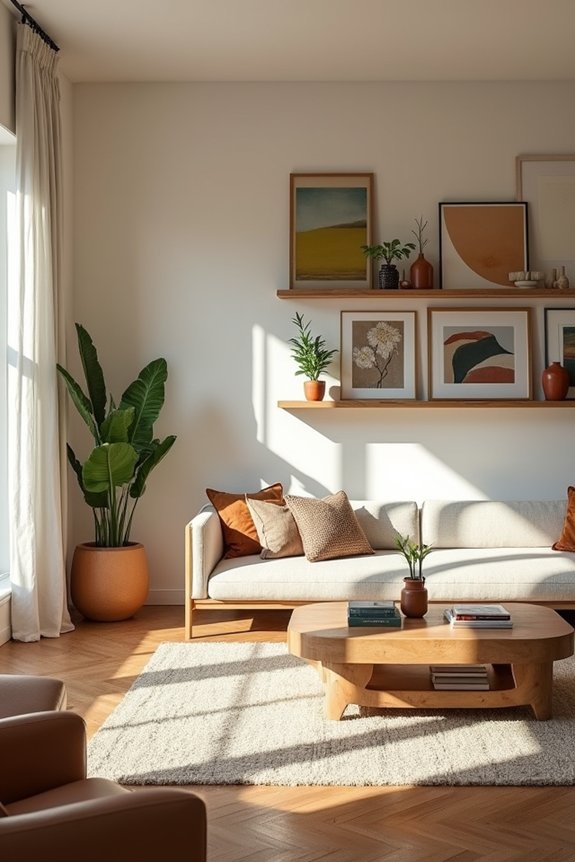
How do you turn blank walls into something that actually tells your story? I’ve discovered that styled shelves and collections do exactly that. They’re not just storage—they’re your home’s personality on display.
Here’s how I make it work:
- Position strategically. I frame my fireplace with shelves on both sides, creating a gallery effect that draws every eye in the room.
- Curate intentionally. My favorite books, vintage dishware, and sentimental trinkets sit together, each piece mattering. No clutter allowed.
- Paint for boldness. A fresh coat makes shelves visible and striking, making collections really pop.
When you blend functional shelving with personal items, something happens. You’re not decorating anymore—you’re sharing who you are. That’s where belonging lives.
Bring Life to Your Living Room With Greenery and Natural Textures

I’ve found that large plants like a fiddle leaf fig or lush Monstera don’t just fill empty corners—they completely change how a room feels, becoming natural conversation starters that draw people in. Adding greenery and natural textures isn’t just visually appealing; it actually reduces anxiety and boosts happiness, which means your living room becomes a calmer space to relax in. By mixing statement plants with smaller hanging options, you’ll create visual layers and depth without sacrificing precious shelf space.
Plants As Statement Pieces
Why settle for blank corners when you can fill them with living, breathing art? I’ve found that plants bring new dimension to spaces and create personal sanctuaries. When I added a fiddle leaf fig to my living room, it became an instant conversation starter—guests actually noticed it before my furniture.
Your Statement Pieces:
- Large focal plants like climbing pothos or Montserrat create bold vertical presence
- Corner placements near windows maximize light and balance empty spaces
- Mixed heights combining cacti with smaller varieties build texture and interest
Here’s what changed for me: incorporating plants into your decor isn’t just trendy. It genuinely reduced my anxiety. Scientific evidence confirms plants boost happiness and create healthier room atmospheres. These plants aren’t mere decorations—they’re living investments in your well-being and belonging within your own space.
Natural Textures And Materials
Plants alone won’t shape your living room—they need the right companions. I’ve learned that pairing greenery with natural textures creates a space where you actually want to spend time.
Think soft, tactile finishes alongside your plants. Rough wood, woven baskets, and stone elements ground your room beautifully. They’re not just pretty—they make your space feel real and inviting.
| Texture | Why It Works |
|---|---|
| Soft greys/off-whites | Backdrop that lets greenery shine |
| Botanical touches | Echoes your plant theme |
| Stone finishes | Adds earthiness and depth |
| Woven materials | Creates warmth and movement |
When you combine these elements with your plants, your living room becomes a place to retreat—a space where natural textures and greenery work together, making you feel genuinely at home.
Biophilic Design Benefits
- Mood boost and anxiety relief: Plants lift your spirits. Research indicates greenery increases happiness, creating a space where stress subsides.
- Improved air quality perception: Placing plants near windows and seating areas strengthens your connection to the outdoors, making your living room feel fresher and lighter.
- Visual and emotional depth: Large plants like Monsteras anchor the room while smaller hanging options save space, letting you layer greenery throughout without overwhelming your environment.
This is functional design—creating an environment where you and your loved ones can be present, surrounded by the calming presence of nature indoors.
Finish With Window Treatments: Blinds, Shutters, or Curtains
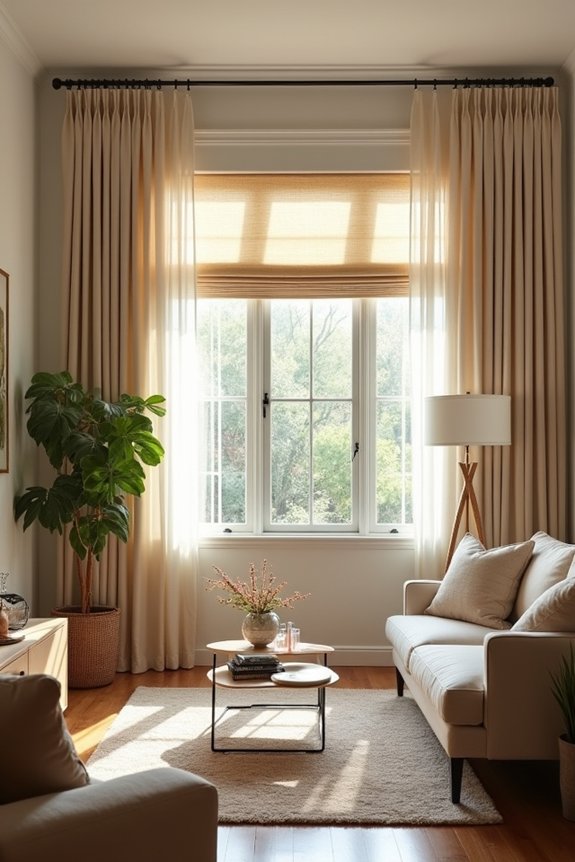
Have you noticed how the right window treatment can completely change a room’s entire vibe?
I’ve discovered that choosing between blinds, shutters, and curtains shapes your whole space. Shutters offer that sophisticated, polished look I crave. They’re sleek, come in styles like tier-on-tier for flexibility, and they make any room feel deliberate.
Blinds are my go-to for adjustability. They let me control exactly how much light filters in, and they’re easy to maintain.
What matters most is that your *window treatments* work together with your décor. The right choice balances natural light, adds texture, and sets your room’s mood. When I invested in quality window treatments, my living room became a space that matched who I am.