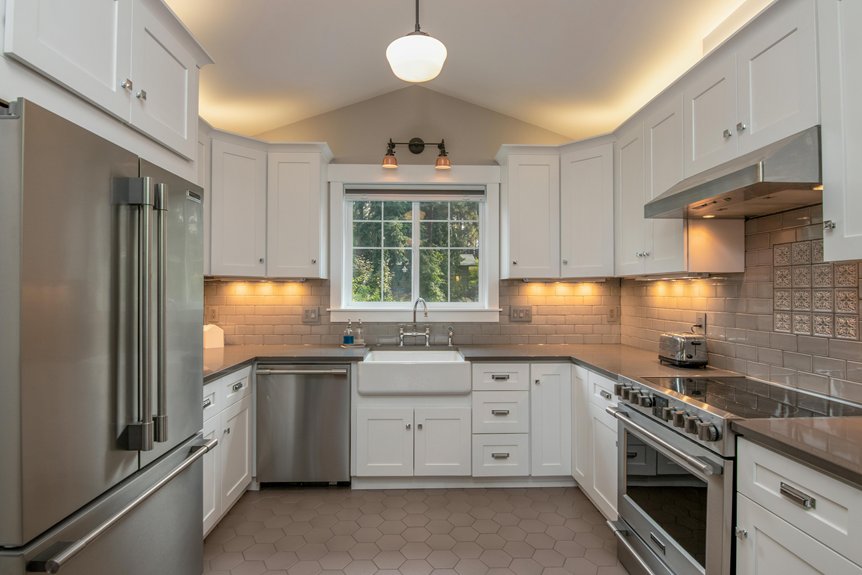
I’ve tested seven kitchen layouts, and they all work around one simple idea: the working triangle connecting your sink, stove, and fridge. When these three sit 4–9 feet apart, you’re not constantly zigzagging across the room. One-wall kitchens work great for apartments. L-shaped designs maximize corner efficiency. U-shaped layouts provide serious storage. Islands? They work well for cooking with company. The real benefit comes when you match your layout to how you actually cook—not how magazines say you should. Stick around to discover which design fits your life.
The Working Triangle: Foundation of Kitchen Efficiency
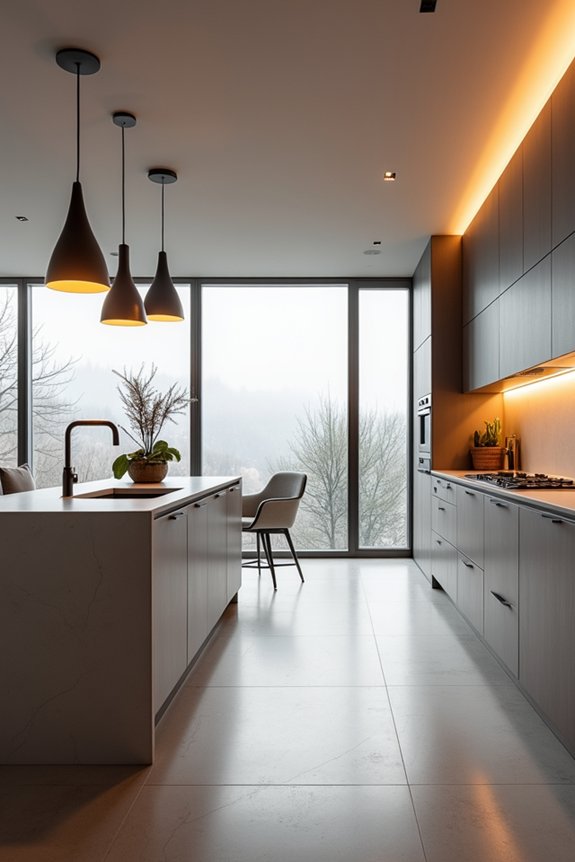
Why does this matter? When these three zones work together, you’re not wasting energy. You prep at the counter near your fridge, cook at the stove, and clean at the sink—all within arm’s reach.
Add your dishwasher close by, and you’ve created a functional kitchen. You’ll notice the difference right away: less fatigue, more cooking enjoyment. That’s the working triangle’s real benefit.
Assess Your Needs: Kitchen Size, Household, and Cooking Style
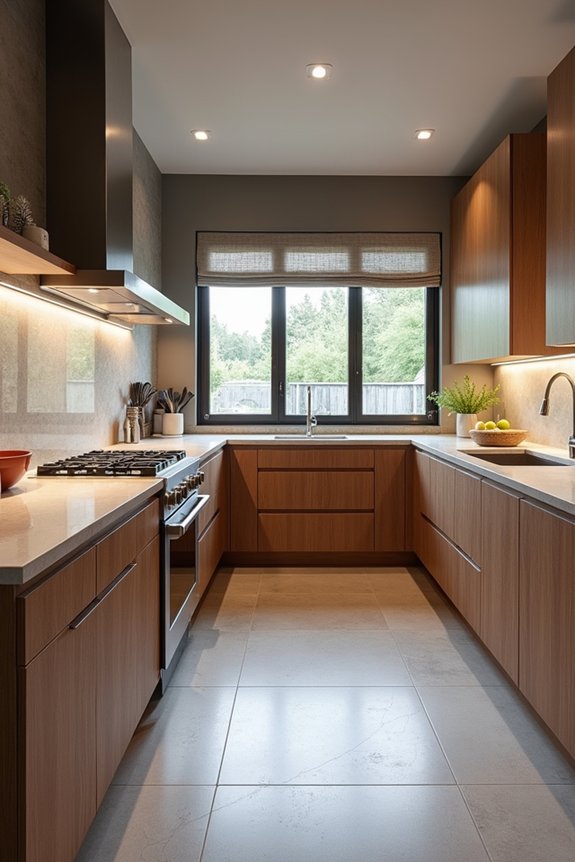
How well you know your own kitchen habits shapes your planning. Understanding your kitchen layout and workflow starts with honest reflection.
What’s your cooking reality? Do you meal-prep weekly or grab takeout most nights? Are you a daily bread baker or someone who microwaves everything? These patterns affect your storage and appliance needs.
Next, measure your space. Can you fit distinct zones—prep, cook, clean-up, storage—without creating traffic jams? A small kitchen requires careful prioritization of what matters most.
Consider your household. Does everyone cook simultaneously, or is it solo work? Do you need beverage stations or snack zones integrated smoothly?
Map distances between sink, stove, and fridge. Fewer steps improve workflow. Finally, decide: do you prefer cabinets or drawers? Pull-outs or shelves?
These answers guide your entire kitchen’s efficiency.
One-Wall and Galley Kitchens: Making Tight Spaces Work
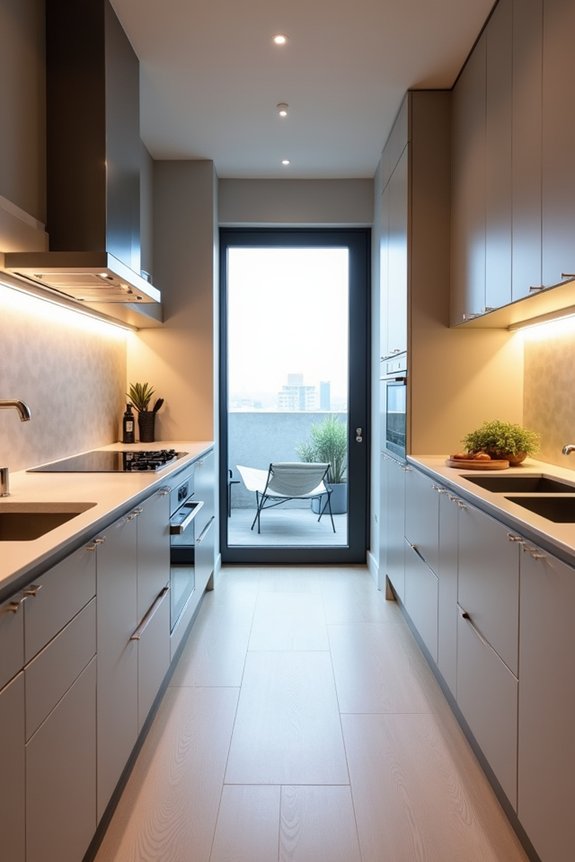
If you’re working with a compact kitchen, limited square footage doesn’t mean limited potential—one-wall and galley layouts are highly efficient options for maximizing functionality in minimal space. You have three primary strategies at your disposal: maximizing every inch of your square footage through smart vertical storage, creating a streamlined workflow in those narrow corridors by clustering your sink, stove, and fridge close together, and discovering cost-effective layout solutions that won’t require a complete renovation. The advantage? These tight designs often cost less to outfit than sprawling kitchens, and they actually *force* you to stay organized—there’s simply nowhere for clutter to hide.
Maximizing Minimal Square Footage
Position your dishwasher, sink, and trash bin in a straight line. This arrangement eliminates wasted steps during daily tasks. Add pull-out shelves near cooking zones. They reduce stretching and keep everything organized.
You’re not sacrificing functionality here. You’re gaining purpose. That’s what efficient minimal square footage looks like.
Streamlined Workflow in Corridors
I position my prep surfaces in a continuous line facing my sink and disposal area. No backtracking. No bottlenecks. Just smooth, purposeful movement from chopping to cooking to cleanup.
Light colors and reflective surfaces work well in narrow galleys. They visually expand the space while keeping everything practical and reachable. When your kitchen workflow functions smoothly, cooking becomes more enjoyable—not frustrating.
Cost-Effective Layout Solutions
Why do tight kitchens often feel more efficient than sprawling ones? I’ve discovered that *smaller spaces force smarter choices*.
One-wall and galley kitchen layouts are budget-friendly because they minimize materials and installation costs. You’re not paying for excessive cabinetry or countertops you won’t use.
Here’s what makes them work:
- Efficient workflow: The sink, stove, and refrigerator stay close together, reducing unnecessary steps
- Dual counters in galley designs create natural prep and cooking zones without extra expense
- Pull-out drawers maximize accessibility without extra cost
I’ve seen homeowners make the most of cramped spaces into highly functional kitchens by embracing these layouts rather than fighting them. When your kitchen layouts align with how you actually cook, everything flows better—and your wallet stays fuller.
L-Shaped Kitchens: When Corner Prep Zones Work Best
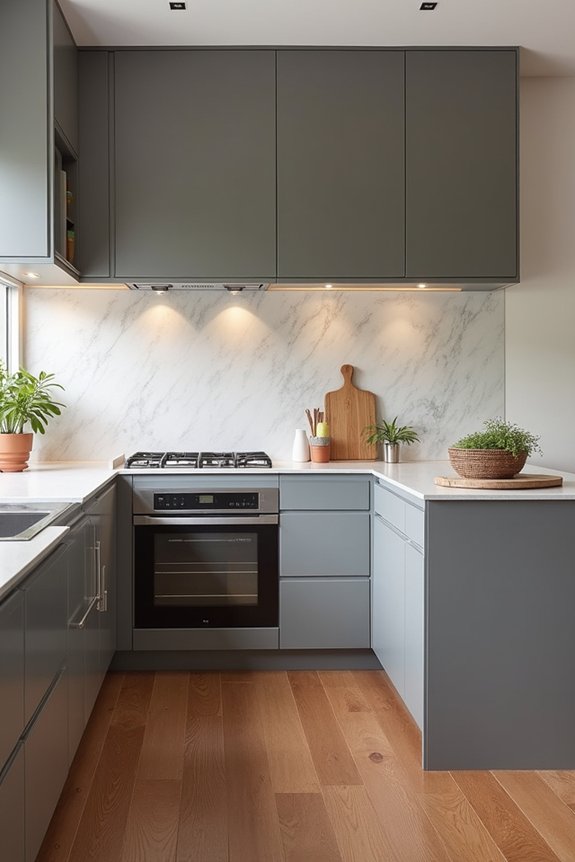
When you’ve got two walls meeting at a right angle, you’re looking at one of the most practical kitchen layouts available. An L-shaped kitchen creates distinct zones for cooking, cleaning, and prep work.
This design delivers real benefits. The corner becomes a functional hub—install pull-out shelves or a lazy Susan, and you can access everything without stretching or bending awkwardly. Your sink, stove, and refrigerator form that ideal work triangle, reducing unnecessary steps during meal prep.
Why does this layout work so well? It functions effectively in small apartments and larger homes alike. You gain generous counter space along each wall while keeping your kitchen open and accessible. That’s the L-shaped advantage: it delivers both efficiency and an inviting atmosphere.
U-Shaped and Horseshoe Kitchens: Maximum Storage Without Dead Zones
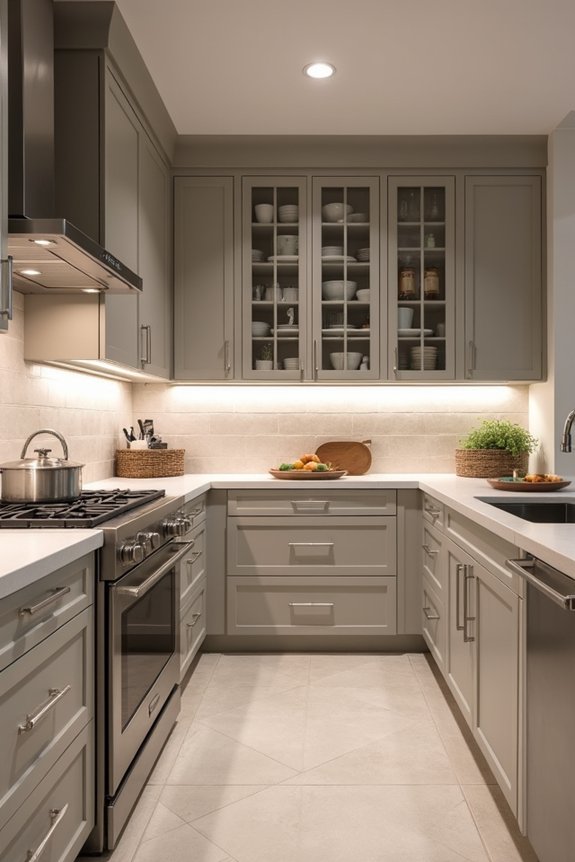
U-shaped kitchens take that L-shaped efficiency and wrap it around you—literally. This layout eliminates those frustrating dead zones where you’re constantly reaching or walking extra steps. Three walls of cabinetry and appliances create a horseshoe design that surrounds your workspace, making everything accessible without wasted motion.
| Feature | Benefit | Storage | Workflow |
|---|---|---|---|
| Three walls | Maximum coverage | Abundant shelving | Minimal travel |
| Lazy Susans | Corner access | Hard-to-reach spots | Quick retrieval |
| Pull-outs | Easy organization | Deeper cabinets | Better visibility |
| Built-ins | Cohesive design | Integrated appliances | Smooth transitions |
This layout accommodates larger countertop spans for meal prep. The enclosed design supports dishwashers, ovens, and refrigerators while maintaining clear walkways. If you’re hosting, the horseshoe aspect keeps you connected to guests while staying focused on cooking. You’re not isolated—you’re included.
Islands and Peninsulas: Hosting While You Cook
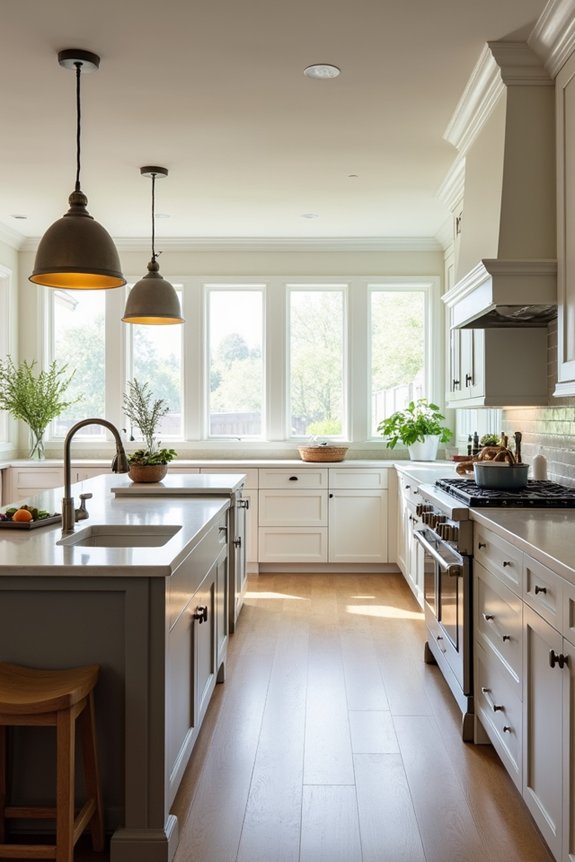
Islands and peninsulas bring people together in your kitchen. A well-placed island with seating creates a practical setup—you’re chopping vegetables while friends chat nearby. It works.
Islands and peninsulas transform kitchens into gathering spaces where cooking and connection happen simultaneously.
Why Islands Work:
- House sinks, cooktops, and storage in one central hub
- Reduce steps between your sink, range, and prep areas
- Keep frequently used tools within arm’s reach
Smart Planning Matters:
Clear pathways prevent bottlenecks. Position your island so you can move freely to the dishwasher and range without obstacles. Storage drawers underneath mean you’re unloading dishes steps away from where they belong.
That’s real efficiency. Plus, your guests actually feel included. No more solo cooking—just genuine connection while you work.
Design Your Zones: Where Appliances Belong for Real Efficiency
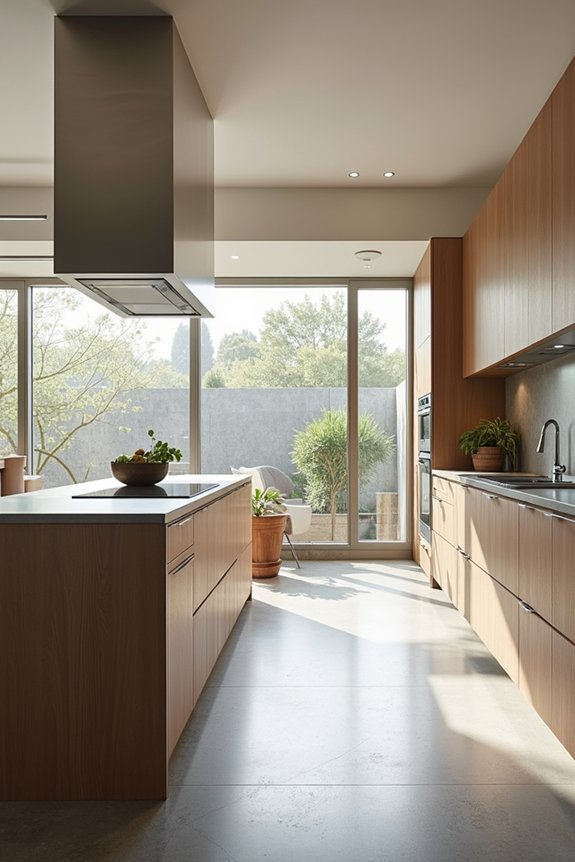
I’ve learned that your kitchen works best when you stop fighting its layout and actually work *with* it—and that’s where the working triangle comes in. This principle connects your sink, stove, and fridge in an invisible triangle (ideally 4–9 feet per side), creating a zone where you spend most of your cooking time without exhausting yourself with pointless walks across the kitchen. When you position your prep, cooking, cleanup, and storage zones strategically around these anchors, you’ll notice something shifts: dinner prep becomes less like a marathon and more like a smooth, logical process.
The Working Triangle Principle
Why do some kitchens feel like you’re running a marathon just to make dinner?
The answer lies in the Working Triangle—connecting your sink, dishwasher, and rangetop with sides between 4 and 9 feet. This isn’t just design jargon; it’s a practical foundation for smooth workflow.
When these three stations form an efficient triangle, you’re not zigzagging across your kitchen constantly. Your prep zone sits near cooking. Your cleanup flows logically from sink to dishwasher to waste bin. You’re not wasting steps or energy.
The benefit comes when you preserve open countertop space *within* the triangle for staging ingredients. Ample workspace means you’re working smarter, not harder. You’re moving intentionally, not frantically.
This principle makes cooking from exhausting to enjoyable.
Zone Placement And Proximity
I’ve learned that creating four distinct zones keeps your kitchen running smoothly. Your prepping zone needs to sit close to cooking—think knives, bowls, and spices within arm’s reach. This proximity cuts your steps dramatically.
Position your sink, dishwasher, and trash bin together. This creates a natural waste flow from prep to cleanup. The working triangle—connecting sink, fridge, and rangetop—remains your foundation.
Here’s what matters most: keep frequently used pantry essentials like oil, vinegars, and spices near your prepping zone. Place your oven close to counter space for safe hot-dish transfers.
When zones work together, you’re not constantly running between stations. You’ll work with efficiency and purpose.