You can’t see toxic chemicals in your rug, but your nose might catch them—that new-rug smell? That’s off-gassing VOCs like formaldehyde. Check labels for third-party certifications (OEKO-TEX, Greenguard Gold) that actually test for hidden nasties in fibers, backings, and dyes.
Ask manufacturers directly about PFAS, flame retardants, and synthetic latex. Skip vague “non-toxic” claims; demand written proof.
Strong chemical odors mean ongoing exposure. The real story about what’s lurking in your rug unfolds when you know where to look.
What Toxic Chemicals Hide in Rugs?
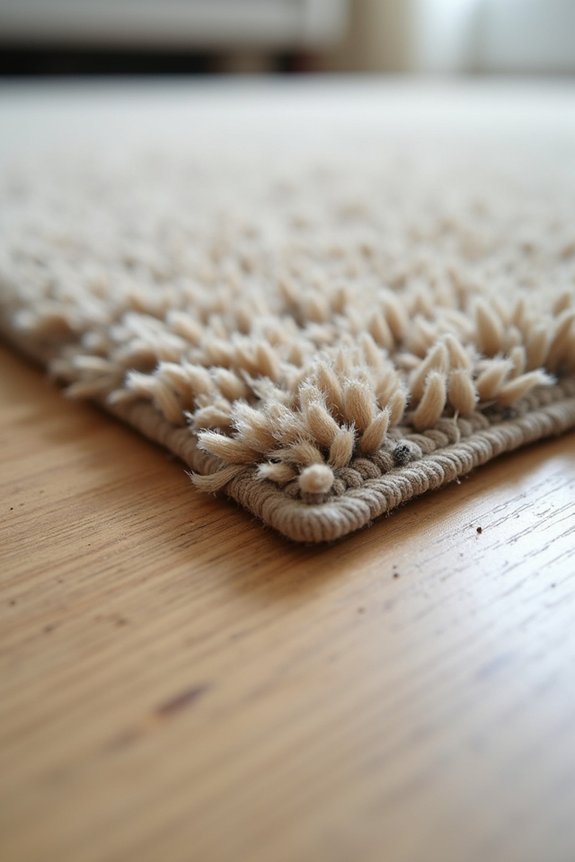
Why does your new rug smell like a chemical factory? That distinctive odor signals hidden toxins lurking in your home.
I’ve learned rugs contain sneaky chemicals we rarely think about. VOCs—volatile organic compounds like formaldehyde and benzene—off-gas continuously, triggering headaches and breathing problems. The backing underneath? Often made with synthetic latex and phthalates that pollute indoor air.
Then there’s PFAS, the infamous “forever chemicals” used for stain resistance. They don’t break down and can damage your liver and thyroid. Some manufacturers add flame retardants too, which you’re literally inhaling.
Even the colors matter. Azo dyes leave chemical residues that leach into your skin. It’s frustrating because these toxins aren’t always visible or obvious.
Understanding what’s hiding helps us make safer choices for our families.
Read Labels to Spot Toxic Chemical Red Flags
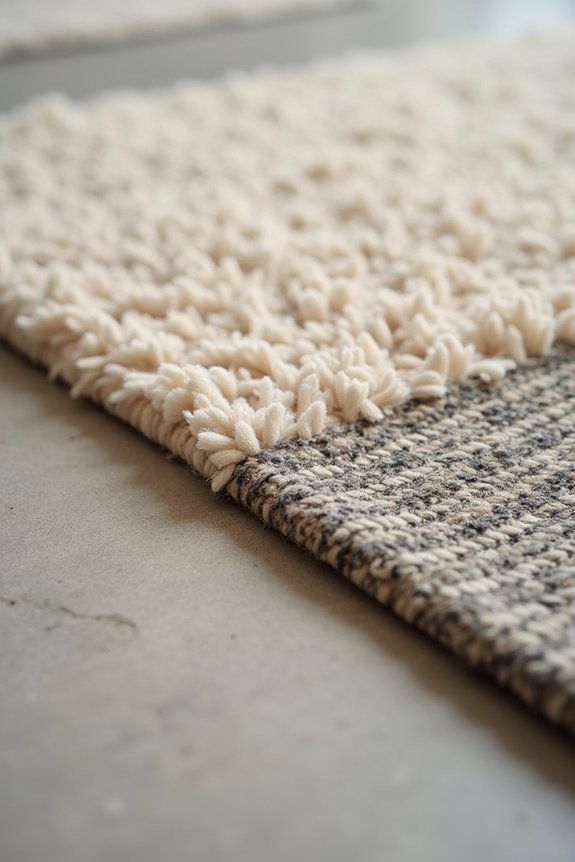
When I’m shopping for rugs, I’ve learned that the label tells me everything I need to know—or it should, anyway. You’ll want to hunt for specific third-party certifications like GOTS or OEKO-TEX Standard 100, which actually mean a company tested for harmful chemicals, versus vague promises of being “eco-friendly” (which, honestly, could mean anything). Checking whether the manufacturer discloses what’s in their backing, adhesives, and dyes matters because transparency indicates they’ve got nothing to hide.
Certification Marks Matter Most
How do you know what’s actually safe when you’re standing in front of a rug that claims to be “natural” or “eco-friendly”?
Look for third-party certifications. They’re your proof.
GOTS guarantees organic fibers with restricted toxic dyes. OEKO-TEX Standard 100 tests for VOCs, phthalates, and formaldehyde—the sneaky chemicals hiding in your rug. Greenguard Gold sets strict emission limits, keeping your indoor air cleaner.
Here’s the thing: vague labels fool everyone. I’ve seen “eco-friendly” rugs that weren’t tested at all.
Request testing documents from sellers. Ask about backing materials, glues, and flame retardants. Get explicit ingredient disclosures in writing.
These certification marks aren’t just fancy logos—they’re your guarantee that someone actually tested what you’re bringing home. That matters.
Chemical Content Transparency Signs
Most rug labels tell you almost nothing about what’s actually in them—and that’s exactly the problem. I’ve learned to hunt for specifics. Look for VOC disclosures—manufacturers should clearly state emissions levels. Seek out third-party certifications like OEKO-TEX or Greenguard Gold, which require honest testing. Dig into backing materials and glues and adhesives; avoid PVC and synthetic latex that off-gas. Check for PFAS and flame retardants—these shouldn’t be hiding in fine print. Ask about dye and stain treatments too. When a label just says “eco-friendly” without details? That’s greenwashing. Transparency means real ingredient lists, not marketing buzzwords. I always ask manufacturers directly when labels are vague. Know exactly what you’re bringing into your home.
Vague Marketing Language Warnings
Skip rugs that hide behind vague language. Instead, hunt for detailed ingredient lists. Does it mention *PFAS, VOCs, or AZO dyes*? Those specifics matter. Ask yourself: Can I find actual testing data? Are dyes and backings clearly disclosed?
When a label talks around what’s inside, that’s your red flag. Trustworthy brands spell everything out—because they’ve got nothing to hide.
Off-Gassing Odors: A Sign of Harmful Chemicals
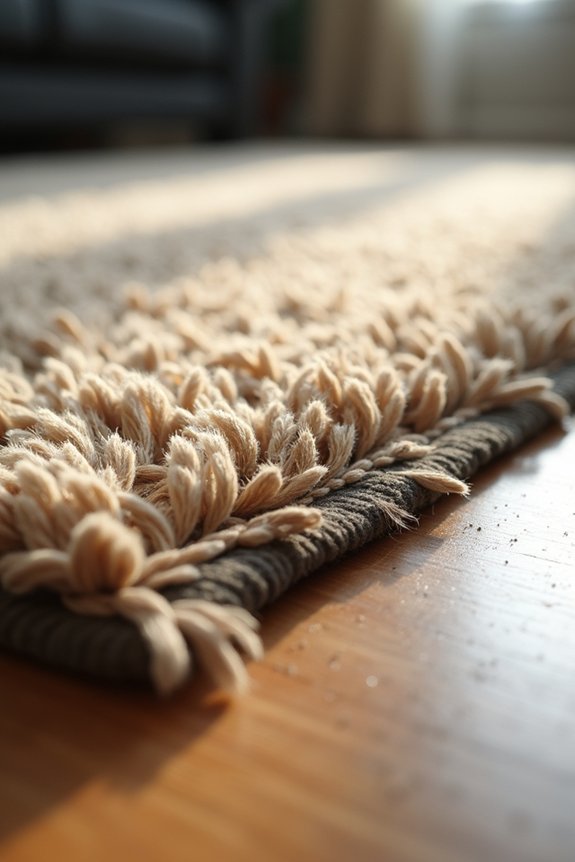
Why does your new rug smell like a chemical factory? That strong odor you’re noticing isn’t just unpleasant—it’s your indoor air quality telling you something’s wrong.
What you’re experiencing is *off-gassing*. New synthetic rugs release volatile organic compounds (VOCs) and toxic chemicals into your home as materials break down. It’s like your rug’s way of unpacking its bags, except the contents are harmful.
Here’s what I’ve learned: the intensity depends on ventilation and materials. Better airflow speeds up the process. Low-VOC or VOC-free rugs reduce exposure significantly.
Watch for these signs:
- Strong chemical smells lasting weeks
- Headaches or respiratory irritation
- Allergic reactions in sensitive family members
Don’t ignore these warnings. Your nose is detecting real toxins affecting your family’s health.
Synthetic Fibers Release More Toxic Chemicals: Here’s Why
Synthetic fibers like polypropylene and polyester pack a serious chemical punch. Their backings and adhesives contain volatile organic compounds that seep into your home’s air. I’ve noticed synthetic rugs off-gas for weeks—sometimes months—releasing that stubborn new-rug smell.
Here’s what makes them worse than natural alternatives:
- VOCs and flame retardants embedded in synthetic fibers themselves
- PFAS chemicals applied for stain resistance (they’re “forever chemicals” that don’t break down)
- Poor ventilation amplifies exposure in sealed rooms
Natural fibers simply don’t off-gas at these levels. You’re inviting chemical off-gassing into your breathing space when you choose synthetic. Understanding this difference helps you make healthier choices for your family.
Chemical Treatments That Add Toxicity: Flame Retardants and Stain Guards
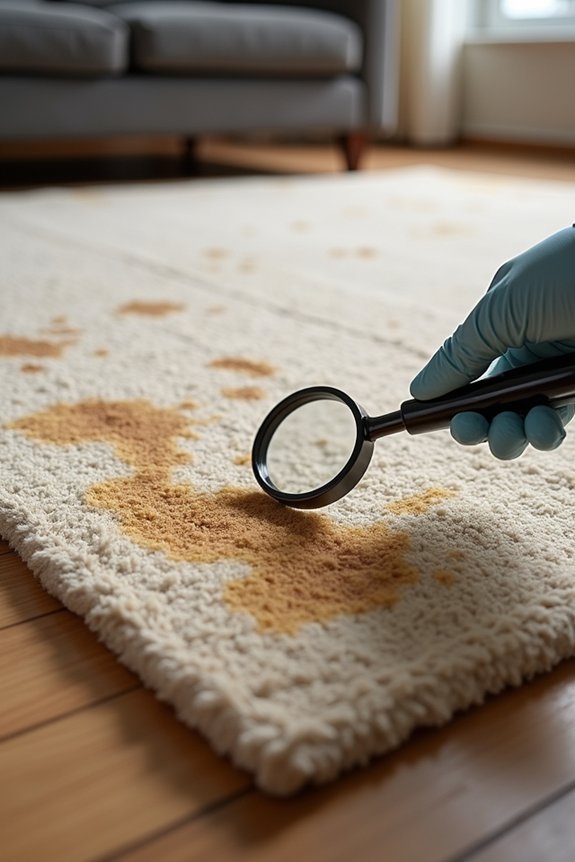
When you bring home that shiny new rug with its stain-resistant coating and fire-safe guarantee, you’re actually inviting a cocktail of chemical treatments into your living room. I’ve learned the hard way that those protective coatings hide real dangers.
Flame retardants disrupt your hormones and irritate your lungs over time. Stain guards use PFAS—those stubborn “forever chemicals” that won’t break down—linking to liver and thyroid problems. Your rug’s adhesives release formaldehyde and other VOCs into your air. Manufacturing dyes leave harmful residues too.
Here’s what matters: check labels for PFAS-free claims, request off-gassing information, and choose natural fiber rugs when possible. Your family’s health isn’t worth the convenience of stain resistance.
Check for Third-Party Certifications That Verify Safety
When I started shopping for a rug that wouldn’t make my kids wheeze, I realized that “eco-friendly” stamped on a label means almost nothing without actual proof behind it. The good news? You can look for real certifications—GOTS, OEKO-TEX Standard 100, and Greenguard Gold—that independent labs have actually tested and verified. These aren’t just marketing words; they’re your guarantee that someone’s checked the rug for harmful stuff like formaldehyde, phthalates, and sketchy flame retardants.
Certification Standards That Matter
If you’re serious about keeping your home safe from hidden chemicals, third-party certifications are your best friends—they’re the independent truth-tellers in a market full of greenwashing.
I’ve learned that three certification standards truly matter. GOTS ensures organic fiber content and restricts toxic dyes/finishes, cutting your chemical exposure substantially. OEKO-TEX Standard 100 tests for harmful substances like VOCs, phthalates, and formaldehyde—basically your safety net against invisible nasties. Greenguard Gold goes further, establishing strict chemical emissions limits that guarantee safer indoor air quality.
Here’s my honest take: vague “eco” labels mean nothing. Request actual documentation or testing results. Don’t settle for marketing fluff. These certifications represent real standards, real testing, real protection for your family’s health.
Verifying Independent Safety Testing
Don’t just take a manufacturer’s word for it. I’ve learned that independent testing separates genuine safety claims from marketing speak. Look for these trusted certifications:
GOTS verifies organic fibers and restricts toxic dyes. OEKO-TEX Standard 100 tests for harmful substances like formaldehyde and phthalates. Greenguard Gold limits chemical emissions to protect your indoor air quality.
Here’s the thing though—certifications aren’t always visible. Ask manufacturers directly for their Certificates of Compliance. Request test reports that specifically cover backings, glues, and dyes testing, not just the fiber itself. Most reputable companies will share this documentation. It’s your home. You deserve transparency.
Decoding Labels and Claims
Ever picked up a rug tag and felt like you were reading a foreign language?
I’ve been there. That’s why I look for third-party certifications—your best defense against greenwashing. Three major players deserve your attention:
GOTS confirms organic fibers and restricts toxic dyes. OEKO-TEX Standard 100 tests for VOCs, phthalates, and formaldehyde. Greenguard Gold sets strict emissions limits, protecting your indoor air quality.
Here’s the thing: vague claims like “eco-friendly” without concrete proof? Skip them. Ask sellers for actual certification documentation. Don’t just trust the label—verify that certifications cover *everything*: fibers, backings, finishes. Not just the pretty surface.
This detective work matters. Your family breathes that rug’s air daily. When you see these certifications, you’re not just buying a rug. You’re choosing peace of mind.
Check the Backing and Adhesive: Often Hidden Toxins
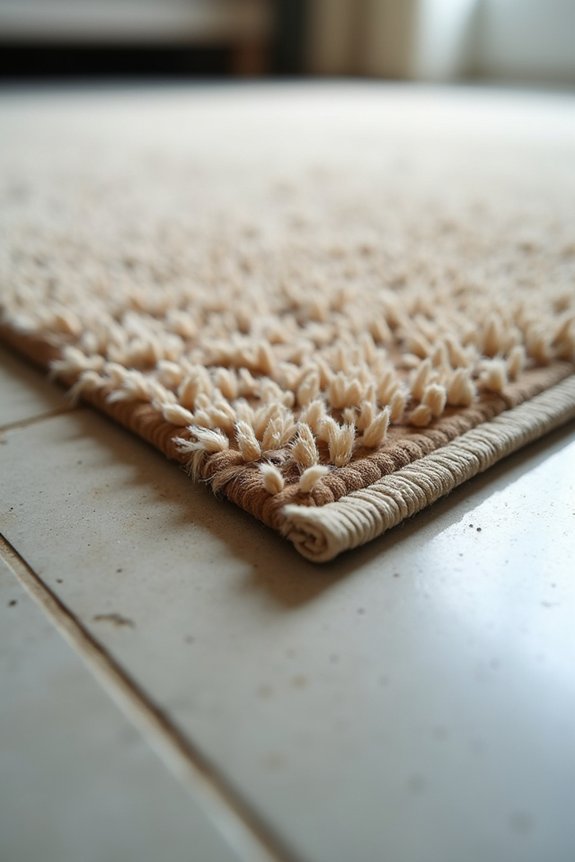
The rug backing—that layer you rarely see or think about—is where toxins like to hide. What’s underneath matters just as much as what’s on top.
Most backings contain synthetic latex, PVC, or adhesives releasing VOCs and phthalates into your home. Here’s what I recommend checking:
- Request full ingredient disclosure from manufacturers
- Avoid PFAS-treated backings that resist stains but harm your family
- Choose natural latex or jute alternatives instead
- Demand third-party testing documentation proving low emissions
The simplest approach is selecting rugs without adhesive backings—sewn or woven constructions work well. Natural latex exists but stays hidden on labels deliberately. Don’t accept vague promises. You need transparency about what’s off-gassing in your living room. Ask questions. Insist on answers.
Ask Manufacturers the Right Questions Before Buying
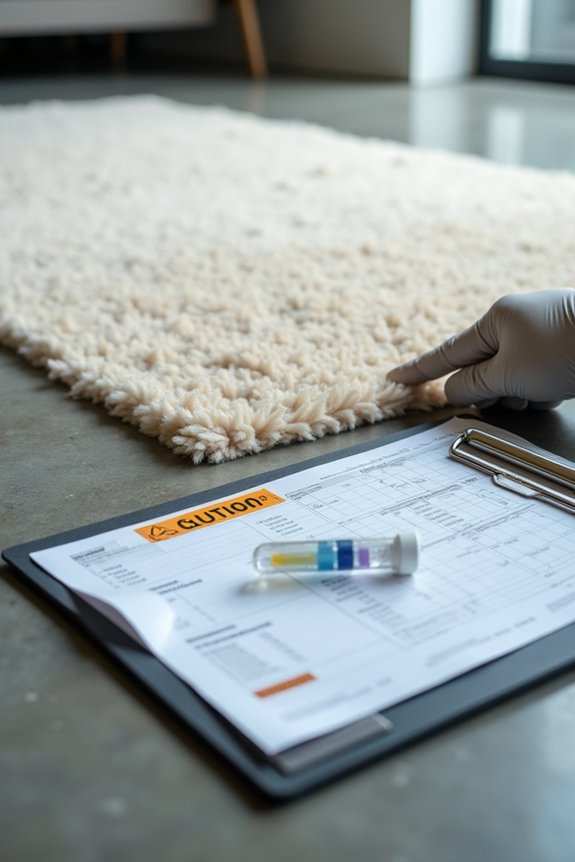
Why do so many people skip this step? It’s easier to just buy and hope for the best. But I’ve learned that asking manufacturers directly changes everything.
Start by requesting GOTS certification and proof of VOC testing. Ask whether they use PFAS-free dyes and avoid azo dyes entirely. Get specifics about backing materials—synthetic latex? PVC? Real answers matter here.
Don’t shy away from tough questions about flame retardants and pesticides. Request independent test reports. Most reputable companies welcome transparency; it’s actually something they value.
This conversation protects your family. You’re not being demanding—you’re being smart. Manufacturers respect buyers who care enough to ask.