
Your rug won’t ruin your deck overnight, but trapped moisture underneath? That’s the real problem. When rain or humidity gets trapped under a rug—especially with non-breathable pads—it creates conditions for mold, mildew, and wood rot. Natural fiber rugs like jute absorb water like sponges, making things worse. The good news: permeable pads, synthetic rugs, and regular lifting prevent most damage. Stick around to discover exactly which mistakes wreck decks fastest.
Will an Outdoor Rug Actually Damage Your Wood Deck?
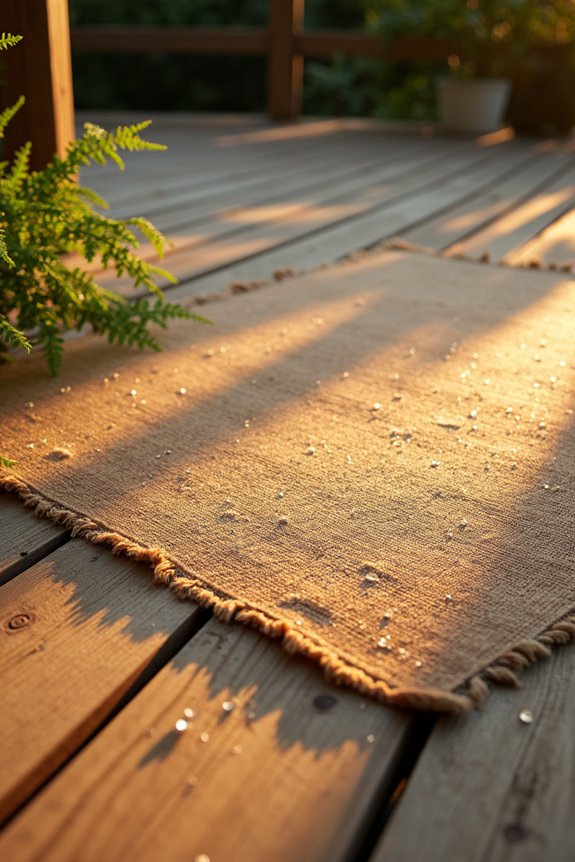
How’s your deck holding up?
I learned the hard way that an outdoor rug isn’t always a deck’s best friend. Here’s what happens: moisture gets trapped underneath, creating the perfect breeding ground for mold and mildew. Your beautiful wood deck becomes vulnerable.
The main culprits:
- Moisture retention from rain and humidity
- Natural fiber rugs absorbing water quickly
- Dyes bleeding onto wood surfaces when wet
- Heat from dark rugs potentially warping boards
I watched my neighbor’s jute rug leave permanent stains on their deck. Not fun. But here’s the good news—you’re not stuck choosing between comfort and protection. Smart strategies exist. Using breathable rug pads and rotating your rug regularly prevents most damage.
How Moisture Trapped Under a Rug Becomes Wood Rot
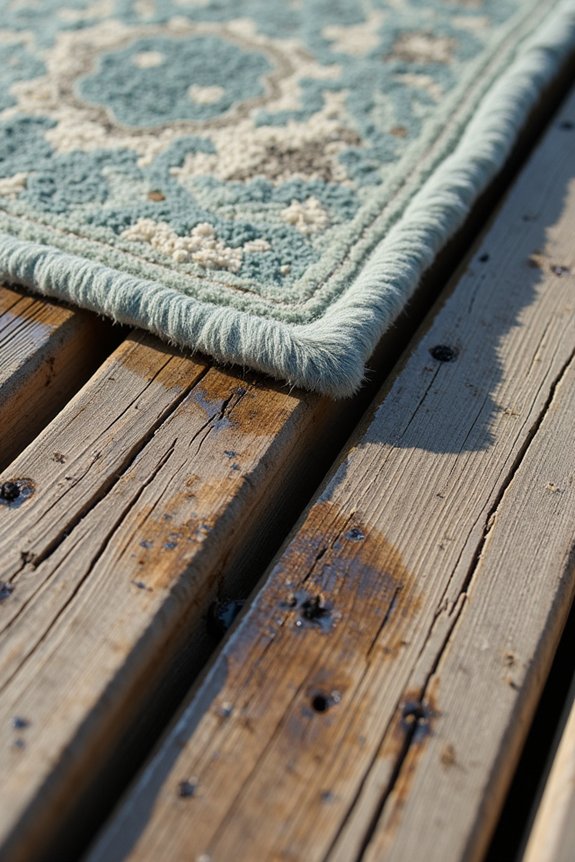
When you plop a rug on your wooden deck, you’re basically creating a moisture trap—kind of like leaving a wet towel bunched up on your bathroom floor—and that trapped dampness is where wood rot really gets going. I learned this the hard way when I noticed soft spots under my favorite outdoor rug, only to discover that fungi and decay organisms had thrived underneath while I wasn’t looking. The key to stopping this isn’t complicated: you need to allow that wood to dry by lifting your rug regularly and choosing the right materials, because once rot takes hold, you’re looking at some serious and expensive deck repairs.
Moisture Retention Under Rugs
Why do I keep finding soft, spongy spots under my outdoor rug? Moisture retention. That trapped dampness creates a perfect storm for decay beneath your deck’s surface.
Here’s what happens: moisture gets trapped under your rug, slowing evaporation and creating ideal conditions for damage.
| Rug Type | Moisture Absorption | Retention Time | Rot Risk |
|---|---|---|---|
| Natural fiber rugs | Very high | Extended | High |
| Synthetic rugs | Low | Minimal | Low |
| Poor rug pad | N/A | Prolonged | High |
| Quality rug pad | N/A | Reduced | Low |
Natural fiber rugs like jute absorb water quickly and hold it longer than synthetics. Your rug pad matters too—non-breathable pads trap humidity, reducing airflow and accelerating mold and mildew growth.
The solution? Lift your rug regularly. This simple habit evacuates trapped moisture, preventing prolonged dampness that degrades wood and protects your deck’s longevity.
Wood Decay And Prevention
Once moisture settles beneath your rug, it doesn’t just sit there—it creates conditions where your deck becomes vulnerable to fungal growth. I’ve watched wood decay happen faster than I’d like to admit. When moisture can’t escape, mold and fungus thrive, eating away at your deck’s integrity from underneath.
Here’s what I’ve learned: poor ventilation accelerates everything. Decks with gaps trap moisture longer, especially after rain. Your wood weakens silently until damage becomes visible—and expensive.
The good news? Prevention’s straightforward:
- Lift your rug regularly to let air circulate and dry the surface
- Choose breathable rug backing designed for outdoor use
- Inspect underneath monthly for dampness or discoloration
That’s it. Small habits protect your investment. I’m not saying rugs will automatically ruin your deck, but ignoring wood rot risk definitely will.
Mold, Mildew, and Discoloration: What Happens Underneath
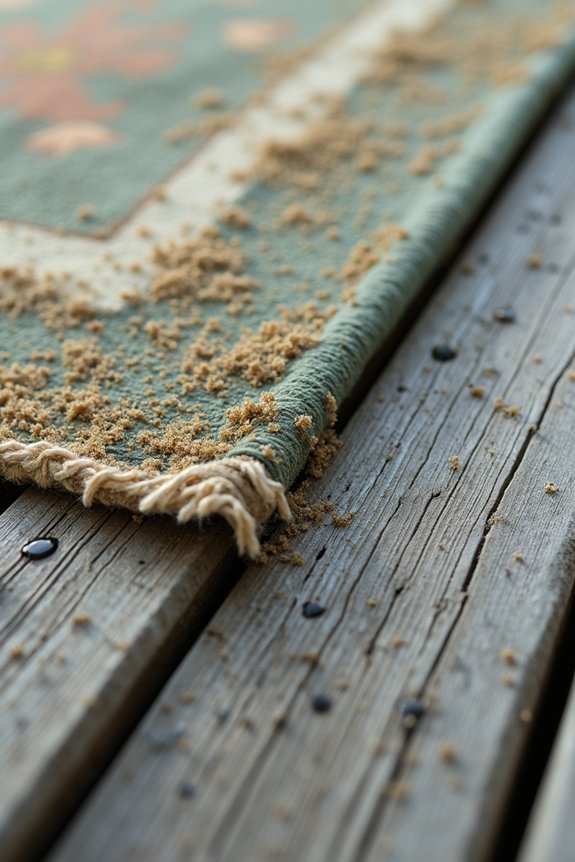
When you leave a rug sitting on your deck, you’re basically creating a perfect storm for mold and mildew—think of it like trapping moisture in a closed container where these nasty fungi can grow underneath. I learned this the hard way when I discovered dark patches blooming across my deck boards after just one rainy season, and some of my natural fiber rugs had actually started smelling musty from the inside out. But what really caught my attention: certain rug dyes can bleed onto your wood when wet, leaving permanent stains that make your deck look discolored—all from something you couldn’t even see happening below the surface.
Moisture Traps Decay
what you can’t see underneath can hurt you far more than what you can.
That trapped moisture? It’s basically an invitation for trouble. When water gets stuck beneath your rug, it creates the perfect breeding ground for mold and mildew. I learned this the hard way when I lifted my rug after a rainy week and found dark spots spreading across my deck boards.
But here’s where it gets serious. Prolonged moisture doesn’t just sit there—it causes wood rot and structural decay. Natural fiber rugs absorb water like sponges, making the problem worse. That’s why ventilation matters so much. Breathable rug pads and regular lifting help your deck dry faster, protecting it from the inside out.
Mold Growth Patterns
Mold doesn’t need much to thrive beneath your rug. When moisture gets trapped under that rug backing, you’re creating an ideal environment for mold and mildew. I’ve seen it happen—a beautiful deck slowly developing dark patches that seemed to appear overnight.
Natural fiber rugs like jute? They’re moisture magnets. They’ll hold dampness like a sponge, and mold growth spreads fast when conditions are right. Even synthetic rugs can trap humidity if they’ve got non-breathable backing.
The real danger? Wood rot. Prolonged moisture exposure doesn’t just create unsightly discoloration—it actually weakens your deck’s structure. Those hidden problems under your rug? They’re silently damaging what you’ve worked hard to build.
That’s why I lift my rug regularly after rain.
Discoloration From Dye Bleeding
those pretty colors can actually transfer onto your wood. I learned this the hard way.
When your outdoor rug gets wet, the dye bleed problem becomes real. The moisture activates those vibrant colors, and they seep right through the backing onto your deck. Natural fiber rugs like jute make this worse because they soak up water like sponges, intensifying the staining.
The fix? Choose a colorfast outdoor rug specifically designed to resist dye migration. Look for rugs labeled as colorfast—they’re treated to prevent this mess. UV exposure fades colors anyway, so investing in quality saves you from those stubborn wood discoloration marks that haunt your deck long after the rug’s gone.
Your deck will stay protected.
Natural or Synthetic: Which Rug Won’t Damage Your Deck?
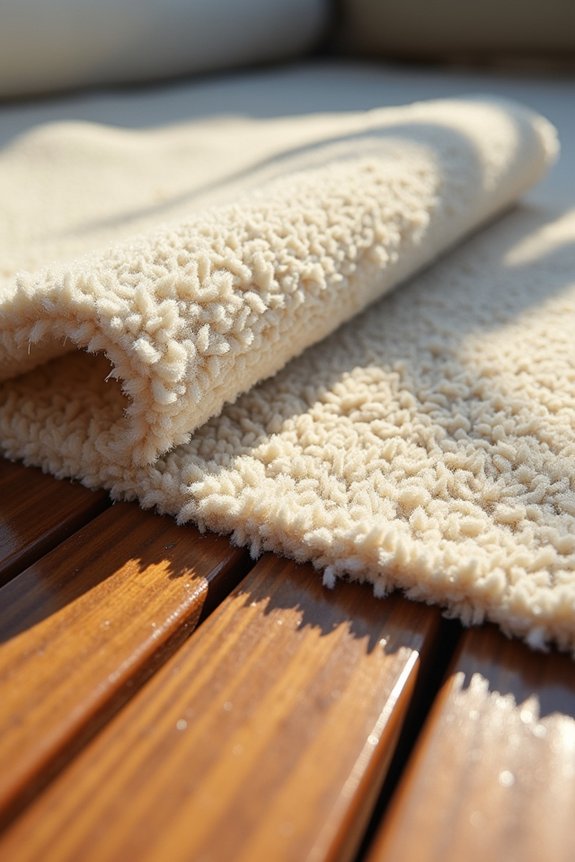
When I first put a natural fiber rug on my deck, I didn’t realize I was basically setting up a moisture trap for my wood—and I learned that lesson the hard way.
Here’s the truth: natural fibers like jute and sisal absorb moisture like sponges. That trapped water creates mold, stains your deck, and can literally rot your wood. Not ideal.
Synthetic fibers? They work well for decks. Polypropylene, polyester, and olefin resist moisture, dry quickly, and handle stains well.
| Rug Type | Moisture Risk |
|---|---|
| Jute | High—absorbs water |
| Sisal | High—promotes mold |
| Polypropylene | Low—water-resistant |
| Polyester | Low—dries fast |
Choose synthetic fibers with UV resistance to prevent fading. Add a rug pad underneath that allows airflow. Make sure your deck has proper drainage. Your deck will benefit from these steps.
How Your Deck Material Changes the Rug Damage Risk
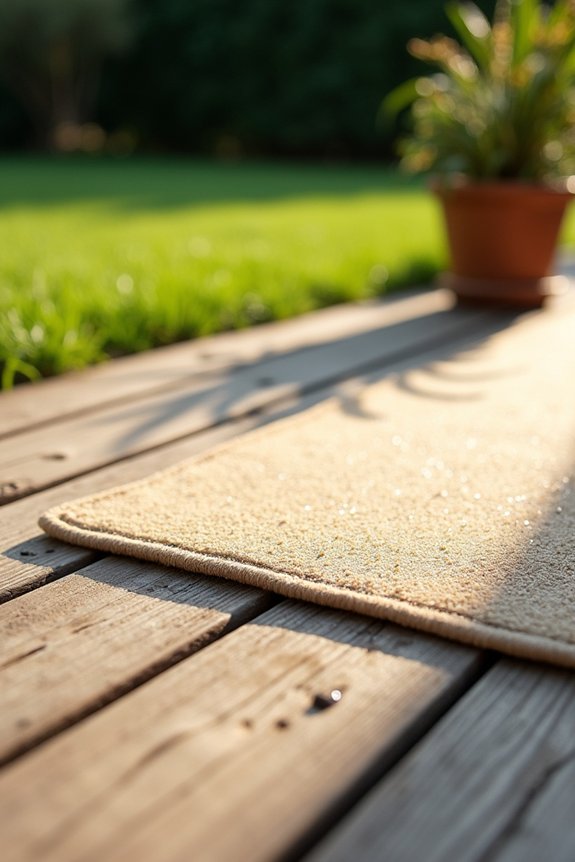
Your deck material matters just as much as your rug choice—maybe even more. I learned this the hard way when I noticed my wood deck darkening under my favorite outdoor rug.
Here’s the thing: hardwoods and pine are moisture magnets. They’ll absorb dampness from your rug and develop rot, mold, or nasty color stains. Tropical hardwoods hold up longer, but they’re not invincible. Composite decking? That’s your friend. It resists moisture way better and rarely gets moldy.
The key factor? Using breathable rug pads and maintaining airflow underneath. This combination keeps moisture from pooling on your wood decks, reducing damage significantly. Your deck material determines how vulnerable you are, so choose your setup wisely—and your deck will thank you.
Rug Pads: Why Airflow Prevents Deck Damage
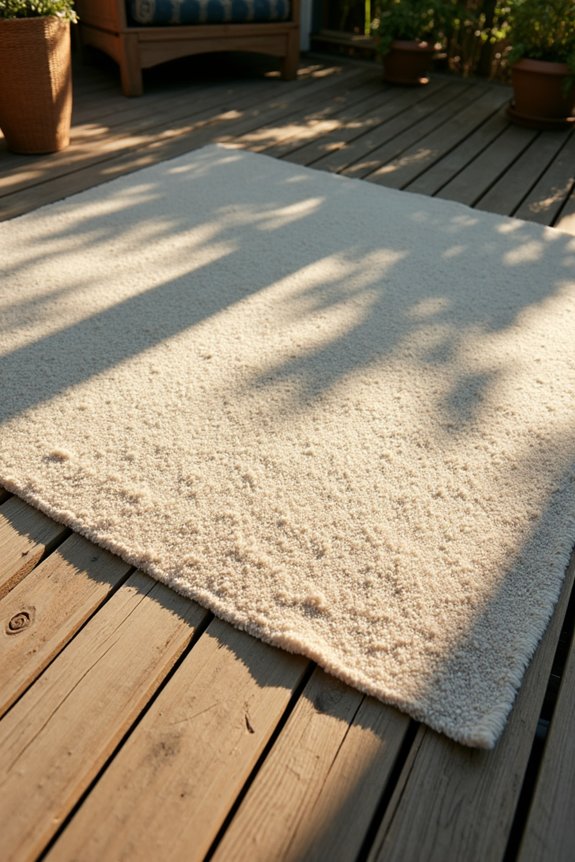
A pad with good ventilation protects your deck by preventing moisture buildup before damage occurs.
Airflow Prevents Moisture Buildup
How does moisture hide under your outdoor rug? It lurks beneath, trapped and waiting to wreak havoc on your deck. That’s where rug pads become your solution.
Quality rug pads create space for airflow beneath your rug, letting moisture escape before it becomes a problem. Without proper airflow, water from rain or morning dew sits there, soaking into wood or composite surfaces. Not ideal.
Here’s what happens with the right rug pads:
- Moisture evaporates faster through increased ventilation
- Mold and mildew can’t take hold without dampness
- Your deck stays protected longer
I’ve watched neighbors skip this step and regret it. Their decks developed soft spots and discoloration within a season. Mine? Still thriving. The difference? Breathable, UV-stabilized rug pads that let air flow freely. Deck protection doesn’t get simpler than this.
Pad Selection Protects Decking
Not all rug pads are created equal—and that’s exactly why I’m telling you to care about this choice. I’ve learned that the right rug pad becomes your deck’s best friend. Here’s why: quality pads let airflow circulate beneath your rug, which means moisture doesn’t get trapped and cause mold or wood rot. They’re designed to resist water themselves, so they don’t add dampness to your decking.
Beyond moisture control, a solid rug pad keeps your rug from sliding around. This prevents those annoying scratches that happen when rugs shift. The pad also distributes weight evenly, protecting your deck from indentations and localized damage.
Look for pads that allow air circulation and resist moisture. This combination works well with breathable rugs, providing real deck protection that lasts.
Ventilation Reduces Mold Growth
Why does mold creep up on decks so fast? Moisture loves hiding under rugs, especially when there’s nowhere for it to escape. I’ve learned that proper rug pads address this damp problem by keeping things dry.
Here’s how airflow saves your deck:
- Breathable rug pads create gaps that let air circulate underneath, preventing moisture from settling
- Lifting your rug regularly exposes the deck to fresh air, stopping mold before it starts
- Moisture-resistant pads refuse to absorb water, keeping both rug and deck drier after rain
- Enhanced airflow under rugs speeds up evaporation, protecting wood from rot damage
When I started using quality rug pads with ventilation in mind, my deck stayed healthier. Mold simply can’t thrive when air moves freely. It’s that simple.
Choose an Outdoor Rug That Matches Your Deck Type

When I first threw a beautiful jute rug on my wood deck, I thought I’d nailed the outdoor aesthetic—until I lifted it three months later to find dark spots creeping across the boards beneath.
That’s when I learned: your deck type matters. For wood decks, I now choose synthetic fibers like polypropylene or olefin. They’re water-resistant and won’t trap moisture like natural jute or sisal do.
Here’s what I look for:
- Backing that lets air flow underneath
- A quality rug pad for moisture protection
- UV-resistant properties to prevent fading
If you’ve got composite decking, skip rugs with latex, rubber, or metal grommets—they can stain and damage the surface.
Matching your outdoor rug to your specific deck type protects your investment. We’re all in this together, learning as we go.
Install Your Rug Correctly on Day One
- Use a quality rug pad underneath to create space for airflow and moisture prevention
- Check that your deck is completely dry before laying anything down—no exceptions
- Choose outdoor rug backing specifically designed for ventilation, never solid rubber
- Lift and clean regularly to spot trapped moisture before it damages your wood
Proper placement means positioning your rug where air flows freely underneath. During wet seasons, I temporarily remove mine to prevent moisture buildup. These simple steps have protected my deck while keeping my outdoor space beautiful and inviting.
Clean and Maintain Your Rug Without Damaging the Deck
Your outdoor rug can actually protect your deck—but only if you’re willing to give it some attention.
I’ve learned that regular maintenance is key. Here’s what works for me:
Lifting and Inspecting. I regularly lift my outdoor rug to check underneath. Trapped moisture breeds mold and wood rot—nobody wants that surprise.
Proper Cleaning. I use mild soap and water, then make sure it’s completely dry before replacing it. Moisture is the real enemy here.
Smart Underlayment. A breathable rug pad improves airflow between rug and deck, giving your deck protection where it counts most.
Rotation Matters. I rotate both rug and furniture periodically. This prevents concentrated wear and moisture buildup in one spot.
Seasonal Storage. During wet seasons, I store my rug indoors. It’s the simplest way to avoid moisture-related damage altogether.
Rotate Your Rug to Prevent Staining and Rot
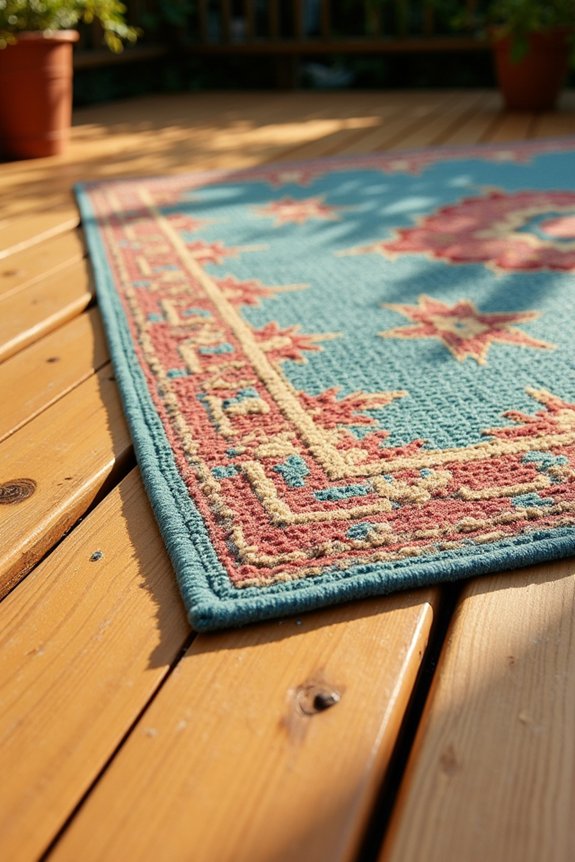
How often do you actually move your outdoor rug? I’ll be honest—I used to leave mine planted in the same spot all summer. Big mistake.
Here’s why rotating matters:
- Distributes wear evenly – You prevent those telltale footprint indentations in high-traffic areas
- Stops moisture buildup – Moving your rug regularly lets trapped moisture escape, reducing mold and rot risk underneath
- Prevents uneven fading – Sunlight hits every section equally when you rotate
- Catches problems early – You’ll spot staining or moisture pockets before they become serious damage
I now rotate mine every 1–2 weeks during peak season. It takes five minutes, and honestly? My deck stays healthier, and my rug looks fresher longer. That’s the kind of simple habit that protects your investment without demanding much effort.
Use UV-Resistant Rugs to Shield Your Deck From Fading
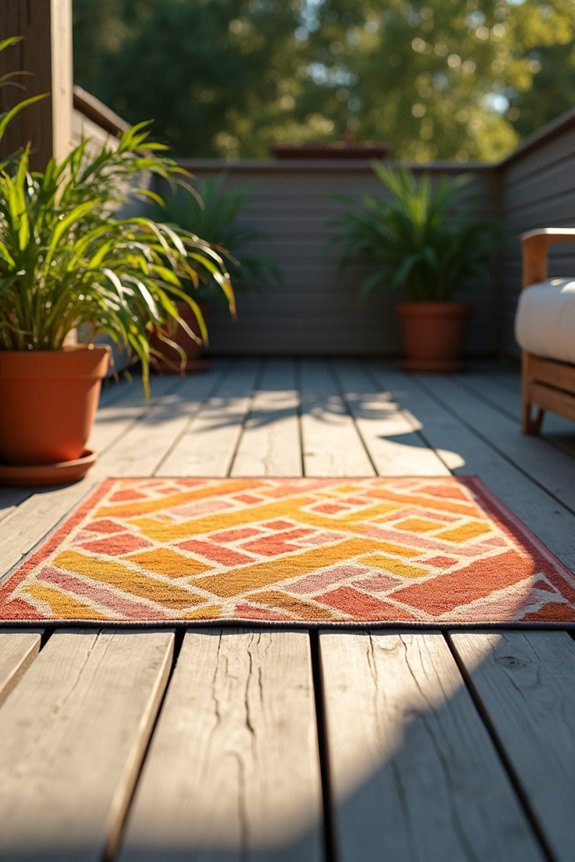
Rotating your rug every couple weeks is half the battle—but what happens when the sun’s actually beating down on it? That’s where UV-resistant rug materials save the day. I’ve watched bright outdoor rugs fade to ghostly versions of themselves without proper protection, and it’s disappointing.
Here’s the thing: UV-resistant rugs shield both your rug and your deck from sun damage. Solid-color and bright-dyed rugs fade fastest, but UV protection dramatically slows this process. You’re giving your deck protection while keeping that vibrant color you love.
The best strategy? Pair UV-resistant rug materials with shade when possible. Even limited sun exposure combined with UV resistance works well. Sure, some fading happens eventually—nothing’s perfect—but you’ll extend your rug’s life significantly while preserving your wood’s original appearance.
Remove Your Rug Before Rain, Snow, and Monsoons
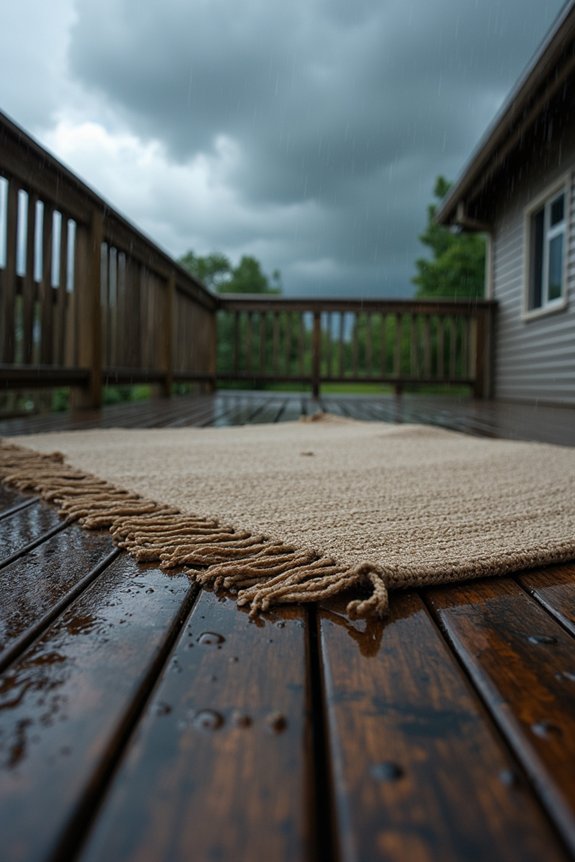
When storm clouds roll in, the thing I’ve learned the hard way: that cozy rug sitting on your deck is about to become a moisture trap.
When storm clouds roll in, that cozy deck rug becomes a moisture trap—remove it before heavy rain arrives.
I’ve watched moisture settle beneath rugs, creating the perfect breeding ground for mold and mildew. Here’s what I do now:
- Remove rugs before heavy rain, snow, or monsoon seasons
- Lift rugs during wet spells to improve ventilation and airflow
- Store rugs indoors to minimize moisture exposure to rug backing
- Allow decking to dry completely before replacing the rug
Improper backing traps water underneath, delaying how fast your deck dries. When I lift that rug during storms, air circulates freely, and my decking stays protected. After weather clears, I wait. Patience matters here. Replacing a rug on damp wood invites fungal damage nobody wants. This simple habit protects your deck.
Check for These Early Warning Signs of Deck Damage
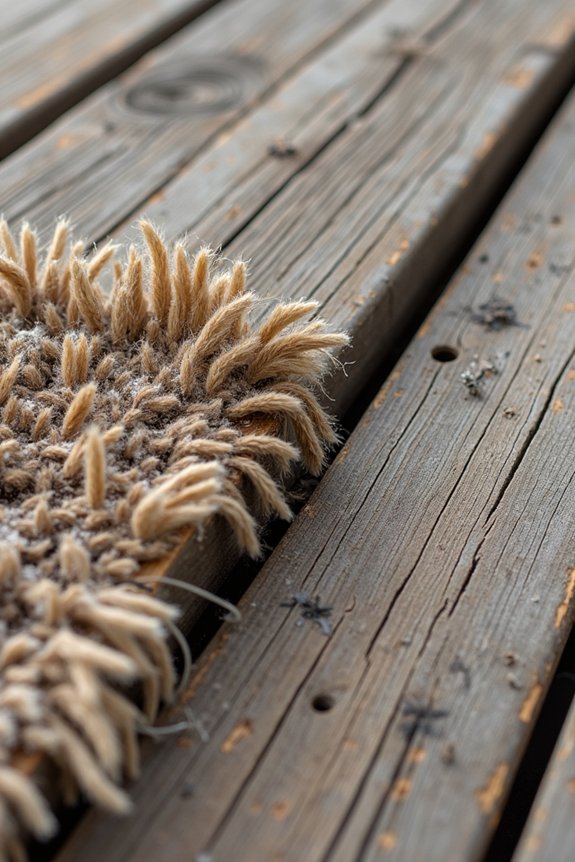
I’ve learned the hard way that rugs can trap moisture underneath, creating the perfect breeding ground for mold, mildew, and wood decay. You’ll want to peek under your rug regularly—especially after rain or cleaning—and look for dark spots, soft wood, or that telltale musty smell that signals trouble brewing. Catching these warning signs early means you can move that rug and save your deck from serious damage before it’s too late.
Visible Mold And Mildew
Why does that musty smell creep in after you’ve left a rug on your deck for a few weeks? Moisture trapped beneath your rug creates the perfect breeding ground for mold and mildew—and honestly, it’s sneaky. I didn’t notice anything until I lifted my rug and found fuzzy growth spreading across the wood.
Here’s what to watch for:
- Musty odor when you approach the rug area
- Fuzzy growth or staining on deck surface edges
- Damp patches underneath when you lift the rug
- Discolored wood that feels soft to touch
These signs mean moisture’s already causing damage. Regular inspections after rain catch problems early before deck rot takes hold. Lift that rug and check underneath.
Wood Discoloration And Staining
Your deck can end up looking like it’s got permanent stains even after you remove the rug. I’ve seen this happen too many times—those ghostly marks that just won’t fade away.
Here’s what’s actually happening underneath:
| Staining Cause | What You’ll See |
|---|---|
| Outdoor rug discoloration | Uneven fading patches |
| Wood staining from dyes | Dark, stubborn marks |
| Moisture retention | Darkened wood grain |
| UV fading transfer | Bleached spots |
| Rug backing abrasion | Micro-scratches trapping dirt |
The dyes in outdoor rugs bleed when wet, seeping deep into your wood’s surface. Combined with moisture retention underneath, you’re creating the perfect conditions for permanent damage. Add UV fading into the mix, and those color transfers become nearly impossible to remove. Those micro-scratches from the rug backing? They trap dirt and make cleaning harder. Your deck’s finish takes a real beating before you even realize what’s happening.
Structural Rot And Decay
While that staining and discoloration might look like your deck’s biggest problem, there’s something far more serious lurking underneath—structural rot that can compromise your entire deck’s safety.
Prolonged moisture trapped under your rug creates the perfect breeding ground for decay. Mold and mildew thrive in damp environments, silently eating away at your wood’s integrity.
Here’s what to inspect regularly:
- Softened, spongy boards that feel mushy underfoot
- Darkened grain patterns indicating deep moisture penetration
- Visible cracking or splintering in the wood surface
- Mold patches appearing beneath the rug
Lift that rug frequently. Check underneath. Natural fiber rugs like jute absorb moisture quickly, accelerating rot faster than synthetics. Your deck’s structural integrity depends on catching these warning signs early—before they become costly repairs.
Stop These Common Mistakes That Ruin Decks
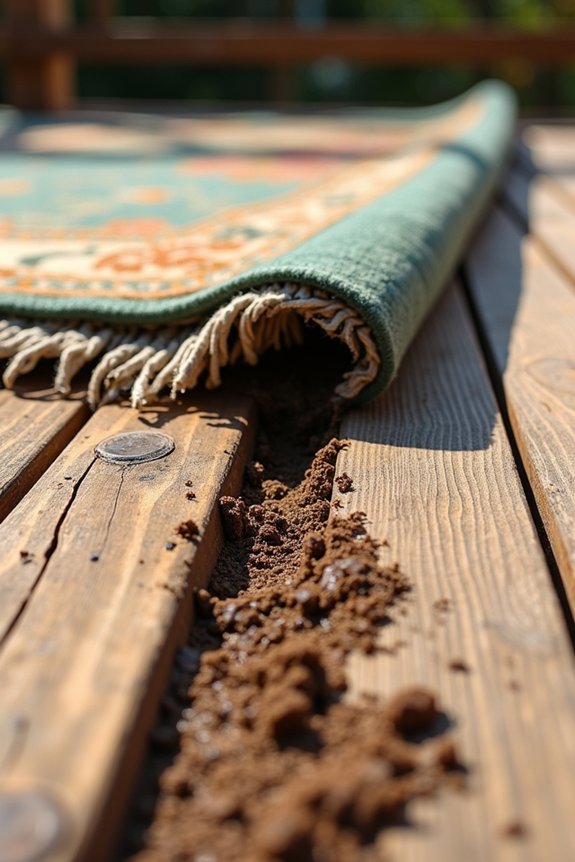
But I’ve learned the hard way that moisture trapped underneath wreaks havoc. Without proper ventilation, you’re basically creating a perfect breeding ground for mold and mildew.
Here’s what I wish I’d known:
Skip the natural fibers. Jute and sisal absorb moisture like sponges. They’ll stain your wood and rot it faster than you’d expect.
Always use an underlay. A breathable pad keeps air circulating beneath your rug, preventing moisture buildup that damages deck boards.
Dry everything promptly. After rain, lift that rug and let your deck breathe. Rotate it regularly too—prevents concentrated damage in one spot.
These simple steps? They work.
Caught Mold or Rot Under Your Rug? Here’s How to Fix It
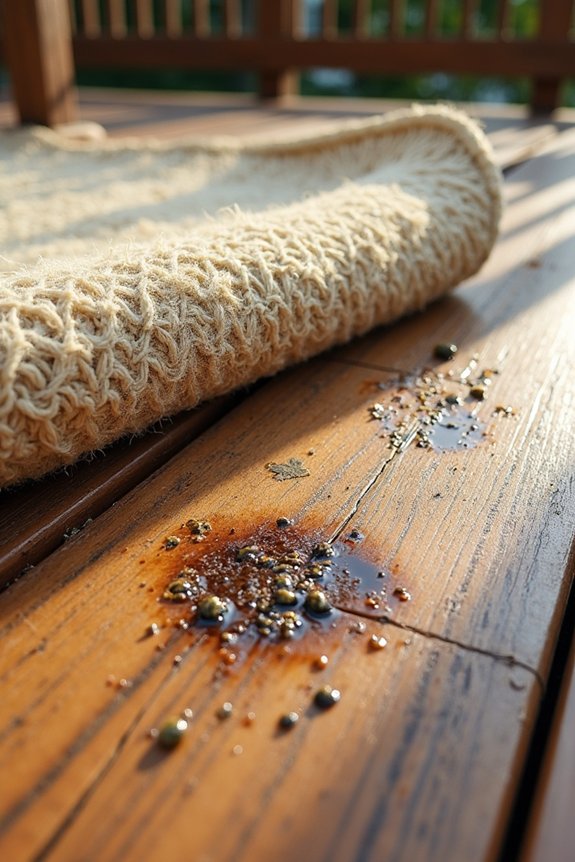
How do you know if damage is already happening beneath that rug? I’ve discovered soft spots and musty smells that indicated real problems. If you’re noticing similar signs, here’s what to do:
- Lift your rug immediately and inspect the deck underneath for discoloration or soft wood
- Check for mold — that fuzzy, dark growth signals moisture problems need urgent attention
- Air out the area thoroughly by drying everything completely before replacing anything
- Invest in a quality rug pad that breathes, preventing moisture from getting trapped
The good news? Caught early, you can stop the damage. I started using a breathable rug pad and lifting my rug weekly. Now I inspect underneath regularly, letting air circulate freely. This simple routine saved my deck and provided peace of mind.