Rugs are a practical tool for pulling a room together. Anchoring your furniture—getting those front legs on the rug—makes spaces feel organized and grounded. The right size matters too; a rug that’s too small creates visual discord. Then comes the selection process: choosing colors and patterns that suit your taste. Layer strategically, position thoughtfully around key design elements, and your room will work cohesively. There’s actually so much more to learn about making this work well.
Anchor Your Rug and Define Your Space
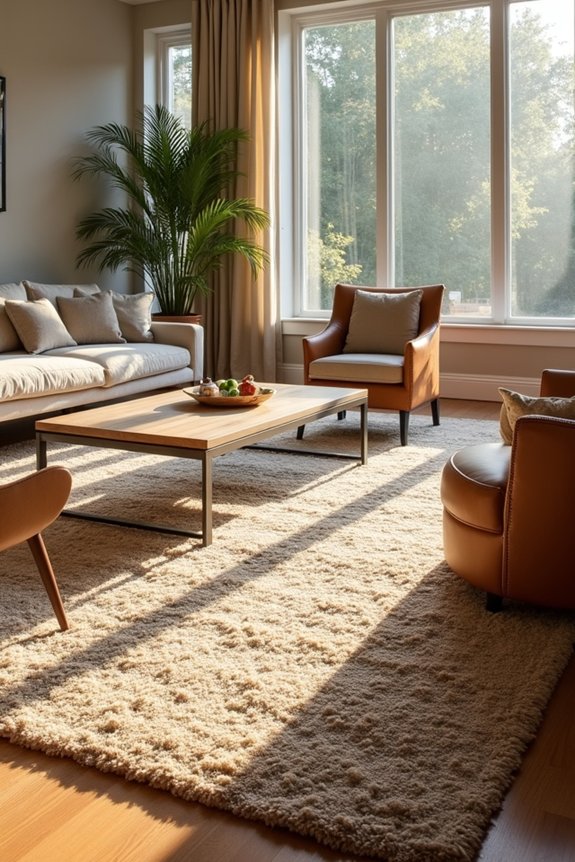
Here’s the reality about rugs—they’re basically the unsung heroes of interior design.
Anchor Your Rug and Define Your Space
I’ve learned that rug placement isn’t random. It’s strategic. When you position your rug so all front legs of your main furniture sit on it, you’re anchoring that entire zone. It grounds everything. Your seating area suddenly feels purposeful, not scattered.
Why This Matters
Space definition matters because it creates belonging. Whether you’re carving out a cozy conversation nook in an open-plan room or centering around a fireplace, your rug becomes the visual anchor that marks the area as a unified zone.
I start by identifying my focal point—a window, fireplace, or architectural feature—then build outward. Sometimes I experiment with slight angles. The result? Cohesive zones that work well together, with clear walkways preserved.
Size Your Rug to Your Room and Furniture
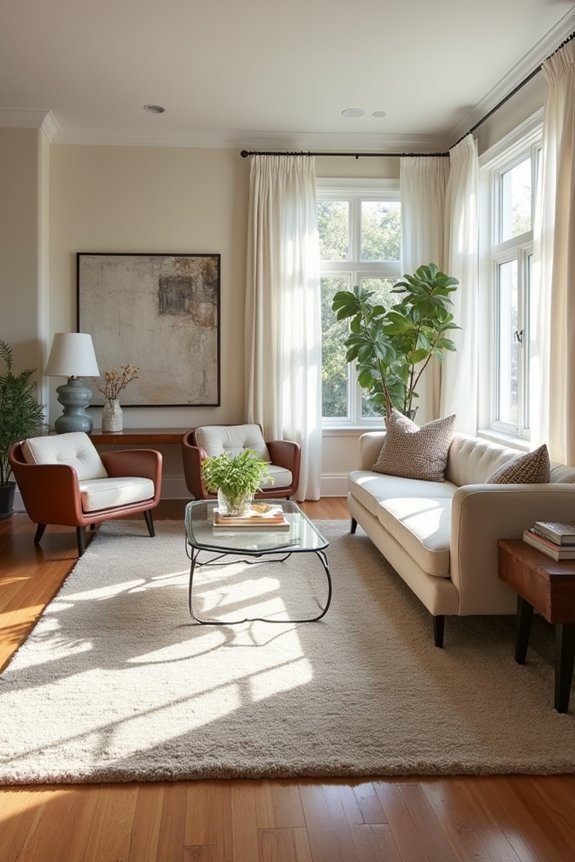
Now that you’ve anchored your space, it’s time to get the sizing right—because a rug that’s too small actually works against everything you’ve just accomplished.
Your rug size should match your room layout and furniture placement. I’ve learned this the hard way. A rug that’s too small makes spaces feel choppy and disconnected. Instead, you want your rug accommodating the front legs of your main furniture pieces, creating that unified look we’re after.
Key sizing strategies:
- Large rugs extending under most seating create defined, balanced groupings
- In bedrooms, run the rug from the bed’s foot or pull from the sides for comfort
- Odd-shaped rooms? Position your rug under part of seating to achieve visual balance
- Consider your traffic paths and focal features when determining placement
Getting this right changes your entire room’s feel.
Choose Rug Color and Pattern to Match Your Style
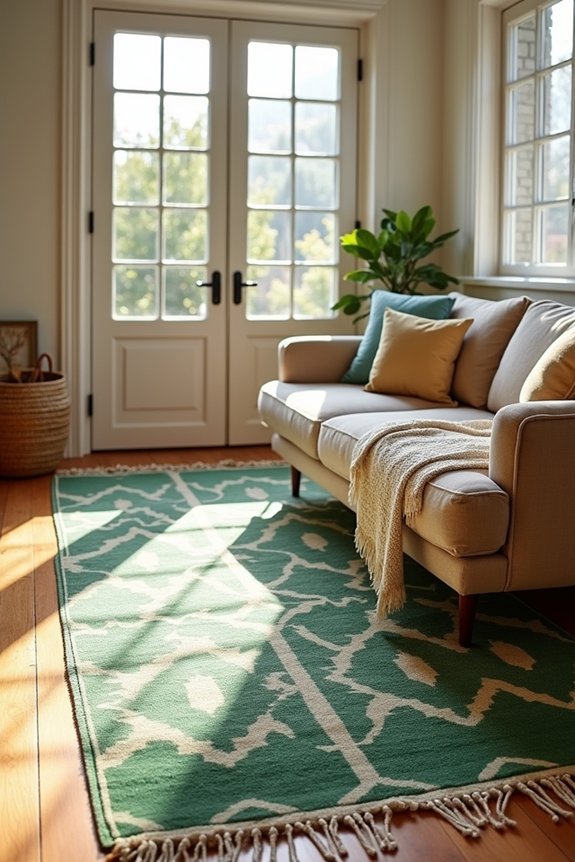
What does your rug say about your space?
Your rug sets the tone for everything else. Choosing the right color coordination matters—it’s the difference between a room that feels deliberate and one that feels random.
| Style | Best For | Color Pick | Pattern Type | Tip |
|---|---|---|---|---|
| Bold & Energetic | Making statements | Jewel tones | Geometric | Pair with neutral walls |
| Calm & Balanced | Letting other features shine | Soft neutrals | Subtle texture | Supports, doesn’t dominate |
| Coastal Vibes | Relaxed living | Blues & whites | Stripes | Complements existing furniture |
| Layered Depth | Adding dimension | Neutral base + accent | Striped overlay | Creates visual interest safely |
| Cohesive Design | Tying rooms together | Coordinated hues | Patterned rug | Anchors furniture zones |
Start with a patterned rug that speaks to you. Then layer thoughtfully—keeping other patterns subtle prevents visual chaos. Your space should feel like you.
Place Your Rug to Balance the Room and Keep Traffic Moving
Once you’ve picked your rug, placement becomes everything—and I’m talking about the difference between a room that flows well and one where you’re constantly stepping around furniture like you’re steering an obstacle course.
Here’s what works for rug placement:
- Center on focal points like fireplaces or large windows to create intentional balance
- Anchor your seating with all front legs on the rug to unify the space
- Define zones in open-plan rooms without blocking walkways
- Test different angles to frame furniture while preserving clear traffic flow
Your rug grounds the room’s main conversation area while keeping pathways open. In odd-shaped layouts, extend the rug under key pieces unevenly to maintain visual harmony. Your rug shouldn’t feel like an afterthought—it’s the foundation that ties everything together.
Layer Rugs to Add Depth and Visual Interest
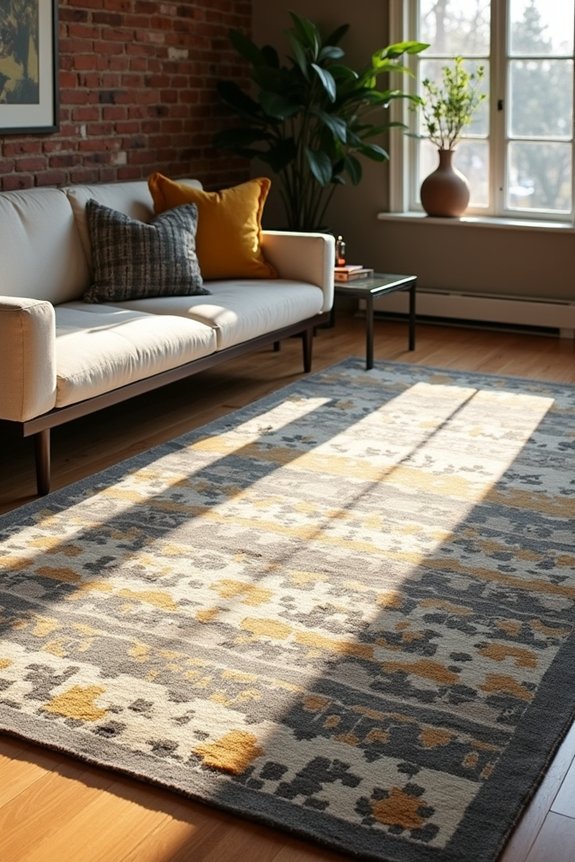
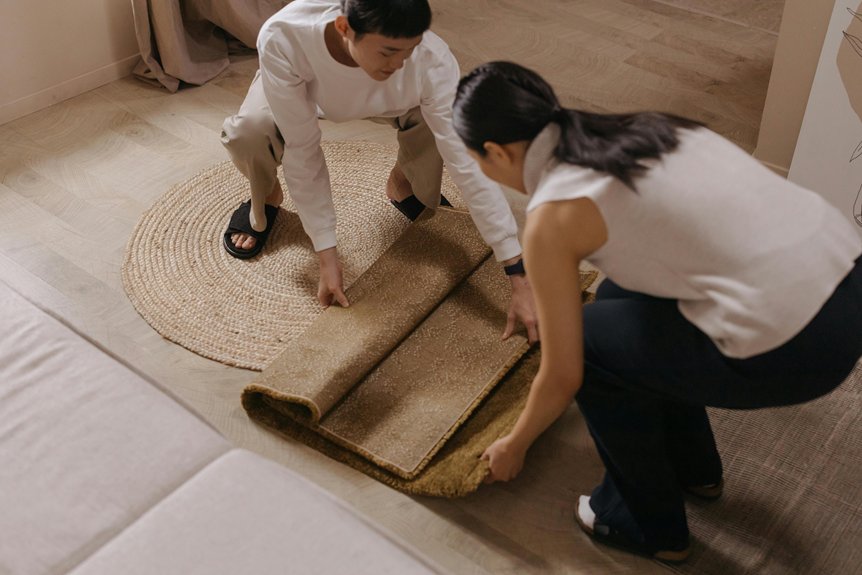
I place a larger neutral rug as my base, then top it with a smaller patterned one. This technique adds dimension to a space—and honestly, it’s saved me when spills happened on my good rug.
The balance matters. I keep one layer dominant in color while the other adds subtle interest. No clashing patterns here. I align front edges with furniture lines and preserve clear walking paths.
The result? A rug arrangement that grounds my room and shows deliberate design choices. Layering isn’t complicated—it’s just smart decorating that creates the comfortable, well-designed space we all want.
Protect and Warm Your Floors While Completing Your Design
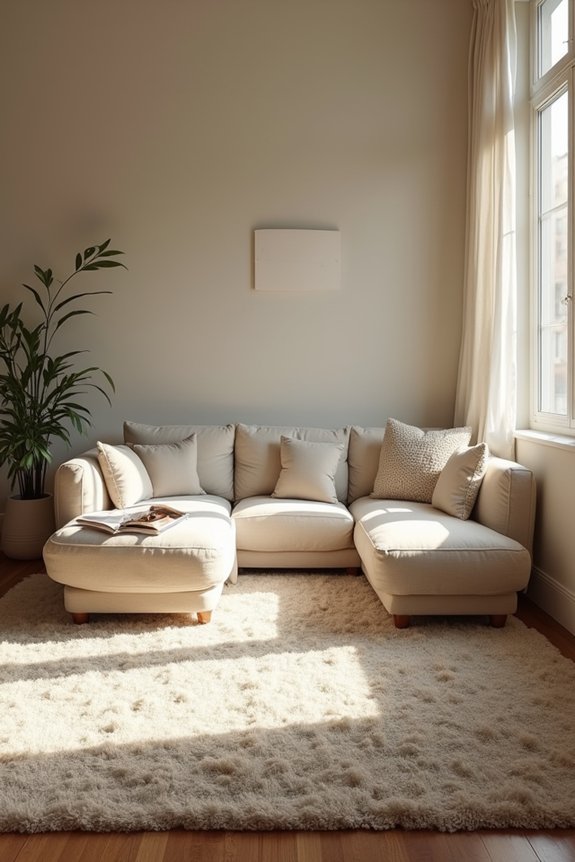
Beyond the style and pattern you’ve chosen, your rug’s got a job to do—and it’s one that’ll save your floors (and your wallet). I’ve watched hardwood floors get scratched in high-traffic zones, and honestly, it’s heartbreaking. A quality rug shields your flooring from daily wear while adding comfort underfoot.
Here’s what makes rugs work harder than they look:
- Scratch protection in living rooms and hallways where foot traffic never stops
- Noise reduction that quiets echo-filled spaces
- Thermal comfort on cold tile or stone—especially useful for bathrooms
- Safety features like rubber-backed options that prevent slipping
Choose plush wool for softness or durable synthetics for practicality. Your decor choice becomes your floors’ best friend, creating spaces that feel both beautiful and protected. That’s what thoughtful rug selection delivers.