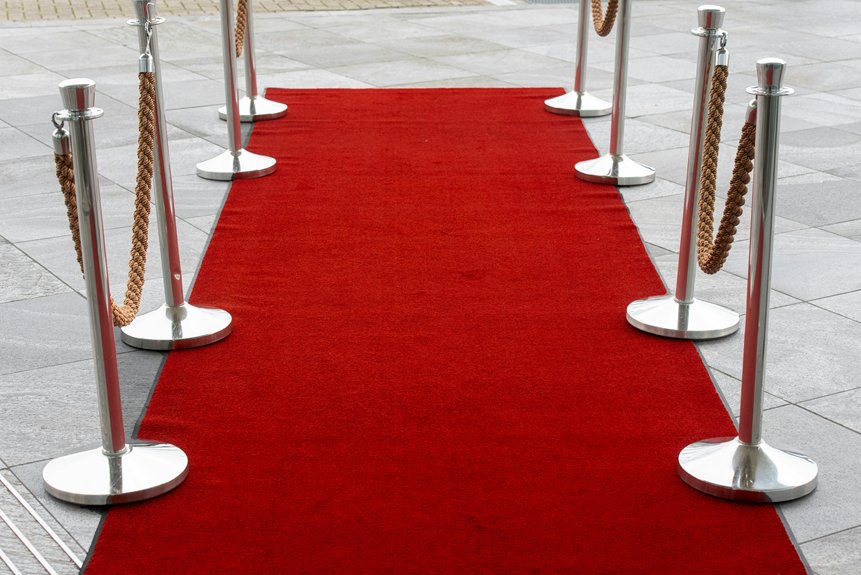
The best rugs for high-traffic areas are wool, low-pile synthetics, and dense cotton flatweaves.
Wool rugs develop a beautiful patina while resisting foot traffic damage—their natural lanolin protects against stains. Nylon and polypropylene blends offer affordable durability without matting. Skip plush and silk entirely; they shred quickly. Pair any rug with a quality non-slip pad, vacuum twice weekly, and rotate seasonally. The specifics of construction, materials, and maintenance routines determine whether rugs last years or months.
Why Standard Rugs Fail in High-Traffic Areas
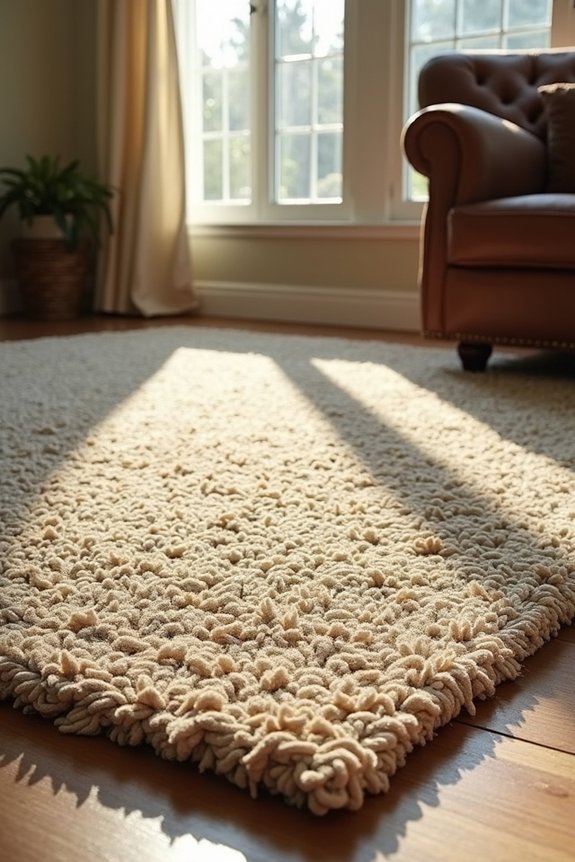
Ever wonder why that gorgeous plush rug you loved started looking flat and tired after just a few months?
I’ve been there. Here’s the thing: standard rugs aren’t built for the punishment high-traffic areas deliver. That luxurious shag or thick pile you adored? It mats down fast. Silk and delicate fibers wear thin almost immediately—they can’t handle constant footsteps.
Low-pile alternatives sound promising, but loosely constructed ones crush just as easily. Quality wool rugs shed more when placed in busy hallways or entryways, demanding constant vacuuming.
The real problem? Most rugs lack the dense weave needed for durability. High-pile styles flatten visibly, losing both comfort and appearance. Your entryway becomes less inviting and more worn-looking.
That’s why we’re here—to find rugs that actually survive daily life.
Materials That Actually Survive Heavy Foot Traffic
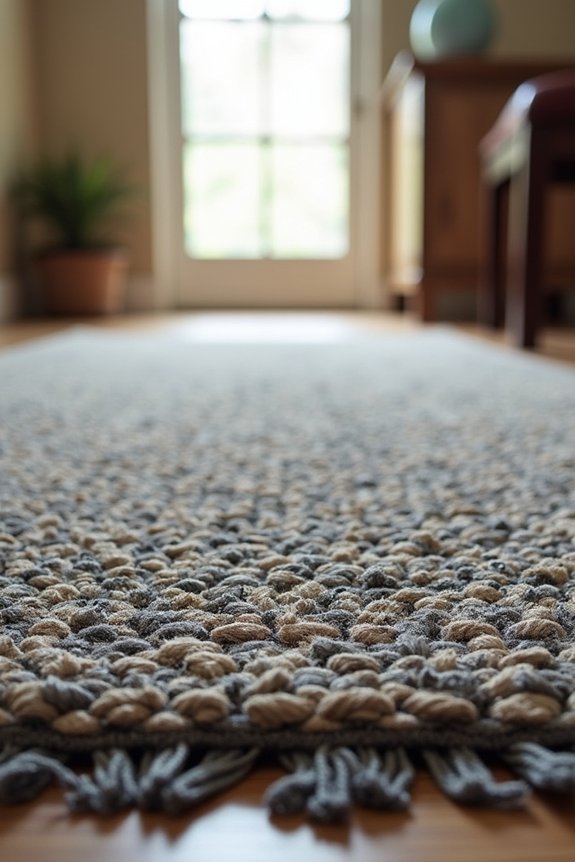
I’ve learned that certain materials genuinely hold up where others crumble. Here’s what actually works for high-traffic rugs:
- Wool’s natural lanolin shields against stains like an invisible bodyguard
- Nylon fibers resist fading and wear
- Polypropylene blends deliver tough durability at a reasonable cost
- Dense weaves (flatweave, hand-knotted) resist matting that makes rugs look tired
- Wool-cotton or wool-polyester blends age well while staying resilient
Rugs made from these materials don’t just survive—they thrive. When you’re choosing high-traffic rugs, think low-pile and densely woven. I’ve watched quality wool rugs outlast cheaper options by years. Synthetic fibers offer affordable toughness, while blends give you the best of both worlds. Your hallway deserves a rug that actually performs.
What to Avoid: Plush, Silk, and Thick-Pile Rugs
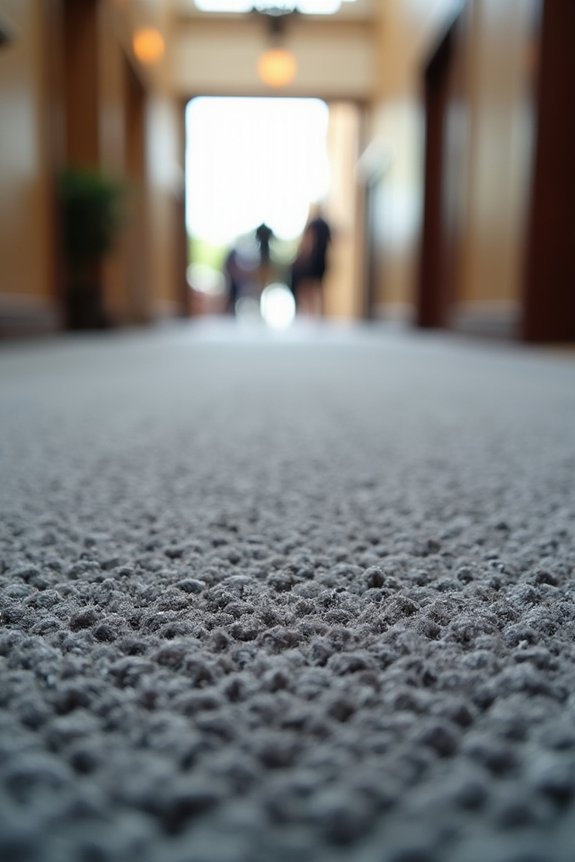
I’ve learned the hard way that plush rugs with their soft, luxurious feel are actually your worst enemy in busy spaces—that gorgeous texture mats down faster than you’d think, and footprints become permanent reminders of poor choices. Silk and viscose rugs might look appealing in a showroom, but they’re basically fancy decorations that’ll shred under regular foot traffic like tissue paper. Then there’s the thick pile trap: anything over three-quarters of an inch tall acts just like plush, crushing and matting until your beautiful rug looks tired and worn within months.
Plush Rugs Mat Easily
- They mat down fast – Your beautiful texture flattens into worn patches
- Cleaning becomes a nightmare – Dirt gets trapped deep in those fibers
- They wear unevenly – Pathways become visibly darker and thinner
- Your investment deteriorates quickly – Premium plush rugs lose their appeal within months
- Footprints linger – Every step leaves permanent marks in the pile
I learned this the hard way. My living room plush rug looked good for exactly three weeks. Then foot traffic created highways of matted fibers that no vacuum could fix. Save plush rugs for bedrooms where you actually want that soft feel without the constant damage.
Silk and Viscose Fragility
Why do silk and viscose rugs look so appealing in showrooms but fall apart in your living room?
These materials simply can’t handle what your family throws at them daily. I learned this the hard way after placing a gorgeous silk runner in my hallway. Within months, it looked worn and tired.
Here’s what happens: Silk fragility means delicate fibers break down quickly under foot traffic. Viscose wear accelerates even faster because the material softens when it takes a beating. Both share a serious durability problem—they’re basically asking for trouble in busy spaces.
Think of it this way: silk and viscose are like fancy silk scarves. Beautiful? Absolutely. Practical for high-traffic zones? Not even close. They’ll show footprints, develop matting, and fray at edges within months.
Reserve these for low-traffic areas where they’ll actually last.
Thick Pile Height Drawbacks
Ever notice how plush rugs look impossibly luxurious in stores but turn into matted disasters within weeks? That’s pile height working against you in high traffic areas. Rugs with pile heights of 0.75 inches or more? They’re maintenance nightmares.
Here’s why thick piles fail you:
- Traps dirt like a magnet—dust settles deep, resisting vacuums
- Flattens permanently—footsteps create permanent highways through fibers
- Requires constant cleaning—weekly vacuuming becomes your new reality
- Costs multiply—professional cleaning bills add up fast
- Looks worn quickly—that plush texture vanishes in months
I learned this the hard way. My hallway rug went from showroom-perfect to shabby in one season. Thinner, denser pile heights? They’re your allies. They resist matting, shed dirt easily, and actually look better longer. Choose a rug that performs, not one demanding endless upkeep.
Wool: Resilient and Soft for Busy Homes
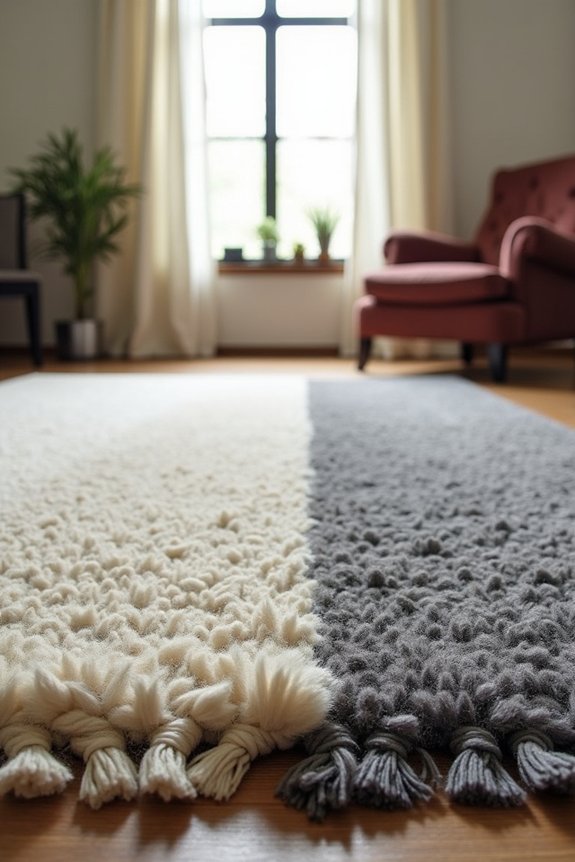
I’ve found that wool rugs are like the reliable friend who shows up to every party—they’re soft underfoot, yet tough enough to handle whatever life throws at them, thanks to natural lanolin that actually repels stains and dirt before they settle in. Their dense weaves (especially hand-knotted and low-pile varieties) mean they’ll hold their shape through years of foot traffic without matting down or looking worn out. The best part? You’re not sacrificing comfort for durability—wool gives you both, plus it develops personality over time with regular vacuuming and the occasional professional cleaning.
Natural Stain Resistance Benefits
Have you ever watched a spill happen in slow motion, only to see it bead up on your wool rug instead of soaking in? That’s lanolin at work—a natural oil in wool fibers that gives your rug built-in stain resistance.
Here’s why wool works well for busy homes:
- Spills stay on the surface longer, giving you time to blot
- Dirt particles don’t embed easily, keeping your rug looking fresher
- Wine, coffee, and juice bead up like tiny water droplets
- You’ll feel less stressed about accidents with kids and pets
- Your rug ages well while resisting everyday wear
This natural protection means you’re not constantly battling stains. Your wool rug becomes a practical, forgiving partner in your home—one that actually improves over time.
Durability Through Dense Weaves
What makes a rug stay put under the constant shuffle of footsteps, the drag of furniture, and the daily chaos of a busy household? I’ll tell you: dense weaves. A wool rug with a tight, compact weave resists matting and crushing like nothing else can. Think of it as armor for your floors.
When fibers pack closely together, they bounce back. Your rug won’t flatten into ugly pathways where everyone walks. The dense weave keeps everything locked in place, maintaining that even texture season after season. Plus, wool’s natural structure means shorter, compact piles rebound quickly after wear.
Hand-knotted wool and machine-made dense options? Both perform well in high-traffic zones. They’re built for families, pets, and messy life happening daily.
Maintenance For Long-Term Wear
Now there’s the thing: a dense weave keeps your rug looking sharp, but only if you’re willing to give it a little love. I’ve learned that consistent care makes a real difference between a rug that ages beautifully and one that deteriorates.
Here’s what I do to keep mine thriving:
- Vacuum 2–3 times weekly to prevent dirt from settling into fibers
- Spot-clean spills immediately before they soak in and set permanently
- Schedule professional cleaning every 1–2 years to refresh deep-down freshness
- Use a quality rug pad underneath to prevent slipping and protect floors
- Watch for initial shedding, which naturally decreases with regular use
You’ll notice your wool rug develops character over time. That’s patina—the mark of a rug that’s truly living in your home and earning its place in your busy family’s story.
Cotton Flatweaves: Durable and Washable
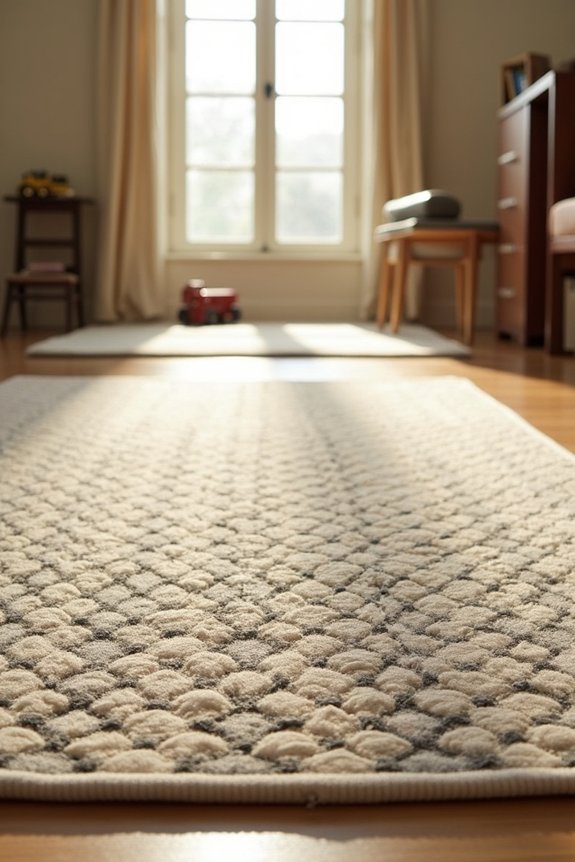
If you’re tired of treating your rug like a museum piece—afraid to let anyone walk on it—cotton flatweaves might be exactly what you need. I’ve found that these cotton rugs combine durability with practicality in ways that actually fit real life.
Here’s what makes flatweave construction so appealing: the tight weave resists matting and crushing from constant foot traffic. You won’t see those frustrating compressed paths after a few months.
Flatweave construction’s tight weave resists matting and crushing, so no more frustrating compressed paths.
Why I recommend them:
- Machine washable (yes, really!)
- Soft underfoot without sacrificing durability
- Cost-effective compared to wool or silk
- Perfect for busy households
Consider the Hook & Loom Flatweave Eco Cotton Rug or Dash & Albert Herringbone Woven Cotton Rug. Both deliver serious wear resistance while staying easy to maintain. A rug you can actually live with.
Synthetic Rugs: Stain-Resistant Workhorses
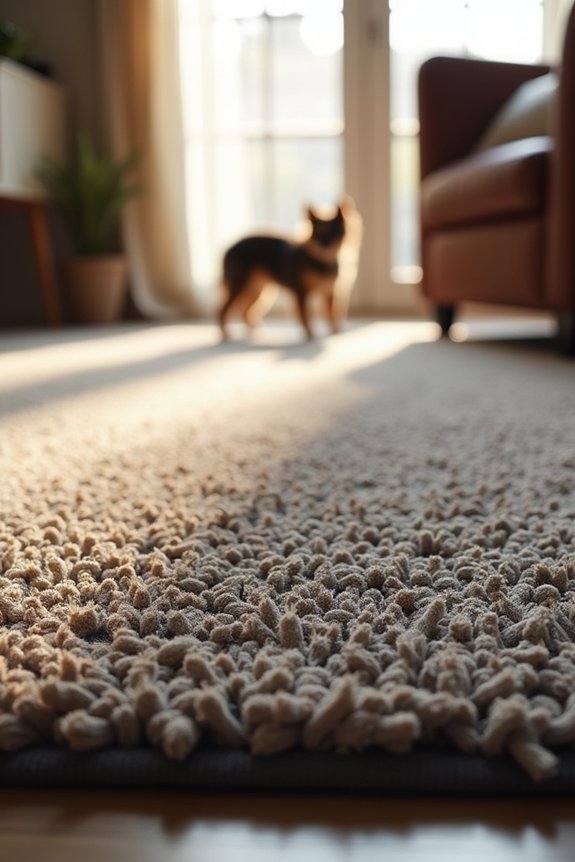
When I’m faced with spills in my entryway or muddy paw prints on my living room floor, I reach for synthetic rugs—and here’s why: they’re *built* to handle whatever life throws at them at an affordable price. Nylon and polypropylene are like the reliable friends who show up every time, resisting stains and fading while staying easy to clean (seriously, a quick vacuum or spot treatment does wonders). You’re getting durability and affordability rolled into one, which means you can stop stressing about accidents and actually enjoy your home.
Durability Meets Affordability
Why do so many families with kids and pets choose synthetic rugs? Simple. They’re built tough and cost less than natural fiber alternatives.
I’ve watched nylon and polypropylene rugs survive spills, muddy paws, and countless footsteps. Here’s what makes them practical:
- Stains vanish with basic cleaning—no panic required
- Colors stay vibrant even after years of heavy use
- Your budget stays intact with affordable pricing
- Maintenance is straightforward compared to natural fibers
- Peace of mind knowing accidents won’t ruin your investment
Brands like Safavieh designed these rugs for busy families seeking durability at reasonable prices. Nylon resists fading well. Polypropylene shrugs off moisture like a champ.
Dense, low-pile weaves prevent matting in hallways and living rooms. You’re not sacrificing quality; you’re choosing smart. That’s the real value here.
Easy Cleaning And Maintenance
Now here’s where synthetic rugs really shine—because let’s face it, durability means nothing if you’re spending hours scrubbing every time someone tracks mud through your entryway.
I’ve learned that low-pile synthetic rugs are practical for busy households. Their short fibers resist matting and make vacuuming effortless. When spills happen—and they will—you’re not panicking. Nylon and polypropylene literally resist stains and moisture absorption, so spot-cleaning becomes quick work.
What I love most? No special products needed. A damp cloth handles most messes. For tougher spots, mild soap and water work perfectly. Many synthetics are machine-washable too, meaning deep cleaning doesn’t require professional help or complicated processes.
Your easy-clean rug means more time with family, less time on maintenance. That’s the real benefit.
Jute and Sisal: Strong and Affordable
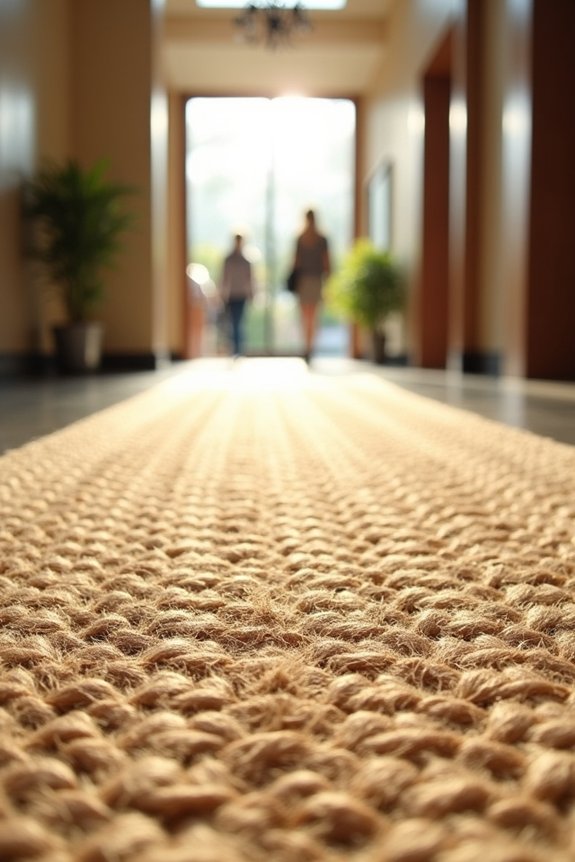
How do you find a rug that won’t fall apart after a season of foot traffic? I’ve discovered that jute and sisal rugs work well for busy homes like mine. These natural fibers are tough, affordable, and built to handle whatever life throws at them.
Why They Work:
- They resist matting and collapse under constant wear
- Low to mid-pile designs mean fewer stains and easier vacuuming
- Perfect layering base for creating your unique style
- Cost-effective without sacrificing durability
- Ideal for entryways, hallways, and living spaces where you need real strength
Sure, they’re coarser than some alternatives and require prompt stain attention. But honestly? That trade-off is worth it when you’re not replacing rugs every year. Many others have moved away from the constant replacement cycle with these rugs.
Why Pile Height Matters: Stick to Low
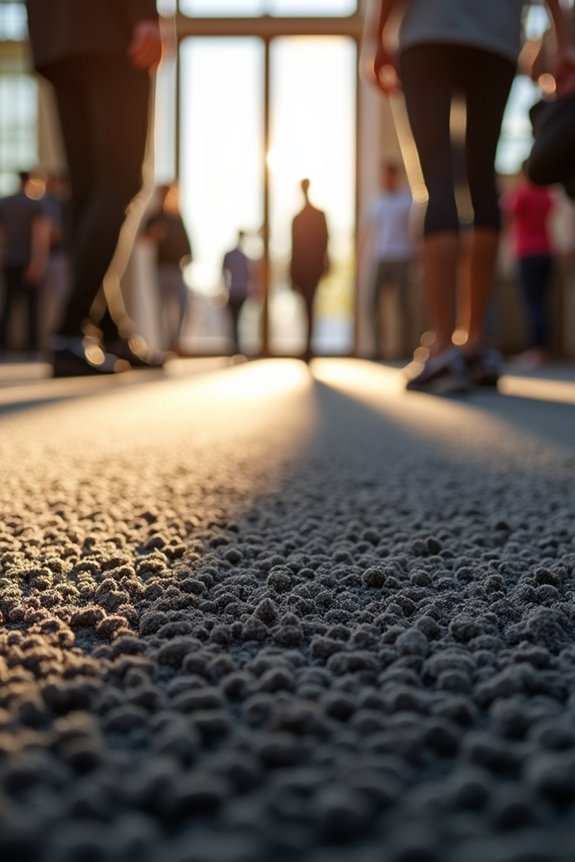
When I redesigned my entryway with a low-pile rug, I noticed the difference immediately—no more matted-down footprints after a week of traffic. Here’s the thing: low pile (think 0.5 inches or less) resists that crushed, flattened look that plush rugs get, plus it’s way easier to vacuum and spot-clean without fussing with fibers. You’re basically getting a rug that bounces back from daily wear, stays looking fresher longer, and won’t have you stressed every time someone walks across it.
Low Pile Resists Matting
Why does your favorite rug start looking flat and tired after just a few months?
The answer lies in pile height. I’ve learned that low pile—half an inch or less—resists matting effectively. Here’s why this matters for your home:
- Daily foot traffic won’t crush your fibers into permanent flatness
- Dense, tight weaves bounce back from constant wear and walking
- Your rug maintains its original appearance longer than high-pile alternatives
- Cleaning becomes easier without matted sections trapping dirt
- Edge integrity stays intact through years of heavy use
Low pile durability comes from its construction. Flatweave and hand-knotted options resist crushing particularly well. When you choose low pile, you’re choosing a rug that’ll stay looking fresh. That’s the practical choice busy households need—something that works with your lifestyle, not against it.
Easier Cleaning And Maintenance
Because low-pile rugs sit close to the ground, spills don’t disappear into deep fibers—they stay right there on the surface where you can spot and tackle them immediately. Low-pile and flatweave options make cleanup simpler than their plush cousins.
| Maintenance Task | Low-Pile Rugs | Deep-Pile Rugs |
|---|---|---|
| Spot cleaning | Quick and easy | Liquid sinks deep |
| Vacuuming frequency | 2–3 times weekly | More often needed |
| Professional cleaning | Occasional sessions | Frequent requirement |
Spills bead on the surface of wool or synthetic low-pile rugs rather than soaking in. Regular vacuuming keeps yours looking fresh. Professional cleaning visits happen less often—saving you money and time. That’s the practical benefit of choosing low-pile options.
Durability Under Heavy Foot Traffic
Maintenance keeps your rug looking fresh, but durability is what actually saves it. I’ve learned that low pile rugs perform well against heavy foot traffic. These shorter fibers bounce back quickly after constant wear, resisting those stubborn matting issues that plague thicker rugs.
Here’s why low pile durability matters to you:
- Shorter fibers recover faster, keeping your entryway looking intentional, not trampled
- Dense weaves hold their shape under daily pressure from family and guests
- Less visible wear means your rug stays dignified longer
- Easier maintenance routine keeps your space feeling welcoming
- Wool and synthetic blends resist stains while maintaining appearance
When you choose low pile construction, you’re investing in a rug that’ll look great for years. That’s the durability that actually protects your family’s favorite gathering spaces.
Tight Weaves and Hand-Knotted Construction Last Longer
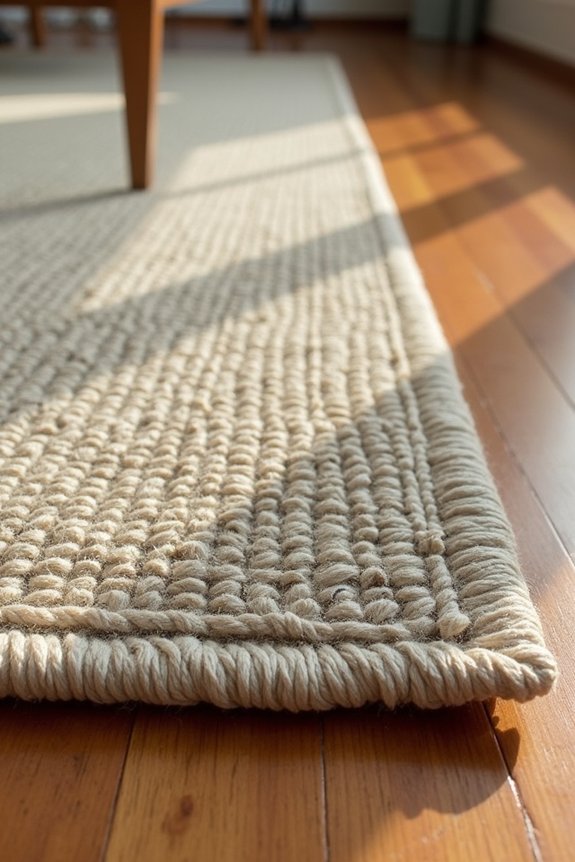
Hand-knotted rugs are the gold standard. I’ve watched them endure years of foot traffic without flattening or showing wear. They’re built to last—literally crafted by hand to withstand constant use. Dense machine-made options work too. They’ve got reinforced piles and edges that resist damage remarkably well.
Here’s what matters: tight weaves. Whether hand-knotted or dense machine-made, a tight weave resists matting and maintains its shape. I’ve seen cheap rugs fall apart in months, but quality construction determines how long your rug actually lasts. That’s the difference between replacing it yearly and keeping it for years.
Patterns and Colors That Hide Wear
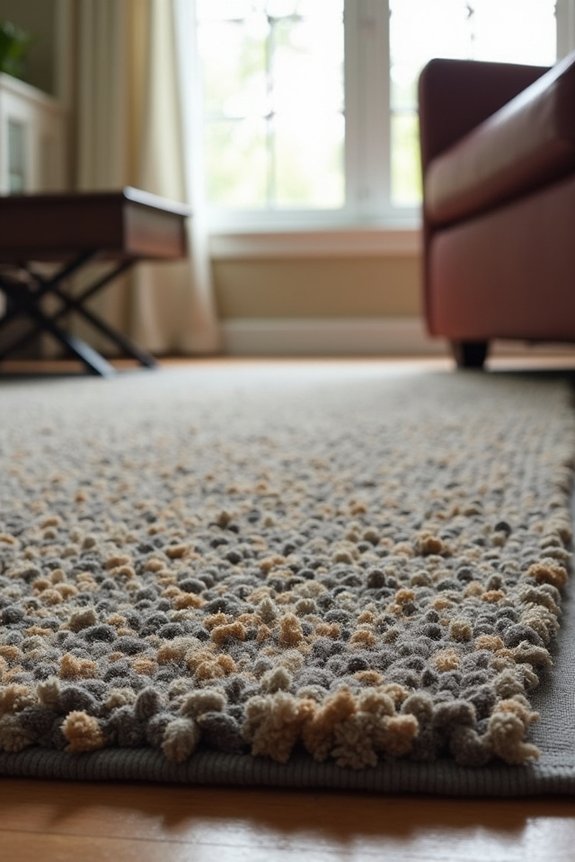
What if I told you that the right pattern could basically hide months of living?
I’ve learned that patterns and colors are your covert tools against visible wear. Here’s what actually works:
- Geometric patterns camouflage footprints and dirt trails brilliantly
- Deeper hues make grime disappear between cleanings
- Layered tones and ombre weaves hide stains effectively
- Textured surfaces mask wear better than flat designs
- Neutral shades balance style with practicality
Dark colors aren’t just trendy—they’re strategic. I notice my burgundy rug handles my family’s chaos way better than my friend’s cream one. Multi-tone weaves work similarly, blending dirt into their design.
Variegated colorways create visual interest while disguising wear. You’re not just choosing a rug; you’re choosing peace of mind. The right pattern means less stress and more living.
Which Rugs Can You Actually Machine-Wash
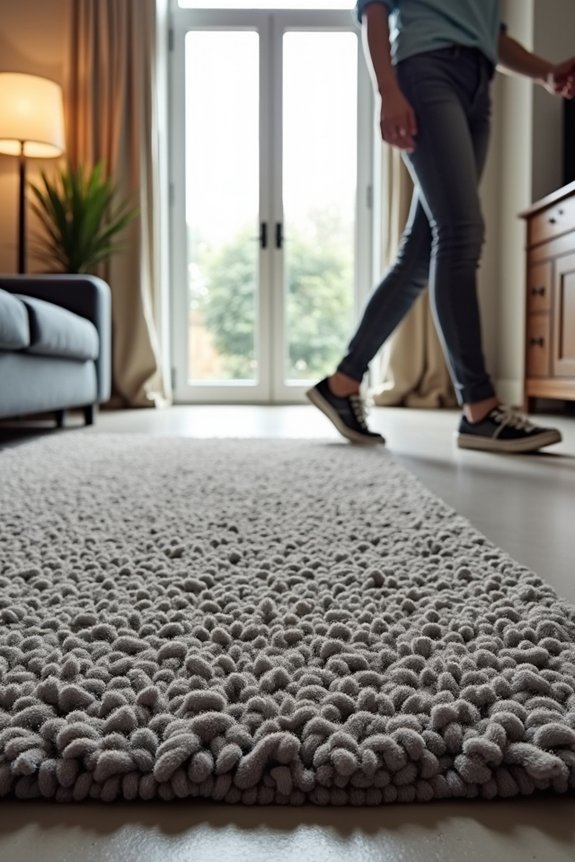
Now this is the thing—once you’ve found a rug that hides all your family’s dirt, you’re going to want to actually clean it without hauling it to a professional every time someone tracks mud through the house.
Here’s what I’ve learned: you’ve got real options. Safavieh Rag Rugs are 100% cotton and totally washable at home—seriously, toss them in the machine. Hook & Loom Flatweave Eco Cotton Rugs work the same way, with their mostly-cotton blend handling machine washing beautifully.
But here’s where it gets tricky. Dash & Albert’s herringbone cotton rugs require professional cleaning due to shrinkage concerns. And wool rugs like Revival Ombre shouldn’t go in the machine.
Cotton’s your friend for actually cleaning your own rugs. It’s practical. It’s honest. It’s exactly what busy families need.
Weekly and Seasonal Care to Maximize Lifespan
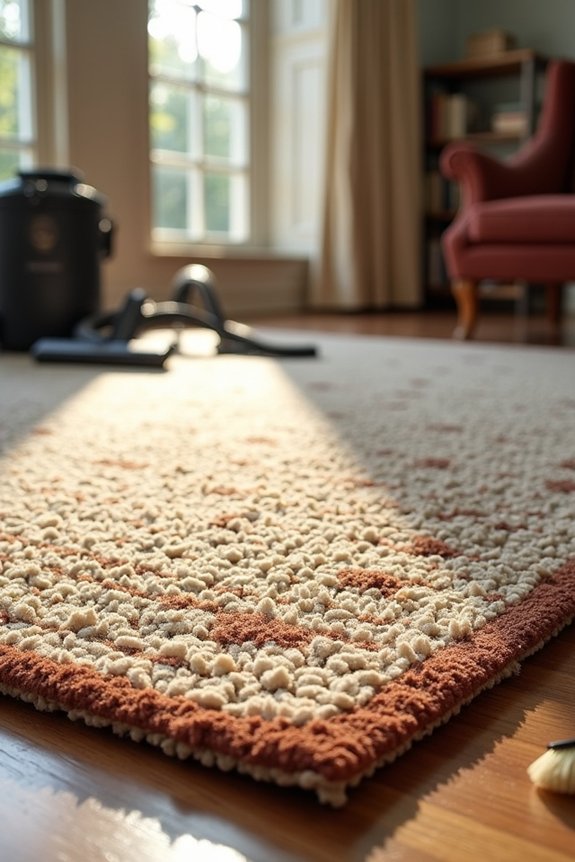
So you’ve invested in a rug that actually withstands your family’s chaos—now comes the part that determines whether it’ll still look great in five years or become a matted, dingy shadow of itself.
Your Weekly and Seasonal Maintenance Roadmap
Here’s what I do to keep my rugs thriving in high-traffic areas:
- Vacuum 2–3 times weekly to prevent dirt from embedding deep into fibers
- Rotate your rug every few months so wear distributes evenly instead of creating permanent traffic lanes
- Spot-clean spills immediately—seriously, don’t procrastinate on this one
- Use a thick rug pad underneath to reduce friction and maintain shape
- Schedule professional cleaning every 1–2 years to prevent matting
This maintenance routine isn’t just about cleaning. It’s about protecting your investment and keeping that rug looking intentional in your space. You’re not just maintaining a floor covering; you’re preserving something that anchors your home.
Rug Pads: Grip, Cushion, and Protection
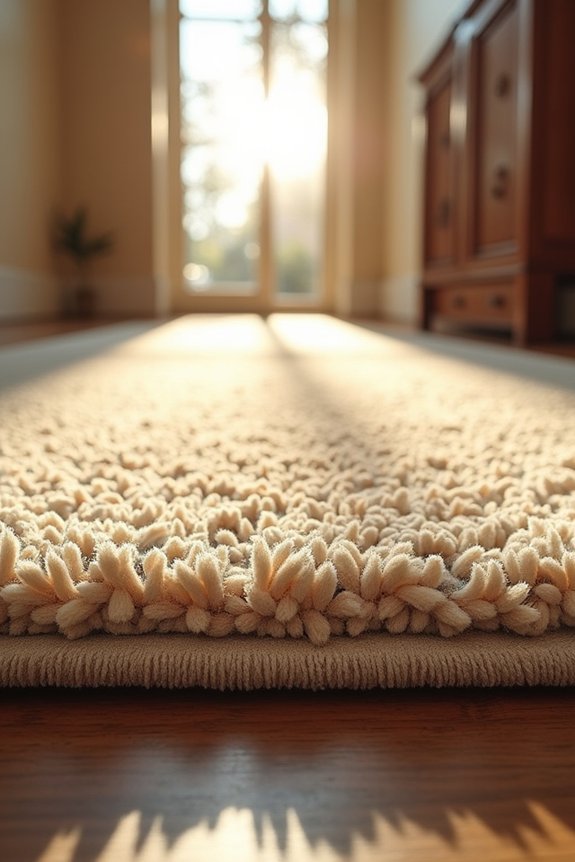
If you’ve ever watched a rug slowly migrate across your floor like it’s plotting an escape, you’ll understand why a quality rug pad matters. I learned this the hard way after nearly tripping over a wandering runner in my hallway.
Rug pads do three important things: they grip your flooring, cushion your steps, and protect both your rug and floors underneath. A dense, non-slip pad absorbs shock that high-traffic areas constantly dish out, preventing your rug from flattening prematurely. Under entryways and hallways, pads trap dirt and moisture before they damage your floors.
For kitchens or mudrooms where spills happen, consider pads with moisture-wicking or antimicrobial properties. You’re not just buying a pad—you’re investing in your rug’s longevity and your family’s safety.
Hall Runners and Entryway Rugs: Durability Where It Counts
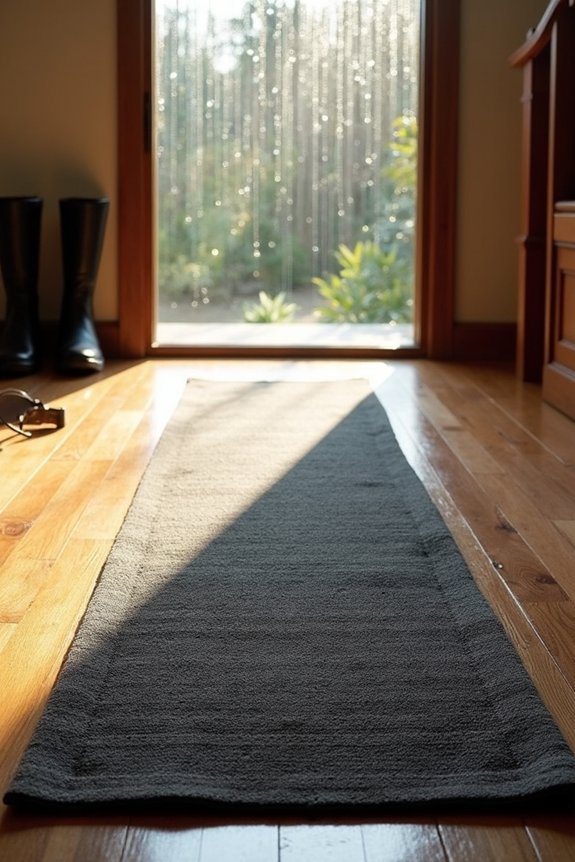
Where does your family spend the most time wearing down a rug? I’d bet it’s your hallway or entryway. These spaces demand tough rugs that won’t quit on you.
Why Hall Runners Matter
You need flatweave constructions and low-pile designs—under 0.5 inches—to resist matting and dirt buildup. They’re your first line of defense against wear and tear.
Materials That Stand Strong:
- Wool handles daily foot traffic like a champ
- Cotton flatweave offers durability and easy cleaning
- Jute and sisal bring natural toughness
- Synthetic fibers (nylon, polypropylene) resist stains
- Hand-knotted pieces maintain shape beautifully
The Hidden Advantage
Pair these durable rugs with thick rug pads. Together, they create stability, cushioning, and longevity. Your high-traffic zones deserve investment. You’re protecting your home and your peace of mind at the same time.