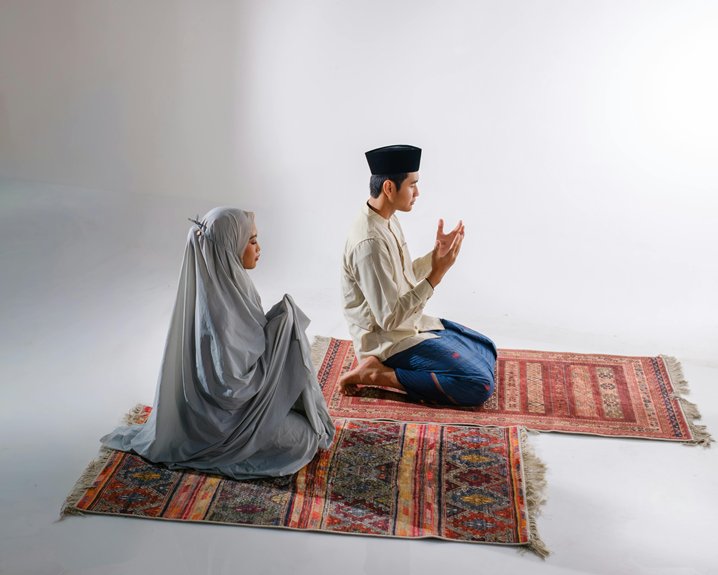
Display your prayer rug in a clean, dedicated spot—not cluttered shelves or high-traffic areas. Wall-hanging works well while protecting fibers from daily wear. Position the mihrab (decorative arch) pointing upward to honor its spiritual purpose. Think of it as creating a sacred focal point, not just background décor. Rotate displays seasonally, dust gently, and share its meaning with guests. When you treat it with intentional reverence—stepping onto it with purpose—the rug becomes a daily practice of respect. There’s much more to discover about caring for and displaying these meaningful pieces.
What Makes Prayer Rugs Sacred?
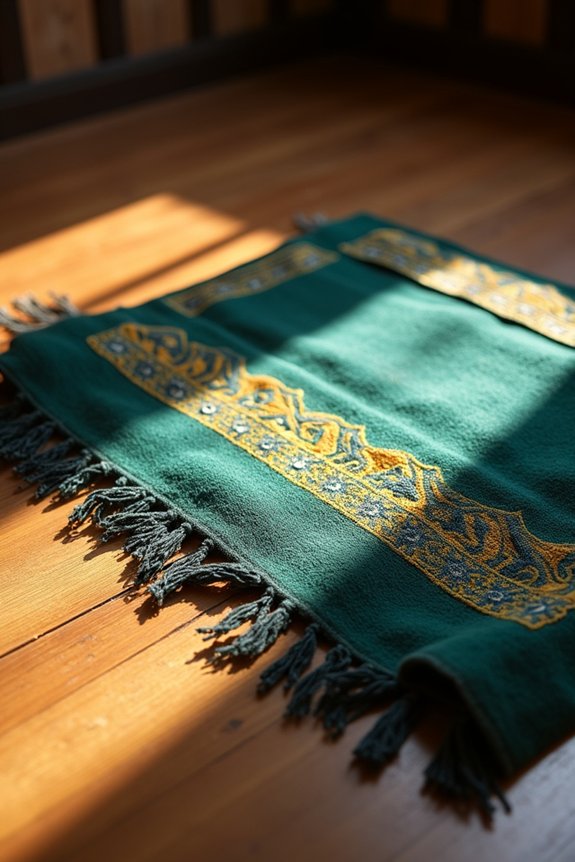
What makes a textile sacred? The intentional practice. The moment you step onto it with purpose. The discipline of showing up, day after day, to pray. That’s what makes it worthy of respect, whether displayed or actively used.
Choose a Clean, Dedicated Display Location
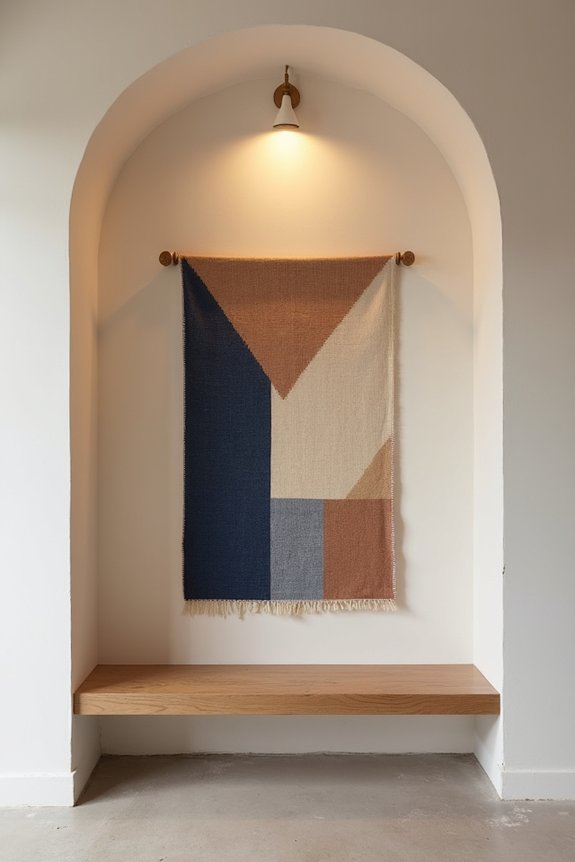
I’ve learned that where you display your prayer rug matters just as much as how you care for it—think of your display space as sacred ground that deserves respect. You’ll want to choose a spot that’s clean and dedicated, not squeezed between dusty knickknacks or positioned where spills might happen, because a prayer rug sitting above a sticky kitchen counter sends the wrong message. The location should feel purposeful and protected, whether that’s a quiet shelf, a meaningful wall space, or a display stand that keeps the rug safely away from the chaos of daily life.
Avoiding Spiritually Inappropriate Spaces
Where you display your prayer rug matters more than you’d think.
I’ve learned that certain spaces simply don’t work for respectful display. Avoid high-traffic areas, bathrooms, and cluttered corners. Your rug deserves a home that honors its spiritual significance.
| Space Type | Why It’s Problematic |
|---|---|
| Hallways | Foot traffic diminishes reverence |
| Bathrooms | Moisture damages fibers and feels disrespectful |
| Basements | Dark, damp conditions harm the rug |
Choose a dedicated spot—a shelf, wall mount, or special table. Keep the mihrab facing appropriately if displayed upright, maintaining traditional prayer orientation. This thoughtful *display placement* demonstrates genuine reverence.
I think of my rug’s purpose first. When I moved mine to a dedicated wall space away from humidity and dust, it became something meaningful rather than mere decoration. That shift matters. Your guests notice when something receives careful attention, and you’ll feel the difference too.
Positioning Above Ground Level
Since prayer rugs carry spiritual weight, lifting yours off the floor is one of the smartest moves you can make. When you display your Prayer Rug above ground level, you’re honoring its sacred purpose while protecting those beautiful fibers.
I’ve found that wall mounting works wonderfully. You’ll want to position your Mihrab Orientation so that distinctive arch design points upward—it guides the rug’s spiritual direction. Think of it like positioning a compass; it matters.
Consider these elevation options:
- Wall display showcases the rug’s artistry
- Closed cabinets shield it from dust
- Elevated shelving keeps it away from foot traffic
Positioning above ground level prevents wear and keeps your Prayer Rug in that dedicated, clean space it deserves. Your Display choice communicates respect while creating a centerpiece that complements your home’s Islamic aesthetic.
Decide Between Wall and Floor Display
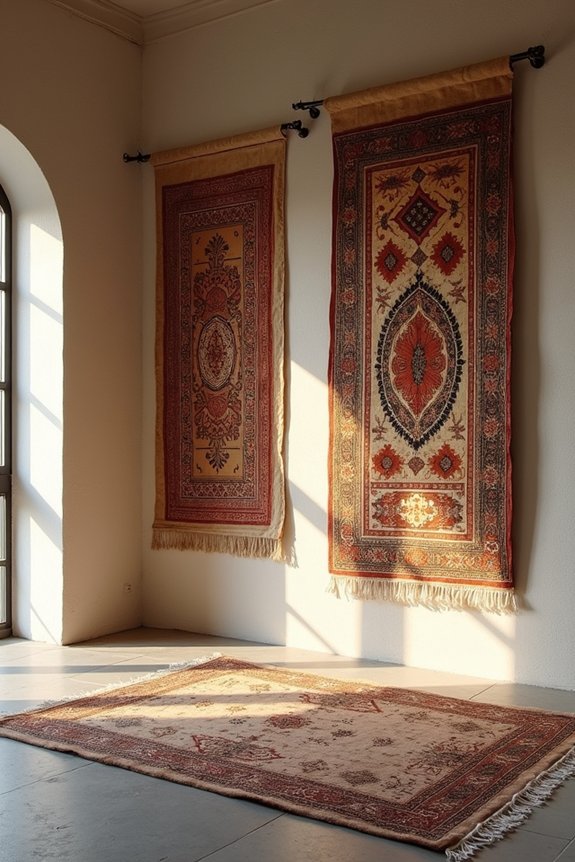
How do you decide where your prayer rug truly belongs—hanging on a wall or spread across your floor?
This choice depends on your space and intentions. Wall display positions your rug as a reverence-filled focal point. You’ll honor its sacred purpose while creating Islamic decor. Floor placement works beautifully too, but requires clean, respectful areas away from high-traffic zones.
| Display Type | Best For | Space Needed | Maintenance | Sacred Feel |
|---|---|---|---|---|
| Wall Hanging | Focal art pieces | Vertical wall space | Easier cleaning | Maximum reverence |
| Floor Display | Active homes | Large, protected area | More frequent care | Intimate connection |
| Paired Display | Design balance | Mixed spaces | Moderate effort | Balanced reverence |
| Corner Placement | Cozy nooks | Dedicated corner | Controlled access | Peaceful sanctuary |
| Gallery Style | Collections | Multiple walls | Individual attention | Curated reverence |
Choose what feels right for your home. Your rug deserves a place where it’s truly cherished.
Select the Right Room for Your Prayer Rug
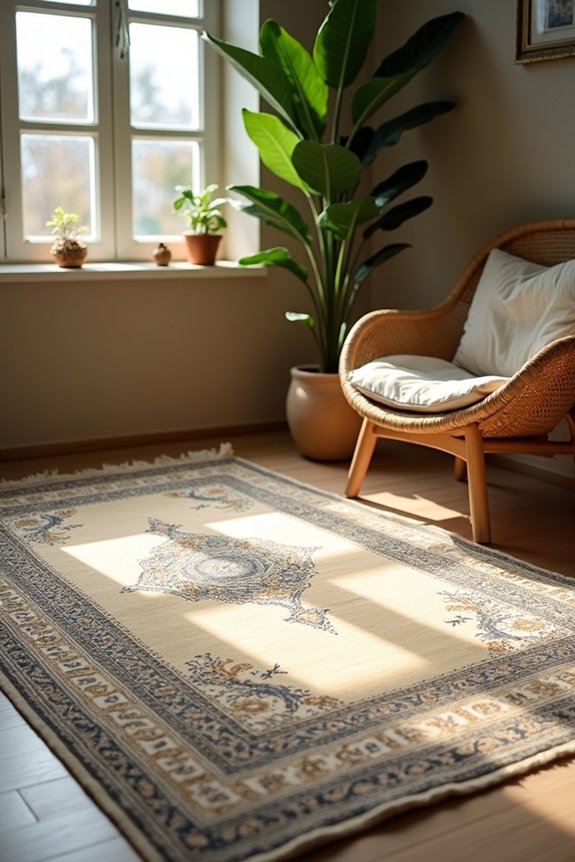
Once you’ve decided whether your rug belongs on a wall or floor, the next step is picking the right room to showcase it.
The suitable room matters. You’ll want clean, low-traffic spaces—think living rooms or dedicated prayer corners rather than dusty hallways or kitchens. Your prayer rug display deserves protection from dirt and heavy foot traffic that’ll wear it down quickly.
When considering wall-hanging orientation, position that mihrab motif pointing upward or toward your spiritual direction. It’s like giving the rug its proper respect through placement.
Choose rooms where you’ll actually see and appreciate it daily. A bedroom corner or quiet study works well. These spaces feel deliberate and peaceful—like you’re creating something meaningful rather than just decorating.
Why Placement Matters: High-Traffic Areas to Avoid
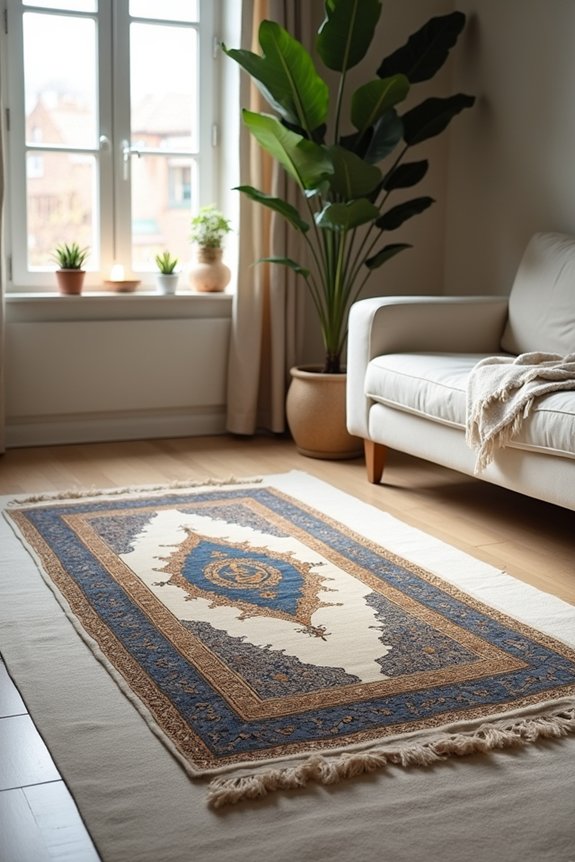
I’ve learned the hard way that where you place your prayer rug really does matter—it’s not just about keeping it pretty, but honoring what it represents. High-traffic areas like entryways, kitchens, and bathrooms expose your rug to constant foot traffic, dirt, and moisture that can damage the fibers and compromise its sacred purpose. Think of it this way: you wouldn’t leave your most meaningful possessions in a path where they’d get stepped on every day, and your prayer rug deserves that same thoughtful protection.
Sacred Spaces Require Protection
Because prayer rugs carry deep spiritual meaning, where you place them in your home matters—and not just for religious reasons.
I’ve learned that protecting these sacred textiles requires intentional choices. You’re honoring both the rug’s purpose and the reverence it deserves when you:
- Choose elevated surfaces like shelves or wall displays rather than floor placement in everyday spaces
- Keep them away from moisture and dust by selecting clean, protected areas that signal their importance
- Position the mihrab thoughtfully so its directional niche points upward, maintaining display etiquette even as decoration
Think of it this way: displaying your prayer rug respectfully tells guests—and yourself—that this object matters spiritually. A dedicated wall space or high shelf creates a reverent focal point. That’s the real value of deliberate placement.
Foot Traffic and Cleanliness
Foot Traffic and Cleanliness
Now that you’ve found the perfect spot to display your prayer rug with reverence, there’s another layer to contemplate: keeping it safe from the constant movement of daily life.
Avoid High-Traffic Zones
Prayer rug placement directly impacts both cleanliness and longevity. Entrances, hallways, and kitchens are problem areas. Shoes track dirt, spills happen, and foot traffic creases delicate fibers—compromising both the rug’s beauty and its sanctity.
Smart Display Solutions
Place your rug in low-traffic areas where it’s genuinely protected. Wall displays work well in busier rooms, preserving integrity while honoring your space. When laying it flat, create a dedicated prayer zone and keep shoes off.
Maintenance Matters
Regular cleaning addresses dirt promptly, maintaining that fresh aroma and respectful presentation your rug deserves.
Protect Your Rug From Sunlight and Damage
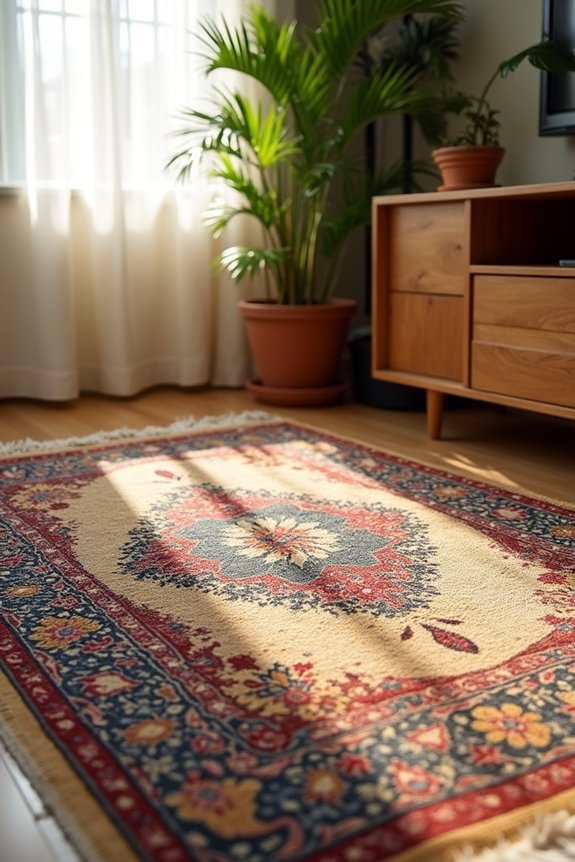
Several forces work against your prayer rug’s beauty and longevity, but sunlight’s impact deserves your attention. I’ve watched gorgeous colors fade when I didn’t take proper precautions, and it taught me valuable lessons about sunlight protection.
Here’s what I do to preserve my rug’s display longevity:
- Use UV-protective window coverings to block harsh rays that fade dyes and weaken fibers
- Rotate your rug periodically to prevent uneven fading from ambient light or heat sources
- Store in cool, dry areas away from damp environments that promote mold and fiber degradation
I also keep mine away from direct sunlight and use a protective underlay for high-traffic spots. These straightforward rug care practices help your prayer rug stay vibrant and strong for years. Your space deserves beauty that lasts.
Maintain Proper Care While on Display
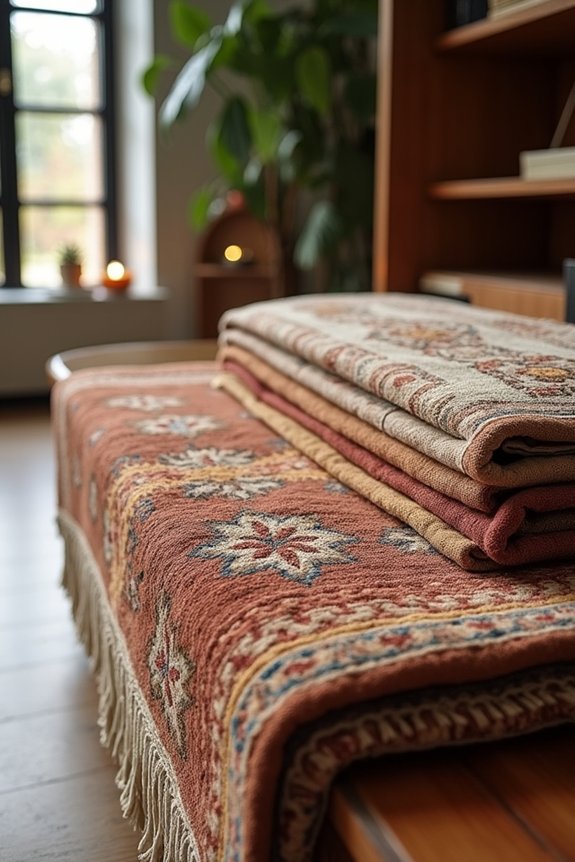
When you keep your prayer rug displayed, you’re committing to keeping it clean and protected—similar to caring for something with spiritual significance. Gentle dusting with a soft cloth every couple of weeks helps maintain its condition, and rolling rather than folding your rug (even temporarily) prevents permanent creasing in the fibers. Professional cleaning every 1–2 years removes deep dust and restores colors, helping your rug remain in good condition as a valued piece.
Storage and Dust Protection
Keeping your prayer rug beautiful requires the same thoughtfulness you’d give to any cherished item—maybe more, actually. Your prayer mats deserve protection from everyday wear and environmental damage.
Here’s how I keep mine in good condition:
- Roll, don’t fold – I store my rug rolled rather than folded to minimize creasing and preserve the weave’s integrity
- Shield from sunlight – I keep it away from direct light to prevent fading, especially those vegetable-based dyes
- Regular dusting – I gently brush with a soft cloth, carefully avoiding the fringes to prevent damage
Dust protection matters too. I use a microfiber cloth for regular cleaning and skip the vacuum near edges—those delicate fringes need a gentle touch. When stored properly between uses, your prayer rug maintains its appearance and spiritual significance for years.
Cleaning Methods for Display
Your prayer rug’s beauty fades fast if you neglect it while it’s hanging on your wall or displayed across a shelf.
Prayer rug care during display doesn’t require complicated steps. Here’s what I do:
Dust regularly. I lightly shake my rug every few weeks to prevent dust buildup. No harsh cleaners—they’ll damage those precious fibers.
Protect from sunlight. I keep mine away from direct rays. The dyes fade quickly otherwise.
Schedule professional cleaning. Every 1–2 years, I have mine professionally cleaned. It preserves the color and texture well.
This display cleaning routine keeps my rug looking fresh without compromising its sacred value. When you treat your rug this way, you’re showing respectful decor that honors both the piece and your home.
Share Your Prayer Rug’s Meaning With Guests
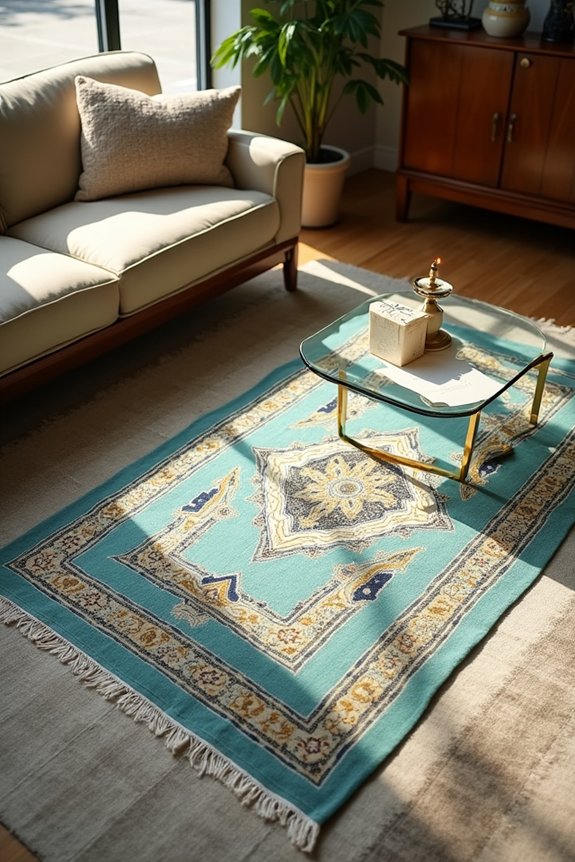
If you’ve got a prayer rug displayed in your home, there’s a good chance your guests will notice it—and wonder what it’s all about.
I’ve found that sharing its meaning helps visitors understand and respect what they’re seeing. Here’s what I explain:
- The purpose: It’s a portable, clean space for daily prayers with a mihrab design pointing toward Mecca
- The symbolism: It represents purification, reverence, and a personal boundary where body and mind align during sajood
- The craftsmanship: Wool, cotton, or silk materials show handmade care and attention
When guests understand the display etiquette—that it’s sacred, not simply decorative—they naturally treat it with reverence. I tell them why I avoid placing it in dirty areas or using it roughly. This conversation creates a meaningful connection point, helping everyone appreciate its true purpose.
Cultural Respect: What to Know About Decorating Prayer Rugs
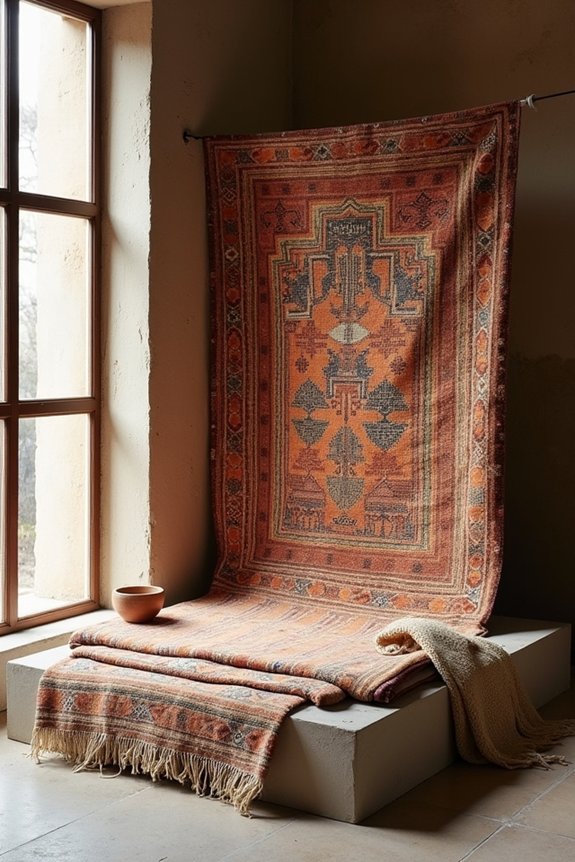
Display Guidelines for Prayer Rug Decor
When you choose prayer rug decor, cultural respect means treating the piece with genuine reverence. I’ve learned that hanging your rug with the mihrab motif facing upward shows you understand its spiritual significance. Keep it away from foot traffic and dirty areas—your rug deserves that dignity.
| Do’s | Don’ts |
|---|---|
| Display Islamic motifs proudly | Fold it carelessly |
| Clean gently and regularly | Use harsh chemicals |
| Hang with mihrab upward | Place near dirty zones |
| Source authentic pieces | Drape disrespectfully |
Selecting designs with Islamic motifs—like arches, lamps, or gardens—preserves both cultural respect and spiritual meaning. This approach honors the sacred purpose of your prayer rug while displaying it beautifully in your home.
Integrate Prayer Rugs Into Your Home’s Aesthetic
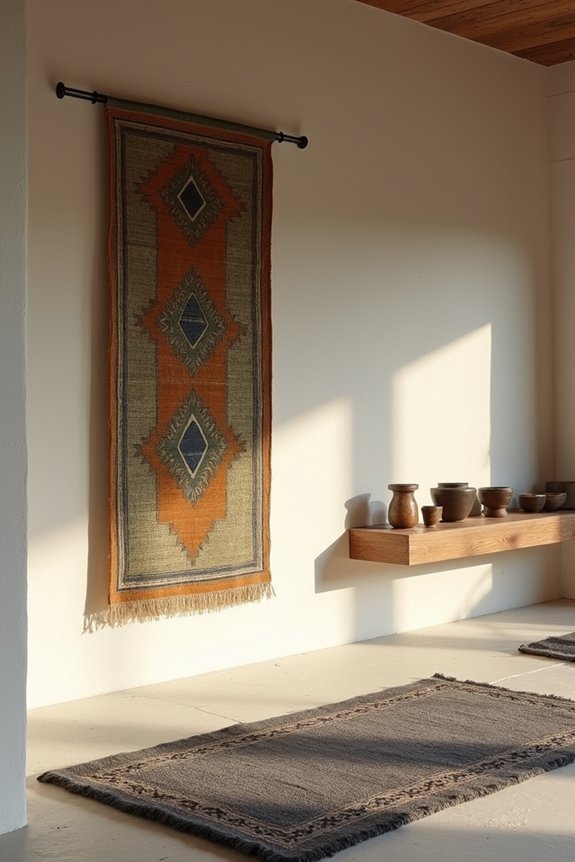
When I display my prayer rugs through wall display, I keep the mihrab pointing upward—honoring its spiritual purpose while maintaining visual appeal. Here’s how I make it work:
- Choose neutral surroundings that let the rug’s geometric patterns and rich blues or greens stand out
- Pair complementary textiles like throw pillows reflecting traditional motifs to create cohesion
- Keep it pristine by avoiding high-traffic areas and regular cleaning
The key? Treat your prayer rug as *the* focal point, not background decoration. When you do this, you’re not just decorating—you’re honoring both aesthetics and reverence. That balance works.
Recognize Ethical Boundaries in Decorative Use
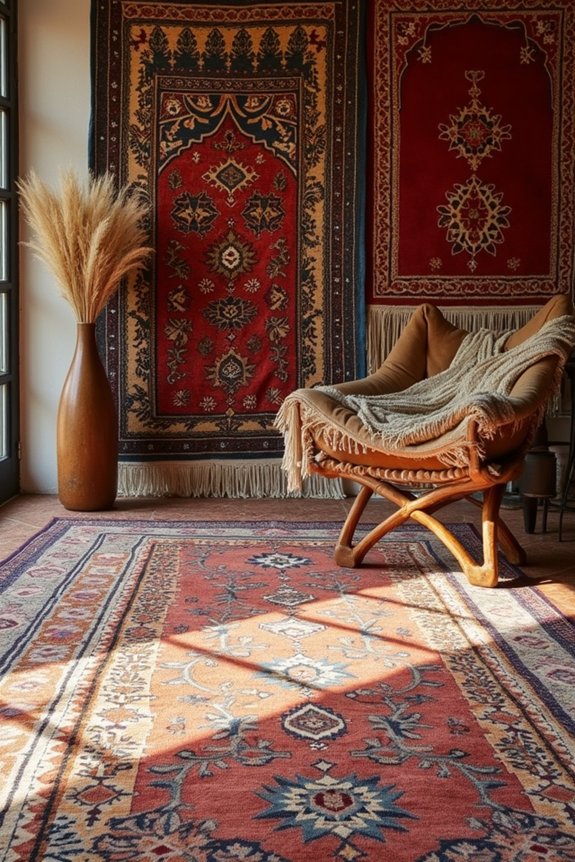
Using a prayer rug as home décor comes with real responsibility—and that’s actually where things get interesting.
You’re not just hanging fabric on your wall. You’re honoring a sacred tradition. I’ve learned that respecting boundaries means thinking carefully about placement and presentation.
| What to Do | What to Avoid |
|---|---|
| Display with mihrab orientation visible | Placing rugs in dirty areas |
| Use wall-hanging or gallery-style display | Treating them like ordinary decor |
| Keep Quranic verses off non-prayer rugs | Displaying culturally sensitive inscriptions carelessly |
Here’s what matters: *respectful display* means your prayer rug stays clean, honored, and positioned thoughtfully. Avoid high-traffic floor areas. Skip the basement. When you’re ready to retire it, donate or repurpose rather than discard.
These boundaries aren’t restrictive—they’re protective. They keep your decorative choice meaningful and genuine.
Store and Rotate Prayer Rugs Seasonally
How do you keep your prayer rugs looking fresh and meaningful throughout the year?
Prayer rug storage and seasonal rotation work together effectively. Rolling—never folding—preserves the weave and prevents creasing that would damage those intricate patterns. Here’s what to do:
Rolling—never folding—preserves the weave and prevents creasing that damages intricate prayer rug patterns.
- Wrap each rug in clean cotton or muslin fabric to shield from dust and moisture
- Store in breathable containers like ventilated crates, labeling each with its season and date
- Rotate displays every 3–4 months to match seasonal color schemes and reflect natural light changes
Before re-displaying, inspect for loose threads, give yours a gentle shake and brush, then air-dry completely. This display respect matters—it’s honoring both the craft and the spiritual significance. Your rugs deserve care that reflects their importance.