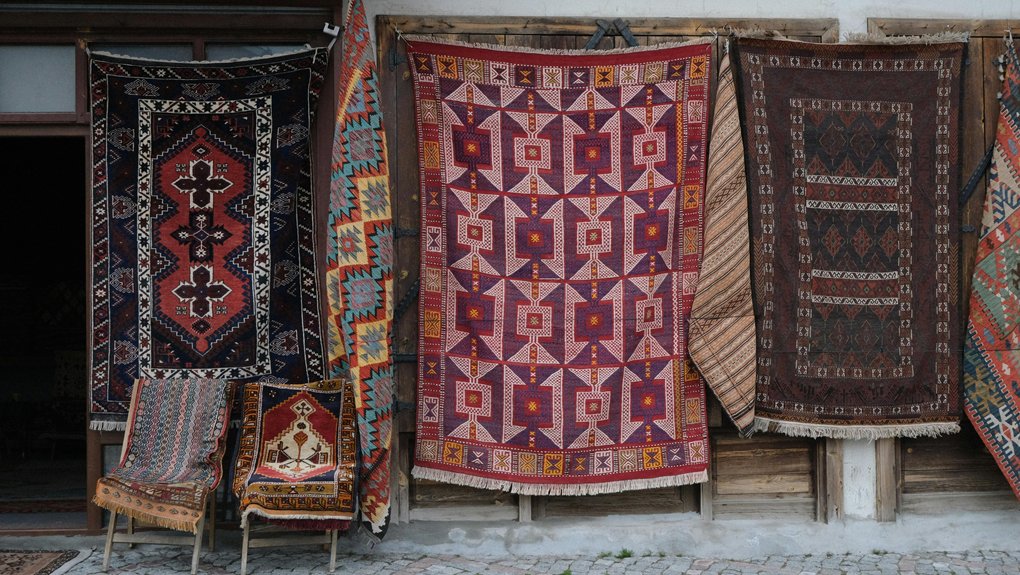
I’ll start by checking your carpet’s pile—low-pile Berber works great, while plush carpet needs a quality rubber-backed pad underneath. Get your rug size right; I usually go with 8×10 for living rooms, positioning furniture legs on the rug. Pick a complementary pattern or solid color to avoid visual clutter. Roll out your pad centered, smooth wrinkles outward, then anchor everything with furniture weight or rug grippers. Regular vacuuming prevents dirt buildup that causes shifting. Stick with these fundamentals, and your space will improve.
Check Your Carpet Pile Before Placing a Rug
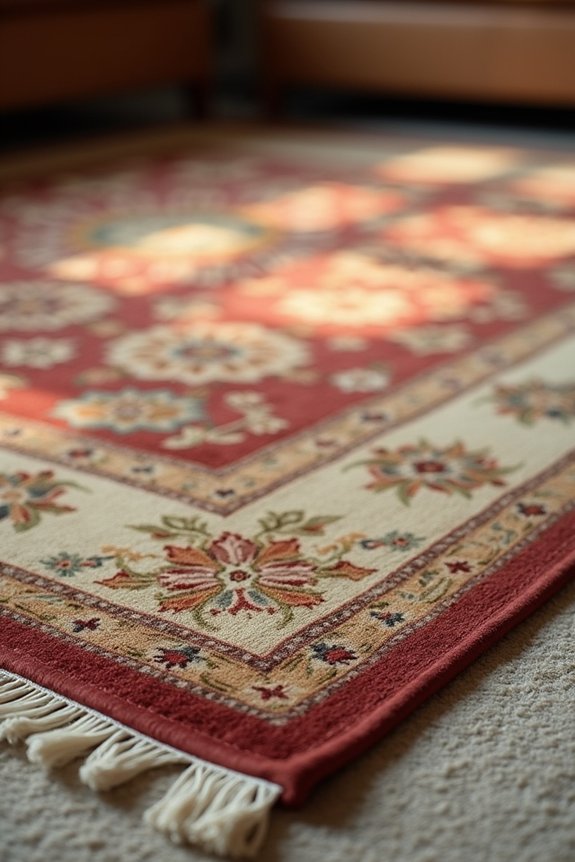
Why does your beautiful new area rug shift and bunch up the moment you place it on your carpet? The answer lies beneath your feet.
Your existing carpet’s pile height matters more than you’d think. Low-pile carpet—like Berber or short-pile options—creates the ideal foundation for layering. It provides stability and prevents excessive movement. Plush carpet? That’s trickier. Thick, high-pile bases don’t offer firm support, causing your decorative rug to slip around frustratingly.
Here’s what I’ve learned: examine your base texture carefully. Run your hand across it. Does it feel dense or fluffy? High-pile means you’ll need thinner, flat-woven rugs paired with quality rug pads designed for carpet-on-carpet use. A rubber-backed pad prevents wrinkles and maintains edge alignment. Check your pile height first—it’s the foundation of successful layering.
Pick the Right Rug Pad for Carpet-on-Carpet Use
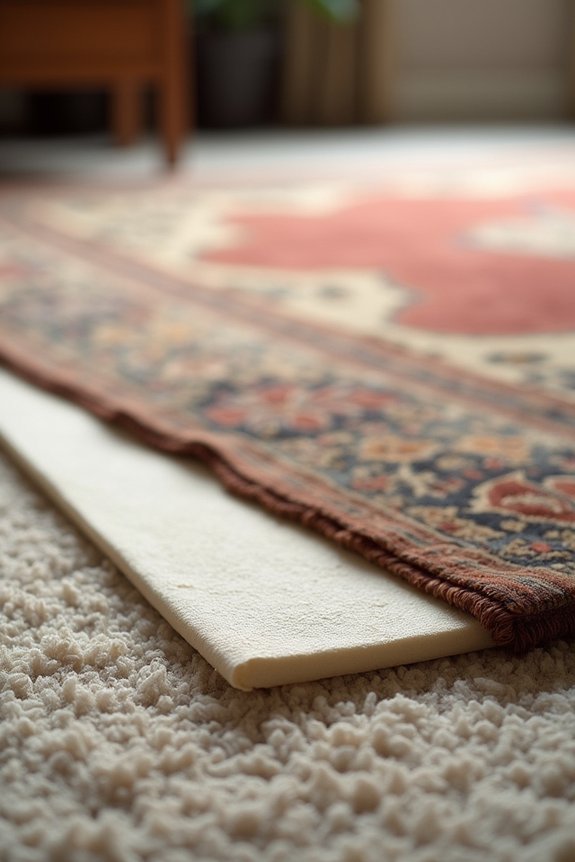
The right rug pad prevents bunching, impressions, and tripping hazards. Your decorative rug stays put, your carpets stay protected, and you achieve the design coordination you’re after.
Size Your Rug Proportionally and Position Furniture
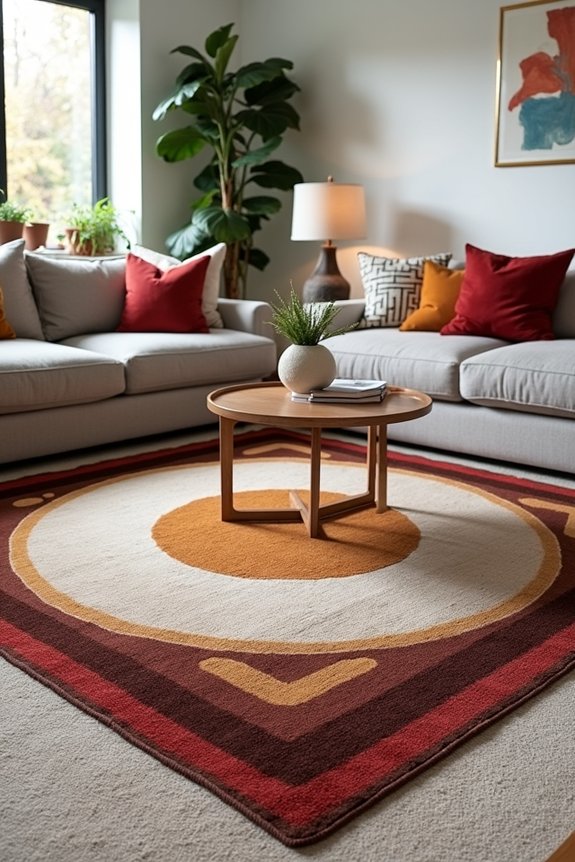
Once your rug pad is in place, think about sizing—getting this part right keeps your rug looking proportional to your space.
Your rug size should match your room proportion and furniture layout. Standard living rooms work well with 8×10 or 9×12 rugs. Here’s what matters: position your rug so the front legs of your sofa and accent chairs rest on it. This creates visual balance and grounds your seating area.
Leave about 18–24 inches of wall-to-wall carpet showing around the edges. This spacing balances the room and prevents your rug from overwhelming everything.
For dining areas, keep those chairs on the rug even when pulled out. Proper furniture placement extends the rug’s life and defines your entire room.
Pair Solid Rugs With Patterned Carpet (And Vice Versa)
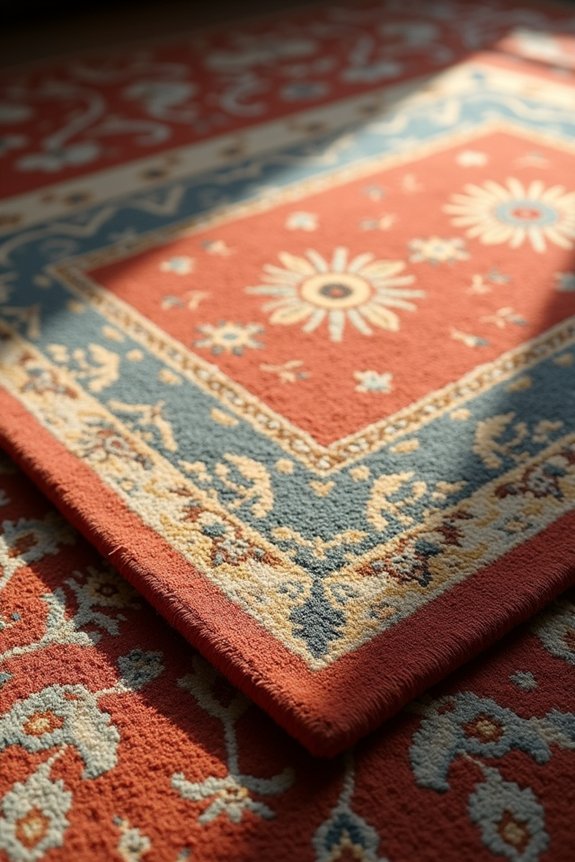
When I first layered a solid rug over my patterned carpet, I realized that matching patterns actually *fights* for attention instead of working together—so I learned to be strategic about what goes on top. You’ll want to think about two key ideas: picking colors and patterns that complement each other rather than compete, and making sure your layered rugs create visual balance instead of chaos. Let me show you exactly how to pull this off without overwhelming your space.
Pattern Coordination Strategies
Why does layering rugs feel so tricky when you’ve already got carpet underfoot?
I’ve learned that successful rug coordination starts with understanding your base. When I place a patterned rug over solid carpet, I create immediate visual interest without chaos. The neutral foundation lets my bold patterns stand out. Conversely, I pair solid rugs with busy carpets to avoid pattern overload—nobody wants their space demanding constant attention.
Here’s my strategy: I align everything with my color scheme for maximum harmony. If my carpet’s blue-toned, I choose rugs echoing those hues. For contrast, I’ll layer a bold pattern over neutral carpet to define separate zones throughout rooms.
The key? Layering rugs with intention prevents visual clashing while creating depth. I think of it like telling a design story—each layer builds meaning without overwhelming the space.
Visual Balance Principles
Your base carpet and top rug need to work together—they should complement each other, not compete.
Solid carpets pair well with patterned rugs. You get texture and visual interest without overwhelming your space. If your carpet has a pattern, choose a solid rug on top. This balance keeps rooms feeling deliberate and calm.
What matters most: scale and alignment. When both layers have patterns, make sure they’re different sizes—a bold geometric carpet works nicely with a delicate striped rug. Use color to tie them together; your top rug should echo hues from your carpet.
Don’t forget your rug pad. It anchors everything and prevents shifting. With thoughtful pattern-pairing and proper placement, you’ll create a layered look that feels collected, not chaotic. Your space becomes genuinely yours.
Lay Your Rug Flat and Anchor It
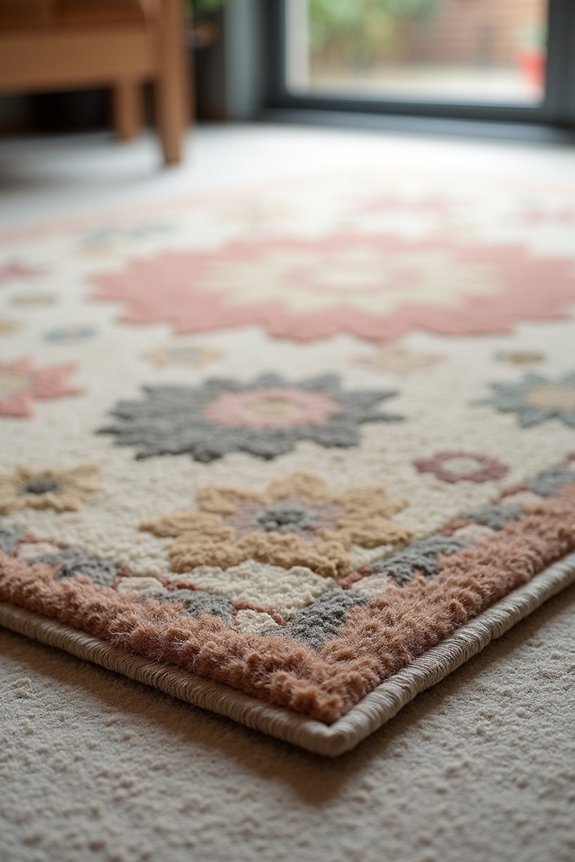
Once your rug’s in place, you’ll want to lay it completely flat and anchor it properly so it stays put and looks deliberate rather than like something the dog dragged across the room.
Start by rolling out your rug pad centered underneath, leaving about an inch showing around all edges. This stabilizes everything and prevents that annoying curling that ruins your design. Smooth out wrinkles by hand, working from the center outward—it takes some effort, but it creates that polished layered appearance you’re after.
For anchoring, place furniture legs directly on top or use hidden tape and corner anchors underneath. This prevents shifting without visible hardware cluttering your design. Your carpet and rug partnership becomes deliberate, polished, and exactly what you want.
Secure Your Rug on Carpet With Furniture and Pads
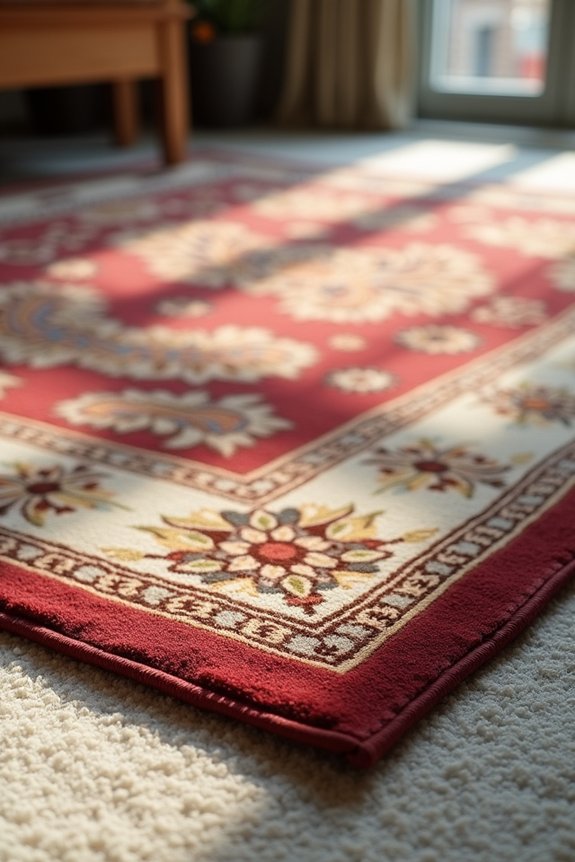
I’ve found that combining smart furniture placement with the right rug pad works well for keeping your rug secure. Position your heavier pieces (think solid sofas or sturdy dressers) so their front legs anchor the rug’s edges, which keeps everything from shifting around as you walk across it. Then add a properly sized rug pad underneath, and you have a setup that stays put.
Furniture Placement Strategies
I’ve learned that strategic furniture placement works to your advantage. When I position my sofa’s front legs directly on the rug, it creates natural weight distribution that keeps everything grounded. Same goes for chairs and tables—their edges or legs become anchors that define your space while preventing slip-ups.
Here’s what I do: I pair this furniture strategy with quality rug pads underneath for that carpet-on-carpet setup. The combination works well. If I need extra insurance, I’ll add rug grippers or double-sided tape in corners, though I test small areas first to avoid damage.
The benefit is this: when your furnishings rest on your rug’s edges, you’re not just securing it. You’re creating visual unity that brings your whole room together.
Rug Pad Selection Guide
What’s the difference between a rug pad that works and one that’ll have you repositioning your decorative rug every week? The right choice.
I learned this the hard way. Traditional hard-floor pads? They slip on carpet like socks on ice. Instead, I discovered carpet-on-carpet pads—they provide the stability you need.
| Pad Type | Best For | Why It Works |
|---|---|---|
| Dense Felt | Plush carpets | Grips without damage |
| Rubber-Coated Mesh | High-traffic areas | Prevents bunching |
| Hard-Floor Pads | NOT carpet | Causes slipping |
Here’s my method: I measure my decorative rug, then choose a pad that’s 1–2 inches smaller on each side. This keeps it hidden while anchoring everything underneath. Dense felt under top rugs prevents impressions and slipping. You’ll notice the difference immediately—no more adjusting, no more frustration. Just a rug that stays put.
Use Anchors or Tape if Movement Persists
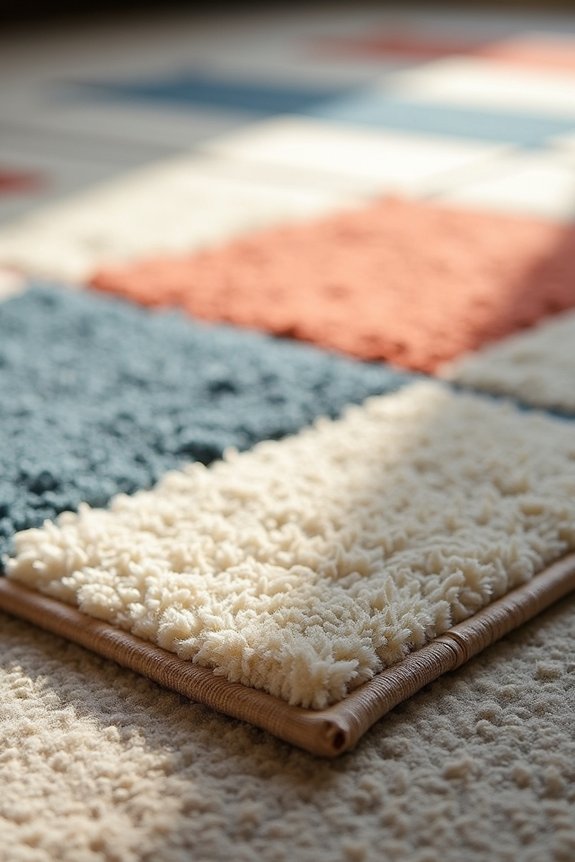
Does your decorative rug still creep across your carpet despite your best efforts?
I’ve been there—watching my carefully arranged rug inch toward the sofa like it’s got somewhere to be. When rug pads alone don’t cut it, I turn to rug anchors or double-sided carpet tape. These solutions work well for preventing creep during daily foot traffic.
Rug anchors secure your rug edges beneath furniture or strategic points, keeping everything locked in place. I like them because they maintain that clean layered rug look without visible mechanisms.
Double-sided carpet tape provides strong adhesion between rug and carpet. Test it first though—you want to avoid residue or fiber damage.
In high-traffic areas, I combine both methods. This combination stabilizes your rug on carpet effectively while keeping that polished appearance you’re after.
Vacuum and Clean Regularly to Prevent Shifting
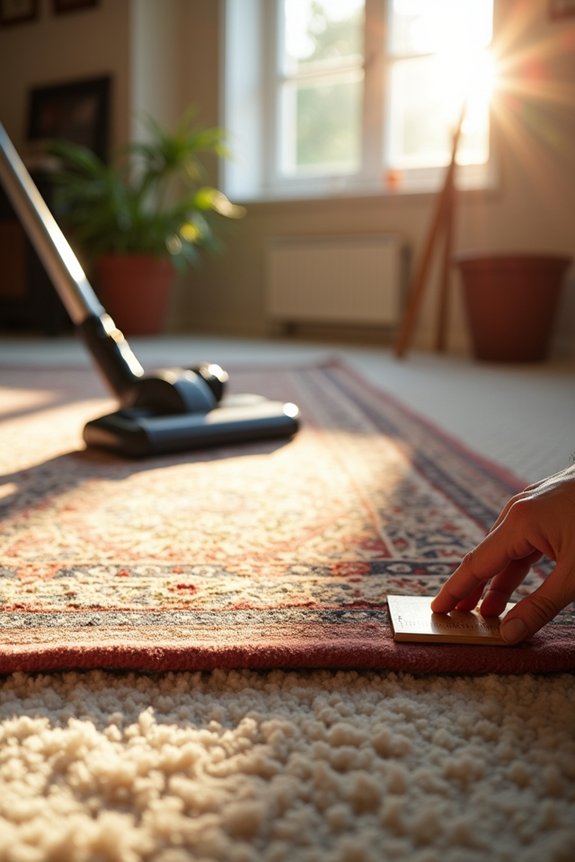
Here’s the thing about rug creeping—sometimes the real culprit isn’t the rug itself, but the dirt and debris hiding underneath it.
The real culprit behind rug creeping often isn’t the rug itself, but hidden dirt and debris underneath it.
I vacuum my area rug weekly and do a deep clean yearly. This simple maintenance prevents dirt buildup that causes shifting. You’d be surprised how much gunk settles between your rug pad and carpet underneath.
I fold my rug back occasionally to vacuum the carpet beneath. It’s quick but effective for stability. For spills, I keep Folex spot cleaner handy—addressing them fast stops seepage that triggers movement.
Here’s my honest take: clean underneath your rug pad regularly. Dirt sinking through destabilizes everything. Between professional cleaning and home maintenance, I choose both. Home cleaning keeps odors controlled and gives me peace of mind knowing my rug stays put.