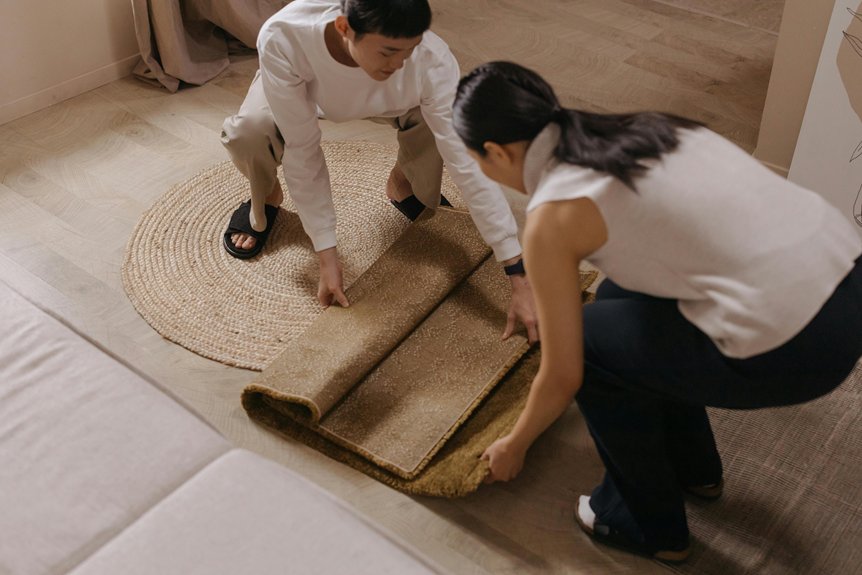
No, rugs aren’t officially furniture—but here’s the thing: they work *like* furniture in your space. Experts call them “soft furnishings” because they organize rooms, define zones, and provide comfort without legs or structure. A rug under your sofa’s front legs? That’s intentional design, not decoration. They shape atmosphere through color, texture, and pattern just as much as your couch does. The label matters less than what your rug actually *does* for your home—and there’s plenty more to discover about making that work well.
What Exactly Is Furniture?
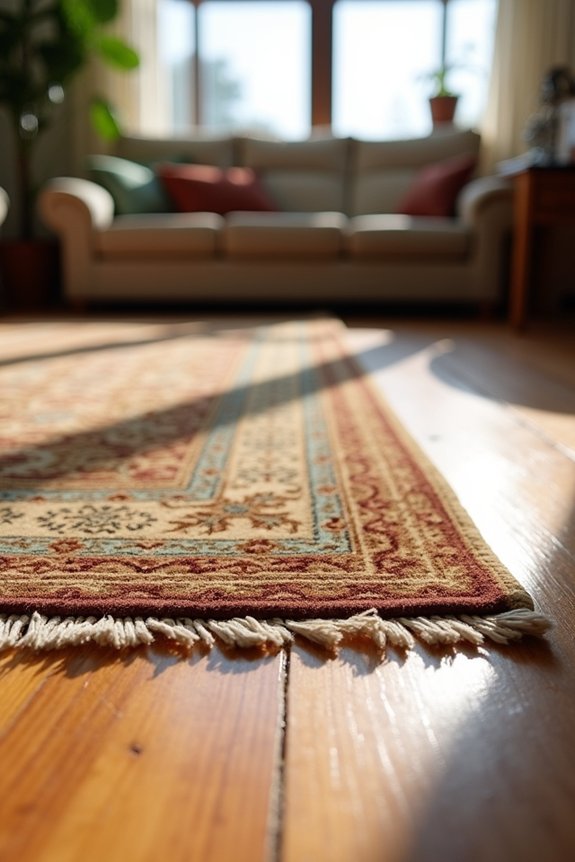
Here’s the matter about furniture—it’s got a job to do. When I think about furniture, I’m talking about those movable pieces that make our homes work. A couch supports you while you’re watching TV. A bed lets you sleep comfortably. A dining table brings everyone together for meals. Storage pieces keep your stuff organized.
What makes something furniture? It needs to sit off the ground. It’s functional, meaning it actually helps you do something. And here’s the key: you can move it around. That flexibility matters because life changes, right? You rearrange rooms. You adapt spaces.
Think about your bedroom. Your bed, dresser, and nightstand all work together, supporting your daily routine. That’s furniture doing what it does best—making life easier and more comfortable for you.
Short Answer: No, Rugs Aren’t Traditionally Furniture
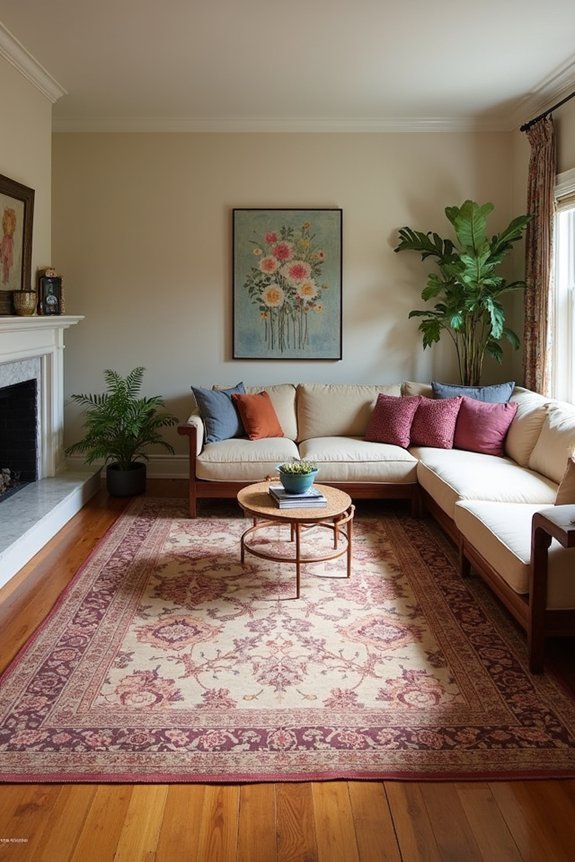
So, are rugs furniture? Not really. I’ve learned that experts actually classify rugs as soft furnishings—not traditional furniture. Here’s why:
- They don’t support your body like chairs, beds, or sofas do
- They stay put on the floor rather than being repositionable furniture pieces
- They’re legally categorized as decor, not furniture in most contexts
Now, I get it. Rugs feel important to your space—maybe even necessary. And culturally, people have used rugs for sitting or sleeping. But that doesn’t change their official classification. Think of it this way: your rug influences your room’s appearance like furniture does, yet it remains a floor covering. Understanding this distinction helps you see rugs for what they truly are—design elements that ground your space without needing the furniture label.
How Rugs Function as Soft Furnishings Instead
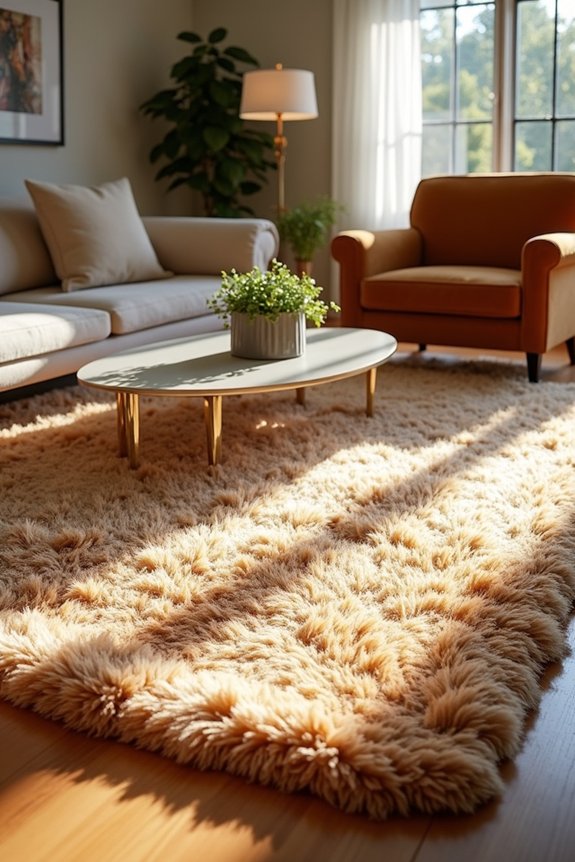
What makes a rug so powerful in a room if it’s not technically furniture?
I’ve discovered that soft furnishings like rugs work differently than chairs or tables. They anchor your space without needing legs or structure. Think of a rug as your room’s silent organizer—it defines where conversations happen, guides foot traffic, and creates cozy zones naturally.
Here’s what makes rugs special:
- They provide warmth and texture that hard floors can’t match
- Patterns and colors tell your room’s story
- They control noise, making spaces feel less echoing and empty
- They layer visually, connecting separate pieces together
Your rug isn’t sitting there doing nothing. It’s working quietly, shaping how your room feels and flows. That’s soft furnishings at work—practical comfort wrapped in style.
How Do Rugs Shape Room Design and Atmosphere?
Ever notice how a room shifts the moment you add the right rug? I’ve seen it happen countless times—a space goes from feeling empty to instantly welcoming.
Rugs shape your room’s entire vibe through three key ways:
- Color and pattern create visual interest and warmth that draws you in
- Texture adds softness underfoot, inviting you to actually live there instead of just passing through
- Strategic placement defines zones, anchoring your seating area so everything feels deliberate
When I align rugs with my sofa’s front legs, the room suddenly clicks into place. It’s like the furniture “knows” where it belongs. In open-plan homes, rugs become invisible boundaries—they quietly whisper, “This is the living area,” without shouting it.
The right rug doesn’t just sit there. It gives your design substance, making your home feel like *yours*.
Why Designers Anchor Rooms Around Rugs
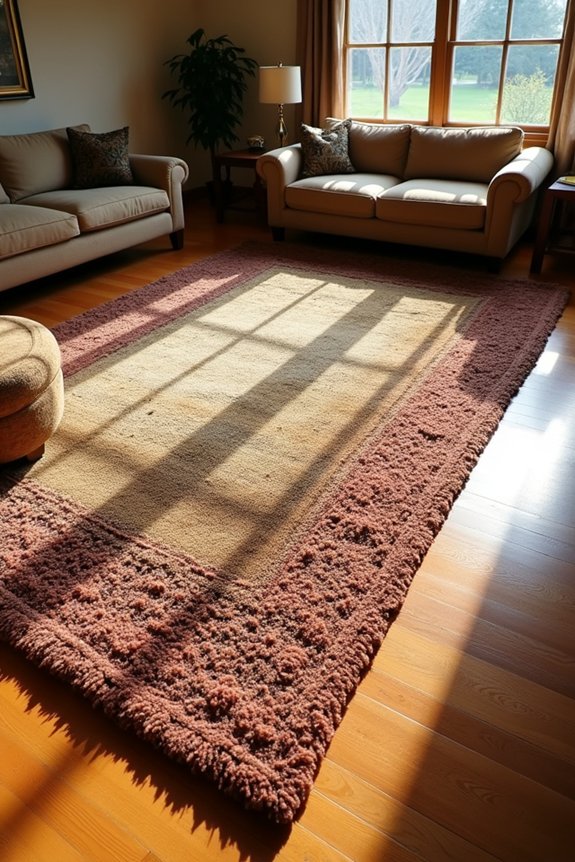
I’ve discovered that anchoring a room around a rug is like drawing an invisible map—it tells your furniture exactly where to go and your eyes where to land first. When you place a rug strategically, you’re actually creating distinct zones that make even a cramped apartment feel organized and deliberate, not haphazard. Think of it as the room’s foundation: a good rug under your sofa and seating area brings scattered pieces together into a unified gathering spot with clear structure and purpose.
Rugs Define Spatial Zones
How do you turn a sprawling, shapeless room into a cozy gathering spot? I’ve discovered that rugs work well. They anchor your living space and create boundaries without walls.
Here’s what I’ve learned rugs accomplish:
- Define gathering zones by establishing visual borders around seating areas
- Unify furniture pieces when they extend under sofas and coffee tables
- Guide movement through bold textures and patterns that invite interaction
When I place my sofa’s front legs on a rug, suddenly that corner feels deliberate. The room stops feeling like a maze. Instead, it becomes my living area—a distinct, inviting zone where people naturally congregate.
In smaller spaces, I’ve noticed rugs do double duty. They carve out territory while making everything feel less cramped. That’s when a room becomes somewhere I actually want to be.
Visual Anchoring Through Placement
Why does a room suddenly feel pulled together when you position a rug just right?
That’s rug anchoring in action. I’ve learned that placing your sofa’s front legs on a rug creates an invisible boundary—a cozy cluster that says “this space belongs together.” You don’t need to cover everything; even partial placement works well.
Here’s what I’ve discovered:
- Front legs matter most. They signal intention and unity without requiring full furniture coverage.
- Smaller spaces expand visually when rugs extend just under seating edges rather than filling the entire room.
- Layering works well. Multiple rugs unify separate zones, preventing that fragmented feeling.
Before committing, I preview placements with painter’s tape. This simple step helps your rug anchor the seating area you’re creating—turning scattered furniture into a welcoming, intentional gathering spot.
Foundation For Furniture Layout
- Define zones in open-plan rooms where walls don’t exist
- Guide furniture placement so pieces naturally cluster together
- Create visual flow that helps your eye move through the space
That rug beneath isn’t just decoration—it’s your room’s foundation. When you place your sofa’s front legs on it, you’re drawing a line that says, “This is where the action happens.” In smaller rooms, extending the rug outward actually makes everything feel bigger. It works because you’re building intentional space, not just filling it randomly.
How Insurance and Tax Law Classify Rugs
When you’re filing insurance claims or tackling tax documents, the classification of your rugs matters more than you’d think—and it’s probably not what you’d expect.
I’ve learned that insurance companies typically categorize rugs as personal property or floor coverings, not furniture. This distinction affects how you report them and what you’ll actually recover if something happens. For tax purposes, your rug falls into a different bucket entirely. Depending on whether it’s for personal use or business, it might be depreciable or non-depreciable personal property.
Here’s what I discovered: replacement cost is what insurers focus on, not whether your rug “feels” like furniture. That substantial Persian rug anchoring your living room? Still classified as a floor covering. Understanding this helps you document items correctly and protects yourself when claims arrive.
When Rugs Replace Furniture: Cultural and Minimalist Contexts
Beyond what insurance companies or tax documents say, rugs’ve got a whole other life in cultures and lifestyles where they’re not just something you walk on.
I’ve noticed how rugs become the foundation of intentional living. Consider these practical shifts:
- Meditation spaces – Rugs define sacred ground where you sit directly on the surface
- Prayer areas – Rugs create dedicated spiritual zones without needing chairs or tables
- Floor-seating setups – Rugs plus cushions replace traditional furniture entirely
What makes this work isn’t complicated—it’s placement, size, and texture creating comfort and defining space. You’re emphasizing *function over labels*. In minimalist homes, rugs aren’t decorative afterthoughts; they’re active seating solutions. They’re lightweight, movable, and honest about what they do. This approach changes how we think about our spaces, making room for what matters most: connection and simplicity.
Should Front Legs or Your Whole Sofa Sit on the Rug?
You’re staring at your sofa, then at your rug, wondering: does the whole thing need to land on that fabric, or can you get away with just the front legs?
You can absolutely do front legs only. Designers have figured out that *partial rug placement* works well. Your front feet anchor the seating area while keeping your floor plan flexible and balanced.
This approach gives you real advantages. You’ll move furniture easier, define your space without needing an enormous rug, and work within budget constraints. The visual anchoring happens through those front legs touching the fabric—that’s enough.
Think of it like this: you’re creating an intentional zone, not swallowing your sofa whole. That’s actually the modern standard now.
Why Rug Size and Budget Constrain Furniture Placement
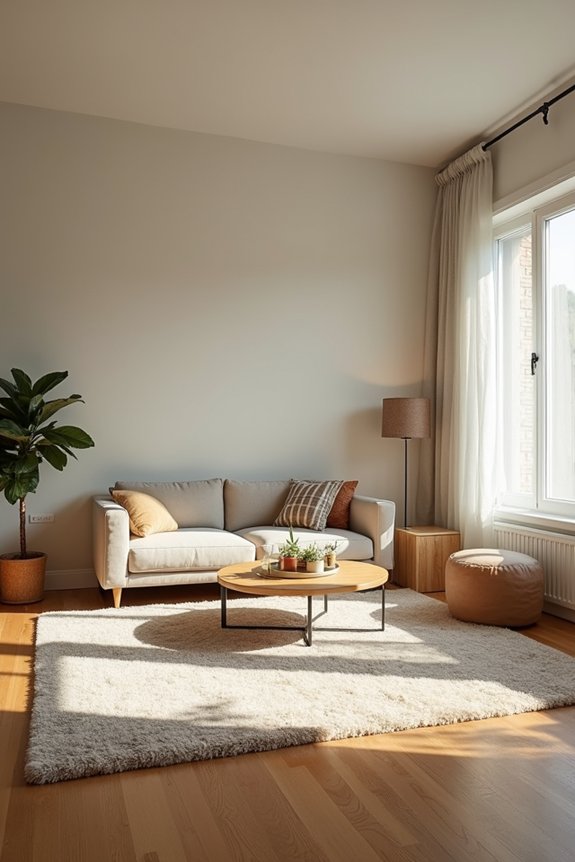
When I’m designing a room layout, I quickly realize that rug size and my budget are practically joined at the hip—they work together to determine where everything else goes. A full-coverage rug under your entire sofa sounds nice, but the price tag often forces me to get creative with smaller rugs or layered options that anchor just the front legs instead. Finding the right rug dimensions within what I can actually spend means I’m constantly measuring twice and checking my bank account once, because squeezing that furniture arrangement to fit a budget-conscious rug is way smarter than overspending.
Cost Impact On Design Choices
How much are you actually willing to spend on a rug—and does that number determine where your sofa really sits?
Your budget shapes everything. I’ve learned that rug size directly impacts furniture placement, and honestly, most of us can’t afford those massive, high-quality rugs designers dream about.
Here’s what I’ve discovered works:
- Smaller rugs force front-leg-on-rug compromises
- Layering cheaper rugs creates cohesion affordably
- Partial undersofa placement defines zones without full coverage
The tradeoff? You sacrifice some acoustics and room cohesion, but you gain flexibility. I used to feel stressed choosing between a beautiful rug and keeping my sofa where I actually wanted it. Now I recognize that budget-conscious choices aren’t failures—they’re practical design decisions that let you live in your space on your own terms.
Finding Appropriately Sized Rugs
Walk into most furniture stores, and here’s what I’ve noticed: the biggest rugs they stock barely cover half your living room. I’ve stood there frustrated, measuring tape in hand, realizing that even their “extra-large” options won’t properly position my sofa.
Here’s the real challenge with rug sizing: it directly controls where your furniture goes. When your rug’s too small, only your sofa’s front legs land on it—throwing off your whole room’s balance. You’re forced to choose between layering smaller rugs over a neutral base or accepting an imperfect layout.
Budget constraints make this trickier. Sometimes I’ve settled for a smaller rug in front rather than spending more. In rentals, I’ve intentionally avoided full coverage for flexibility. Finding appropriately sized rugs isn’t just shopping—it’s solving your entire room’s puzzle.
Can Prayer Rugs or Meditation Mats Function as Furniture?
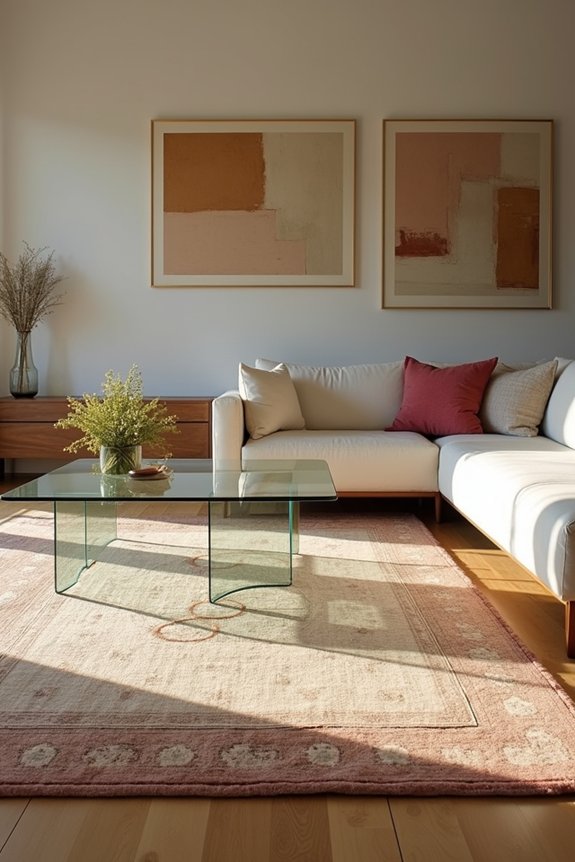
Prayer rugs and meditation mats occupy a curious middle ground—they’re not quite furniture, yet they do some furniture-like things. I’ve noticed they function differently than traditional floor coverings. Here’s what makes them unique:
- They create defined personal space on the floor
- They provide temporary comfort for sitting or kneeling
- They anchor spiritual practice without elevated support
While these mats feel furniture-adjacent when you’re using them, they lack the permanent structure and height we expect from chairs or tables. You can’t really replace your couch with a meditation mat, despite how inviting it might seem after a long day. They’re more like ritualistic anchors—sacred floor coverings that ground your practice in one meaningful spot. That’s a real benefit, just not furniture.
Make the Call: When Design Role Matters More Than the Label
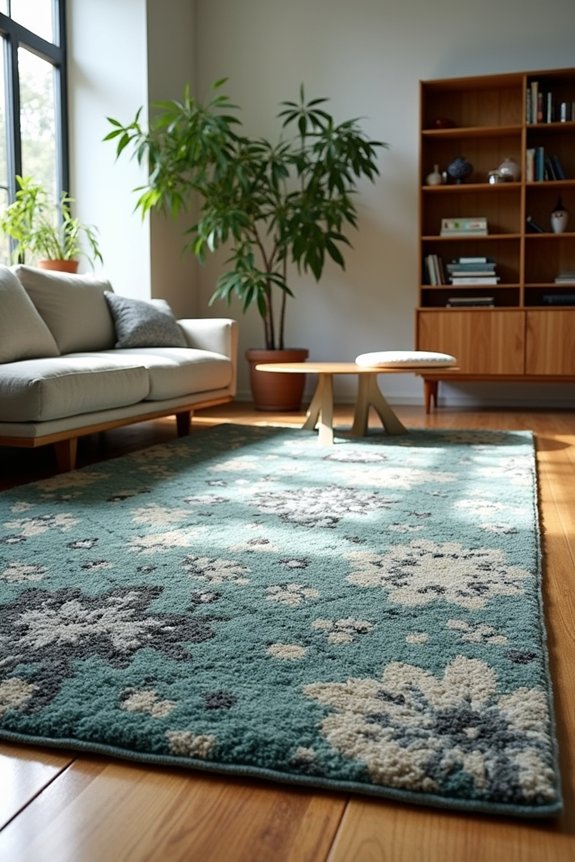
Forget the label debate. What matters:
Your rug earns its worth through function, not labels—it’s furniture when it anchors your entire room.
- Does it ground your furniture arrangement? If yes, it’s working like furniture.
- Does it zone separate areas? That’s foundational design thinking.
- Can front legs sit on it comfortably? Perfect—that’s intentional placement.
Your rug earns its spot through what it *does*, not what someone’s price tag calls it. When a rug anchors your room’s entire layout, it’s already furniture in every way that counts.