Your rug isn’t just something you plop down and forget about. I’ve learned that layering a smaller rug over a neutral base creates serious visual depth, while angling it toward your fireplace or windows grounds the whole room.
Pair bold patterns with soft, muted furniture—think cream sofas and beige curtains—to let your rug shine. Don’t forget to drape fabric over edges for texture, or hang statement pieces as wall art.
The real payoff happens when you test different angles until everything clicks. Stick around to discover exactly how.
Layer Your Rug Over a Larger Base for Visual Depth
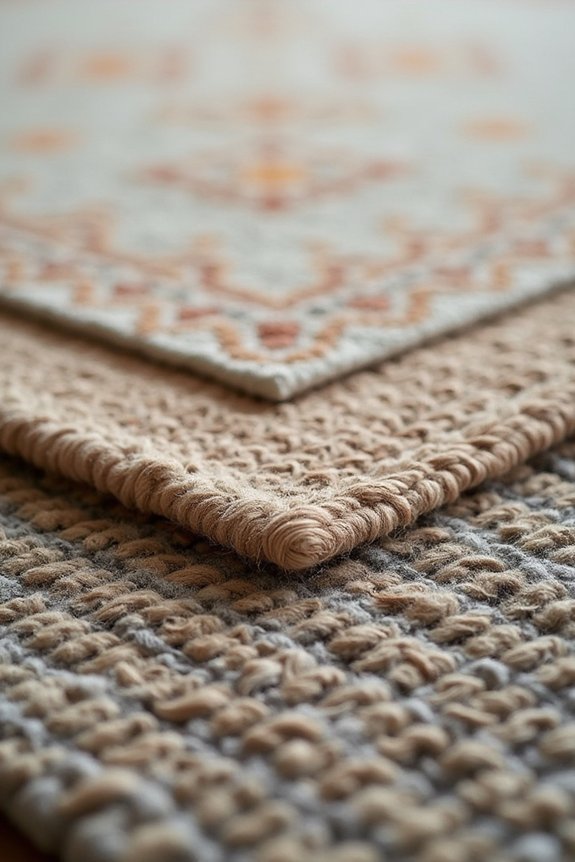
Ever noticed how a room can feel flat and one-dimensional, like it’s missing something?
Ever noticed how a room can feel flat and one-dimensional? Layering rugs adds the visual depth it’s missing.
Layering rugs changes how spaces function. Here’s what works: place a smaller rug—like a 3×5 or 4×6—over a larger neutral base rug. This creates visual depth and defines your seating area.
Coordinate your colors carefully. Let your topper echo the base rug’s hue. Position furniture so front legs land on the top rug. This grounds everything together.
I’ve found this technique does double duty: it protects high-traffic zones while delivering that multi-dimensional style. A 5×8 base with a smaller topper works well. Your room gains dimension without feeling overwhelming.
You’re not just decorating—you’re creating zones that make your space feel organized and welcoming.
Use Your Rug to Define Separate Zones in Open Spaces
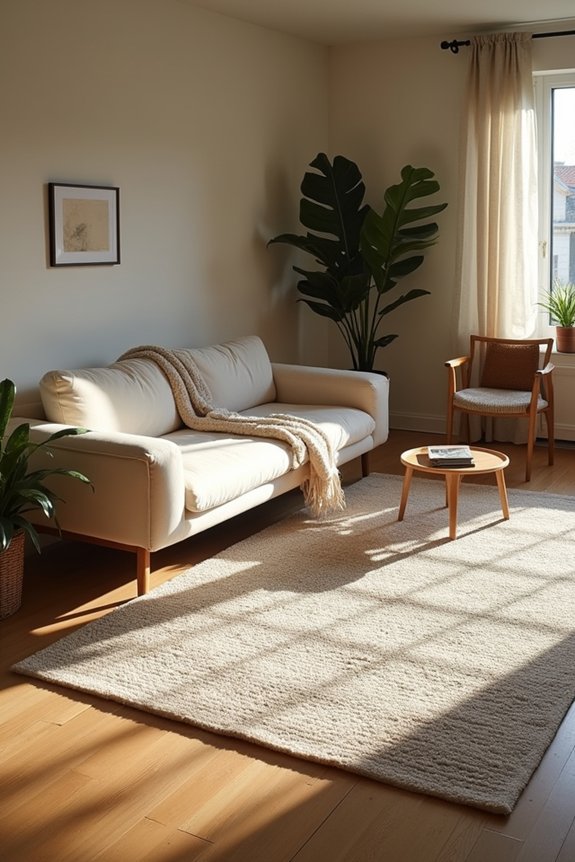
Front legs of furniture land on the rug. It signals “this area belongs together.” Rotate or angle rugs slightly to guide how each zone flows into the next.
Layering smaller rugs over a larger base adds depth while keeping everything cohesive. Walking paths naturally emerge, and your space feels both spacious and welcoming.
Anchor Your Rug to the Room’s Focal Point
- Center under your fireplace for coziness and purpose
- Align with a statement window to frame natural light
- Position seating with front legs on the rug to create a gathering space
- Test angles and rotations until it feels right
- Let odd-shaped rooms guide placement rather than fight them
Your rug placement and seating work together to define your gathering spot. You’re creating the heart of your home where people naturally want to be.
Balance Bold Rugs With Neutral Textiles and Accessories
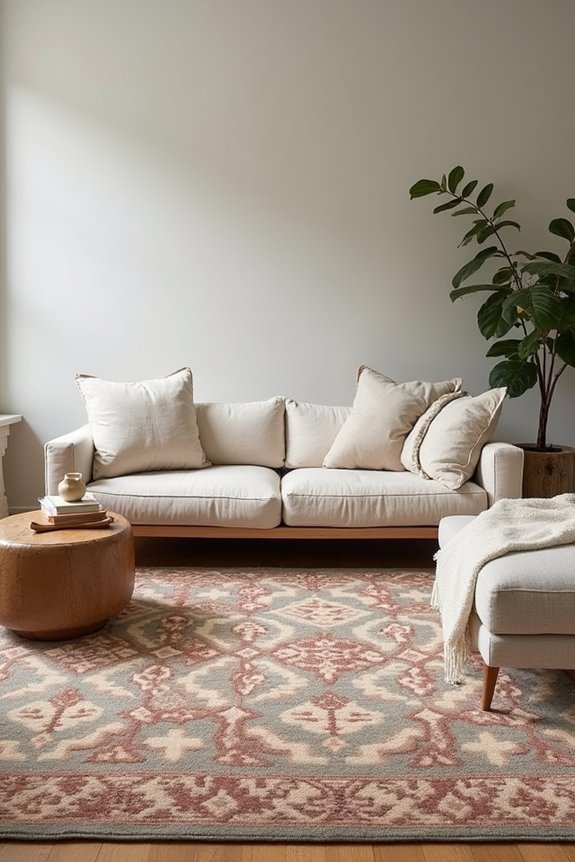
Once you’ve anchored your rug to the room’s heart, it’s time to make sure that bold beauty doesn’t steal the whole show.
Pairing your statement rug with neutral textiles creates the perfect balance. Ground vibrant rugs with soft, muted-tone sofas and curtains—think cream, beige, or soft gray. This approach lets your rug stand out without overwhelming the space.
Use small accents to echo the rug’s colors. Pillows in muted red or navy, wall art in complementary hues—these touches unify everything without competing for attention.
One effective technique: recover existing chairs with ticking patterns or solid textiles that harmonize with your rug. Add neutral decor elements like plants or lamps in colors pulled from the rug itself.
Balance keeps everything feeling deliberate and cohesive.
Drape and Tuck Rugs on Furniture for Layered Texture
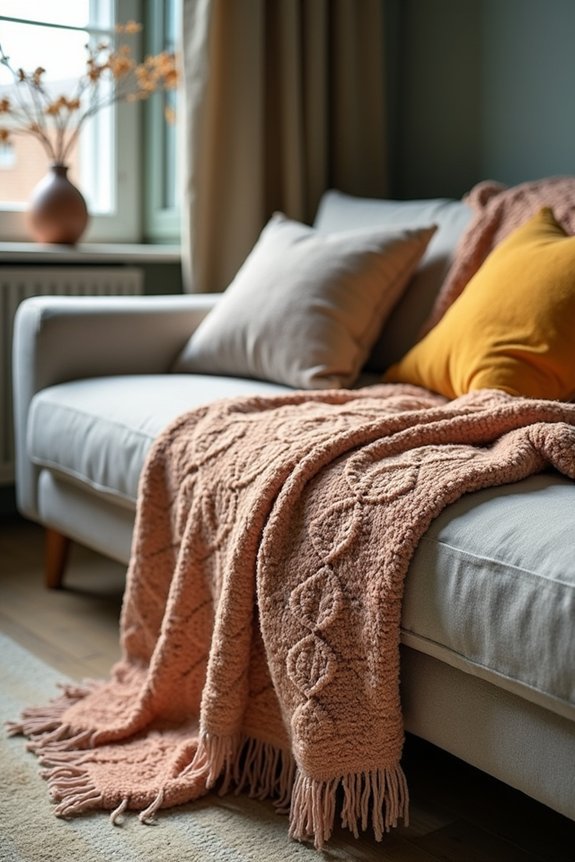
I’ve discovered that draping a flat-weave rug over furniture isn’t just about covering it up—it’s a practical approach to adding texture and visual depth to your space. You’ll want to focus on two key things: first, how you layer the rug to create interest, and second, how you secure it so it stays put instead of sliding around. When you get both of these right, your furniture looks intentional and well-arranged, which is a satisfying result.
Layering For Visual Interest
Want to create a flat, one-dimensional room with real depth and character?
I’ve found that rug layering adds visual interest to our homes. Here’s what makes this technique work:
- Placing a 5×8 textured rug over a 9×12 neutral base adds dimension
- Rotating rug angles helps find the right balance for your seating area
- Soft, muted tones blend well without overwhelming your space
- Flat-weave wool rugs drape nicely over furniture for a relaxed appearance
- Leaving a foot of fabric hanging over your settee creates comfort
These layering techniques make ordinary rooms feel inviting and complete. The texture catches light differently, making everything feel carefully arranged. It’s not complicated—just strategic placement that makes your space feel whole and yours.
Securing Placement Techniques
Now that you’ve layered your rugs for visual interest, it’s time to anchor them in place—and that’s where draping and tucking come in.
I’ve discovered that draping a flat-weave rug over your settee’s back and seat works well. Here’s my technique: smooth the rug into the seam, letting about a foot hang over the back. That weight? It holds the rug in place.
For rug placement stability, position your furniture’s front legs—or all legs—directly on the rug, depending on your sizes. Choose a hue that complements your settee (think soft yellows blending beautifully together) without competing for attention.
Your seating area needs breathing room. Leave enough rug length to frame the space while keeping walking paths clear. You’re creating deliberate design, not cluttered chaos. That’s the right balance.
Hang Vintage or Patterned Rugs as Statement Wall Art
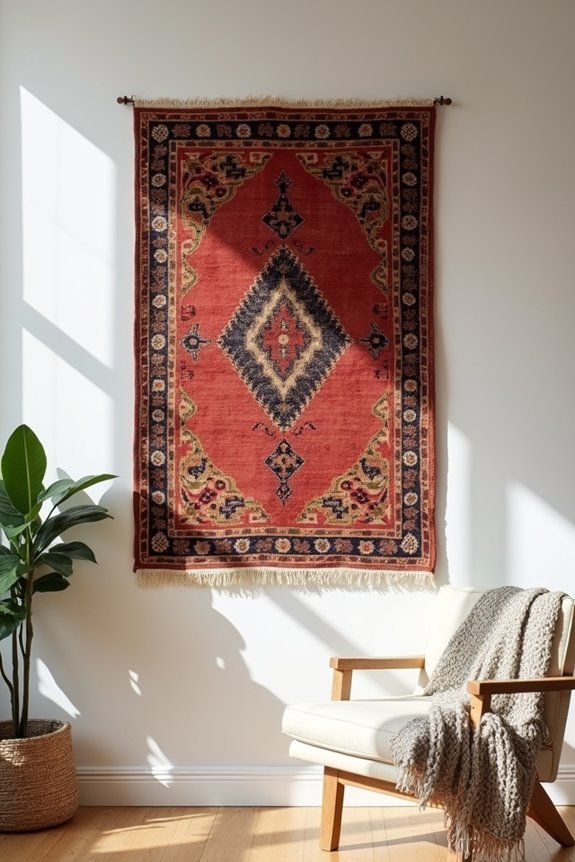
I’ve discovered that hanging a vintage rug on your wall makes it the room’s primary focal point—those rich, handwoven designs and bold patterns immediately draw attention and anchor everything else around them. You know that feeling when you walk into a space and your eyes land on something that captures your attention? That’s what a vibrant, patterned rug does as wall art, whether it features gorgeous jewel tones or geometric shapes. Unlike framed paintings that need matching and fussing, a statement rug carries its own visual weight, bringing color, texture, and personality without any formal fuss.
Rich Handwoven Designs Shine
One of my favorite design discoveries? Hanging handwoven designs on your walls creates statement art. Rich, textured pieces become focal points that anchor your entire room.
Here’s what makes this approach special:
- Bold color stories that draw eyes naturally
- Layered textures creating depth and dimension
- Graphic patterns that feel deliberate and selected
- Vintage character adding soul to modern spaces
- Craftsmanship on display celebrating real artistry
When I hung my first patterned rug, something clicked. The handwoven details caught light differently than flat artwork. Suddenly, my minimalist room had personality without feeling cluttered.
These pieces work because they’re conversation starters. They whisper history while speaking your design language fluently. Your walls deserve that kind of thoughtful, textured beauty—the kind that makes guests ask where you found it.
Bold Patterns Create Focal Points
- Defined borders and repeating designs (stripes, chevrons) read clearly on walls, adding graphic punch
- Vibrant hues improve color balance while serving as your dedicated focal point
- Large patterned pieces anchor surrounding decor, creating a cohesive style
When I mounted my patterned rug vertically, the room suddenly felt more deliberate. Those rich designs that got hidden under furniture now command attention. Your bold patterns deserve that visibility. They’re not just decoration—they’re conversation starters that express who you are.
Vibrant Hues Enhance Display
Why hide a beautiful rug under a coffee table when it could be the star of your room?
I’ve discovered that vibrant hues on rug art work well on walls as gallery displays. When you mount a patterned rug as wall display, it anchors your entire space. Here’s what makes this work:
- Rich colors pop against neutral walls, creating instant personality
- Defined borders frame the piece like gallery art
- You’re joining a community of creative decorators
- Vintage patterns tell stories only you’ll share
- Statement rugs balance rooms without overwhelming them
The key? Pair your vibrant rug art with coordinating cushions or throws. This keeps everything harmonious. I’ve seen small spaces come alive with mounted rugs—suddenly, that corner feels planned and welcoming. Your wall display becomes a conversation starter, not background noise.
Test Angles and Rotations to Optimize Your Rug’s Impact
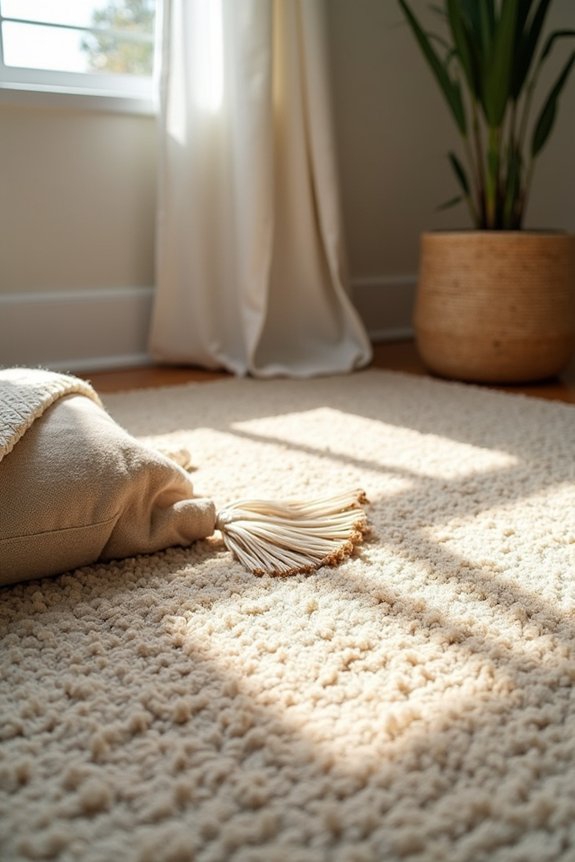
Before you commit to where that rug’s going to live, I’d recommend spending a little time moving it around—seriously, it’s like a dance move for your living room. Test horizontal, vertical, and angled placements. Rotate that rug until something clicks.
Test horizontal, vertical, and angled placements. Rotate your rug until something clicks—it’s like choreography for your living room.
Here’s what I’ve learned: rotation matters. When I angle my rug slightly, it suddenly frames my seating better and feels deliberate rather than random. That’s balance in action.
Try this: Position your rug to create a visual bubble around your furniture while keeping walking paths clear. You’re not decorating the rug itself—you’re using it to anchor your whole space.
Adjust and readjust. When your placement aligns with a focal point like your fireplace, you’ll know you’ve gotten it right. That’s when the room finally starts to work.