Anchor everything to one cohesive color palette—think warm beiges or soft greens—then layer textures within that family to create depth without chaos. Swap bulky bed frames for slim, open designs with under-bed storage. Build storage *into* your walls using flush cabinetry and floating shelves so they disappear visually. Turn windows into designed features with layered treatments. Use wall height strategically for display and everyday items. Choose multi-purpose furniture like storage ottomans or beds with drawers. Layer lighting to set mood while freeing surfaces. These tactics make small bedrooms more livable and functional—and there’s much more to discover about making each choice count.
Anchor Your Small Bedroom With a Single Color Palette

When I first tackled my cramped bedroom, I made the rookie mistake of painting one wall navy, another soft gray, and a third… well, let’s just say it was a design disaster.
Painting multiple clashing wall colors in a small bedroom was my biggest design mistake—until I discovered the power of a unified palette.
Here’s what I learned: a single color palette works well in small spaces. I chose warm beige—hazy, not harsh—and suddenly my bedroom felt like a cocoon instead of a closet.
The approach? Layering different shades within that one color family. Light walls, mid-tone bedding, deeper wood accents. This creates depth without chaos.
A unified design keeps your eye moving smoothly through the room rather than bouncing around confused. Your bed stays the star, not fighting for attention against clashing hues.
Natural, warm tones harmonize beautifully with wood textures. This method makes small bedrooms feel purposeful, peaceful, and distinctly yours—a space where you truly belong.
Layer Texture Through Walls, Textiles, and Surfaces
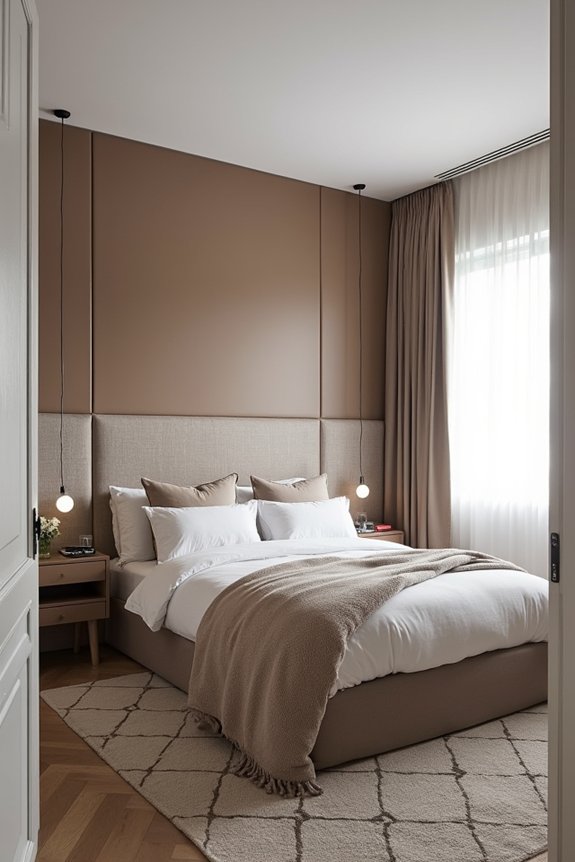
You can make a small bedroom feel rich and inviting without cramming it full of stuff—just layer different textures strategically. Think woven grass cloth on your walls paired with soft linen sheers and velvet accents; they catch light differently and make the room feel deeper than it actually is. The trick is keeping everything within your single-color palette so these textures work together visually rather than competing with each other, which makes the whole space feel more restful.
Woven Walls And Layered Fabrics
I use woven grass cloth on my walls to add dimension without weight. It’s like wrapping yourself in comfort. Then I layer lightweight linen sheers with subtle drapes—each piece builds depth without creating clutter.
The approach? I keep everything within one color family. Varying shades of warm neutrals create continuity while building visual interest.
For the bed, I add velvet layers with woven textures. It feels luxurious yet understated.
This approach works well for small bedrooms that can feel cramped. The layered textiles create an intimate atmosphere that feels purposeful. You’re not sacrificing space—you’re creating layers that make the room feel thoughtfully designed and welcoming.
Textural Depth Through Strategic Materials
Building a bedroom that feels rich and intentional isn’t about cramming in more stuff—it’s about layering what you’ve got strategically. In small bedroom decor, textural depth makes cramped spaces feel more open and comfortable.
I’ve discovered that mixing materials—smooth matte walls paired with woven baskets, soft linens against wood undertones—creates visual interest without clutter. A velvet bedspread against natural surfaces? It works well. It anchors the room with luxury while keeping things balanced.
Here’s what works:
- Grass cloth walls paired with linen sheers
- Scalloped bedside tables for dimension
- Wood slats for warmth and structure
Strategic materials aren’t extras; they’re the foundation of small bedroom decor that actually feels bigger. By choosing textures thoughtfully, you’re building a space that belongs to you—one that’s comfortable and genuinely yours.
Choose a Bed Frame That Doesn’t Consume Visual Space
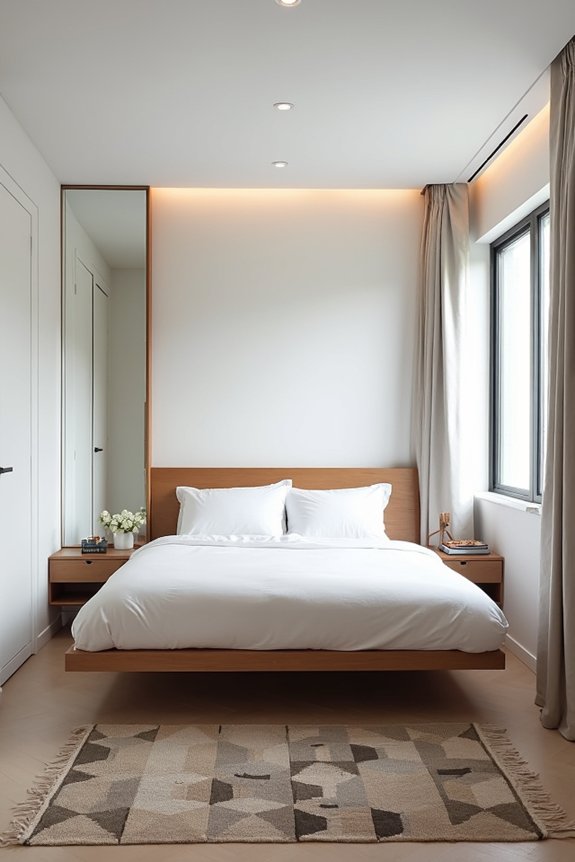
I’ll be honest—when I swapped my chunky wooden bed frame for a sleek metal one, my tiny bedroom instantly felt bigger, and I wasn’t expecting such a noticeable shift. Metal frames work well in small spaces because they’re naturally lightweight and let your eye travel right through them, whereas solid headboards act like visual walls that shrink the room. The key is picking a frame with slim legs, minimal railings, and maybe even built-in storage underneath—that way, you’re getting function without sacrificing the airy, open feeling you’re after.
Metal Frames For Airiness
Picture yourself standing in your small bedroom, and instead of seeing a hulking bed frame dominating the space, you’re looking at something that practically floats—that’s what choosing a lightweight metal frame with slender legs and an open headboard does for your room. This space-maximizing choice creates airiness in your bedroom.
Here’s why metal frames work well: they let light and sight lines travel right through them. Your eyes don’t stop at the bed—they keep moving, making the whole room feel bigger. The open design means less visual weight, more breathing room.
Look for these features:
- Rounded corners for safer movement
- Low-profile design maximizing floor space
- Adjustable dimensions fitting twin or compact full-size mattresses
Pair your metal frame with movable accents like lightweight stools. You’ll preserve openness while keeping reconfiguration easy. That’s how metal frames work in small bedrooms.
Visual Weight Reduction Strategies
Why does your eye stop moving the moment it hits your bed? Heavy wooden headboards and bulky frames act like visual anchors, making your room feel cramped. Lighter bed frames actually change how spacious your bedroom feels.
Here’s what I recommend:
- Choose slim metal or platform frames that let your eye travel beyond the bed
- Select floating or low-profile bases to minimize vertical bulk and create airiness
- Favor rounded corners and compact dimensions that preserve floor space and movement
Your bed frame works best when it doesn’t demand attention. A space-saving bed frame with under-bed clearance reduces visible clutter while maintaining comfort. You’ll notice the difference immediately—your small bedroom suddenly feels more open. Less visual weight means more perceived roominess. That’s not just design; that’s freedom in your own space.
Integrate Built-In Storage That Blends Into Your Walls
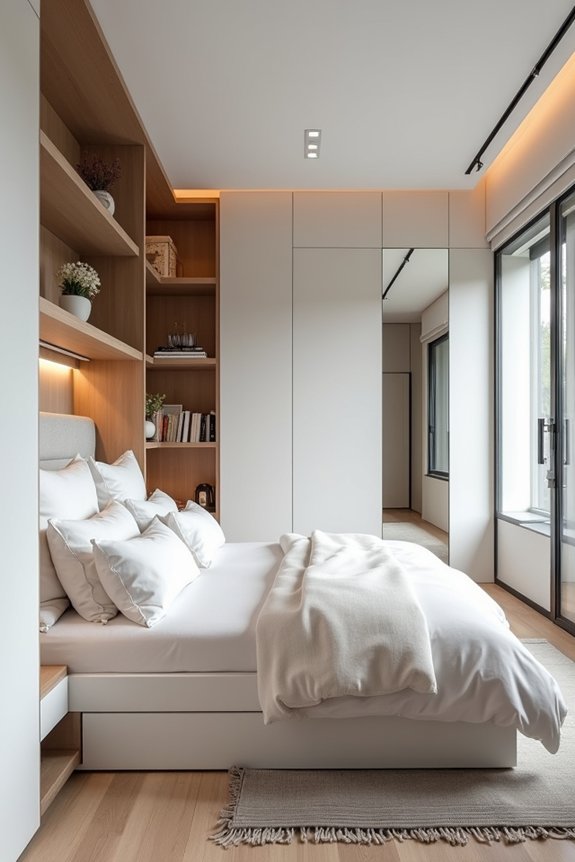
When you’re working with a small bedroom, every square inch matters—and that’s where built-ins become your undercover edge.
I’ve discovered that flush cabinetry blends into your walls when you match finishes to your paint color. No protruding handles. No visual clutter. Just clean lines that make your room feel bigger than it actually is.
The key? Integrate shelving, drawers, and a small desk into one continuous wall unit. You’re not just adding storage—you’re creating architecture that works with your space, not against it.
Keep everyday items within arm’s reach on accessible shelves. Choose finishes that echo your walls, maintaining that spacious feeling you’re after. Built-in storage turns tight corners into functional zones that are organized and yours.
Turn Your Windows Into a Designed Feature, Not an Afterthought
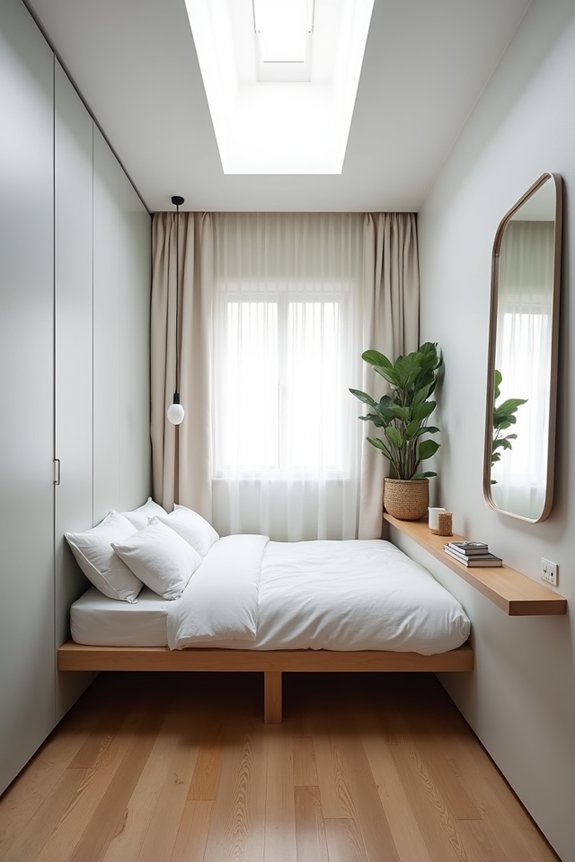
Your windows are often the first thing you notice when you walk into a small bedroom—so they might as well work hard for you. I’ve learned that thoughtful window treatments make these spaces into designed features that actually belong in your room.
Here’s what I’d consider:
- Layer natural woven shades with patterned drapery for soft light control and visual depth
- Align your window finishes with surrounding trim and furniture to create a unified look
- Add a built-in window seat that combines cushions, textiles, and hidden storage
When your window treatments match your walls and décor, everything comes together as one piece. You’re not just covering glass—you’re creating a calm, airy focal point. This approach keeps your small bedroom feeling open while giving your windows the attention they deserve.
Use Wall Height for Storage and Display
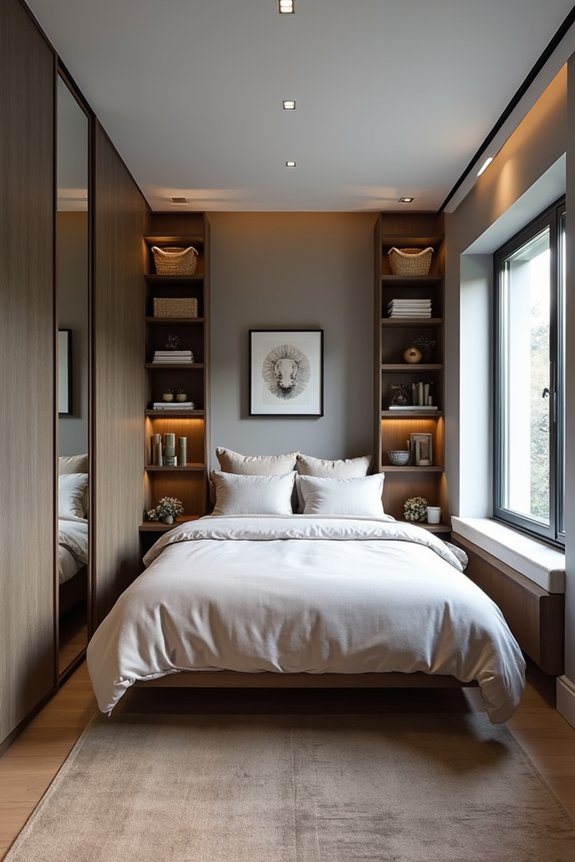
Small bedrooms don’t have much floor space to work with, but they’ve got plenty of wall space—and that’s where storage solutions matter most. Using vertical space keeps cramped rooms organized.
Smart Wall-Mounted Solutions
Wall-mounted storage like floating shelves and narrow consoles keep floors clear while displaying what matters to you. Built-in storage that sits flush against walls maximizes movement room. I arrange frequently used items on high shelves and hide clutter in baskets below.
| Storage Type | Best For | Height |
|---|---|---|
| Floating shelves | Books, plants | Eye level |
| Recessed niches | Daily essentials | Varied |
| Wall-mounted consoles | Décor, keys | Mid-wall |
A textured wood slat wall unifies everything well. You’ll feel calmer surrounded by organized belongings rather than scattered items. Your small bedroom becomes genuinely livable—not just survivable.
Layer Lighting to Free Surfaces and Shape Mood
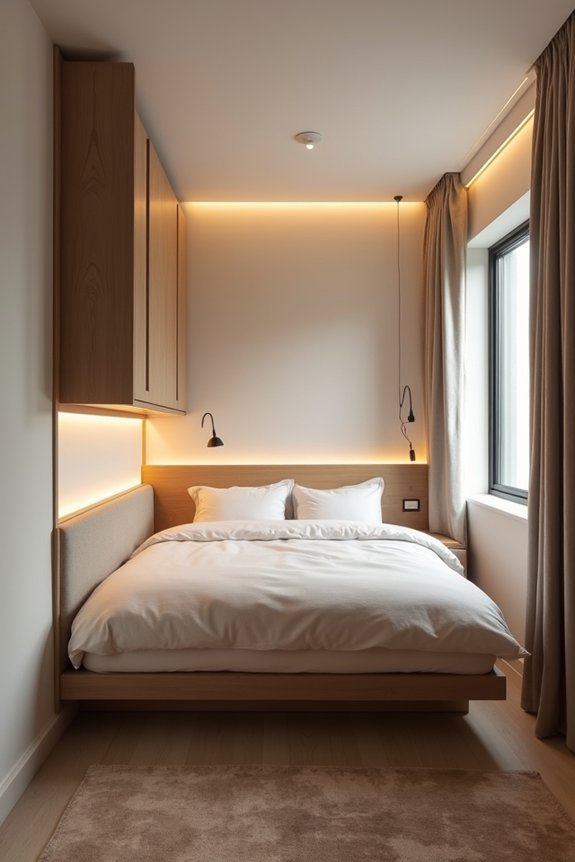
I’ve learned that layering different lighting sources improves how a space functions. Here’s what actually works:
- Task lighting at your desk or bedside keeps you focused without overwhelming the space
- Ambient overhead light from recessed fixtures or slim wall sconces maintains an open, airy feel
- Accent lighting highlights your color palette and creates mood without clutter
Install dimmers everywhere. Seriously. They’re your top tool for space optimization—dim them down at night, brighten during day. This flexibility shapes how you experience your room emotionally.
Choose fixtures that hug your walls. Recessed lights and wall sconces free precious surface area, preventing that crowded feeling. I strategically placed mine to illuminate key zones while avoiding glare. That’s how lighting becomes your invisible design partner.
Select Furniture That Serves at Least Two Purposes
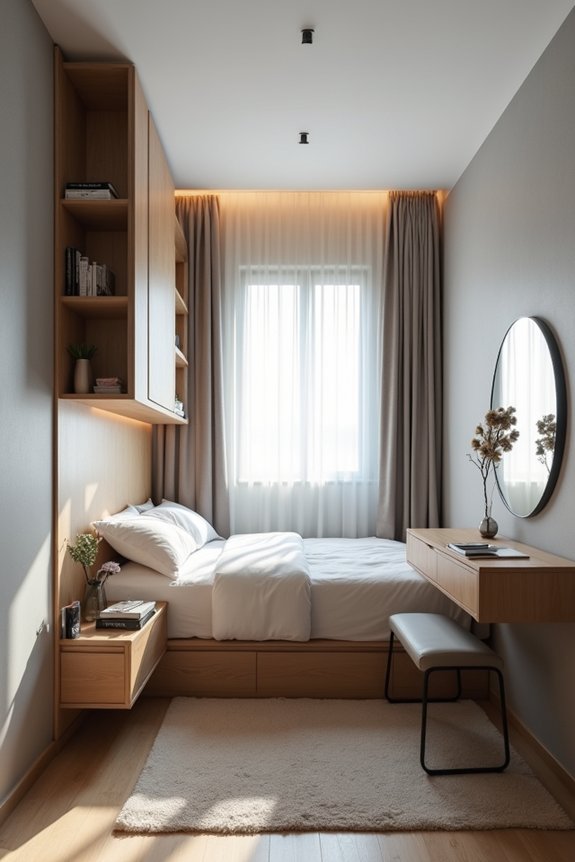
Why squeeze a regular bed, nightstand, and dresser into a space that barely breathes?
Small spaces demand smarter furniture choices—why settle for cramped when multi-functional pieces create room to breathe?
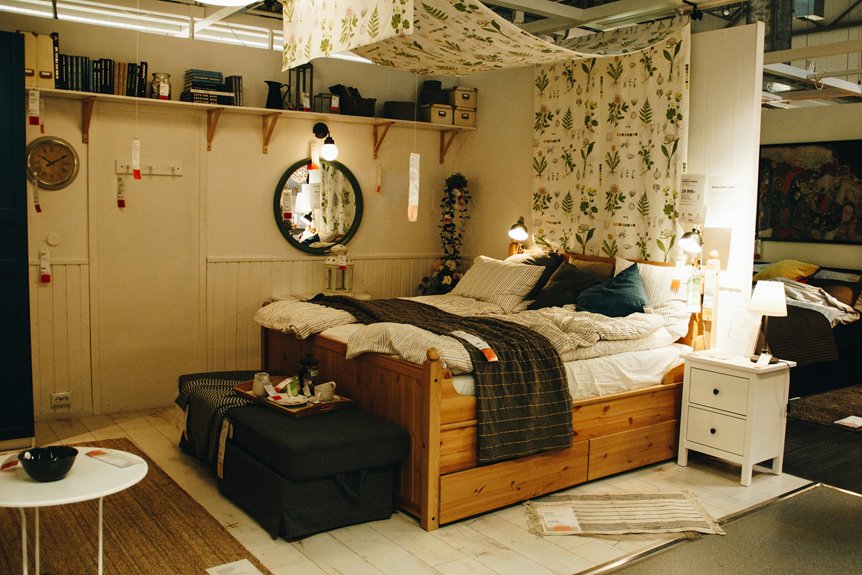
I’ve learned that space-saving multi-functional furniture makes small bedrooms functional. A bed with built-in drawers gives you storage solutions without eating up floor real estate. I’m talking about reclaiming precious square footage while keeping everything you need within arm’s reach.
Consider these smart choices:
- Storage ottomans that double as coffee tables or extra seating
- Desks with integrated shelves for work and display space
- Sofa beds for guests without sacrificing room to move
- Wall-mounted floating shelves that keep floors open and airy
When you choose multi-functional furniture, you’re not just decorating—you’re creating breathing room. It’s the difference between feeling cramped and feeling comfortable. Every piece pulls double duty, letting your small space work *for* you instead of against you.
Add Personality With Art, Books, and Small Accents
When you’re decorating a tiny bedroom, you’ve got to be strategic about adding personality—but that doesn’t mean playing it safe.
I’ve learned that small spaces work well when you layer meaning thoughtfully. Here’s what actually works:
- Petite artworks draw the eye inward without overwhelming your room, creating depth through deliberate placement
- Books as decor serve double duty—stack them color-coded on floating shelves for storage and visual interest
- Trinkets and accents personalize your space when layered thoughtfully on shelves
The key? Restraint. I choose a cohesive palette—greens with warm oak tones, for instance—so decor accents feel purposeful rather than cluttered. This approach gives your small space a curated quality, a calm environment where every piece tells your story without stealing precious square footage.