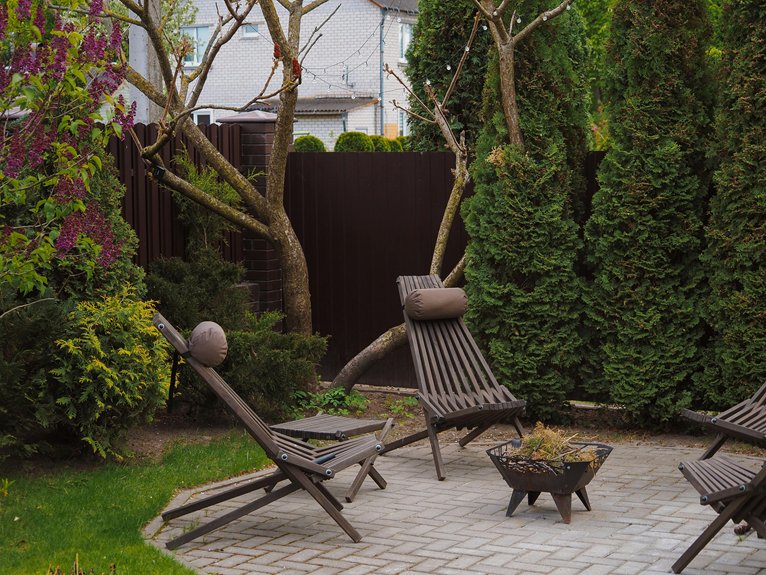
I reorganized my scattered backyard into a functional outdoor room using three core design strategies: creating clear zones with intentional borders, choosing materials that visually tie everything together, and layering elements vertically to make every inch count.
A fire pit became my gathering anchor, while gravel pathways naturally guided guests between dining and lounging areas.
Matching stone pavers and repeated plant colors created visual continuity across fragmented spaces.
Built-in seating with under-bench storage and pergolas that pulled eyes upward made my small yard feel larger and well-organized.
Scattered spaces can become cohesive outdoor retreats with these approaches.
Define Functional Zones With Strategic Placement and Borders
When you’re standing in your backyard wondering where everyone’s going to actually sit, you’ve hit on the real challenge of outdoor living—making a space that works as hard as you do.
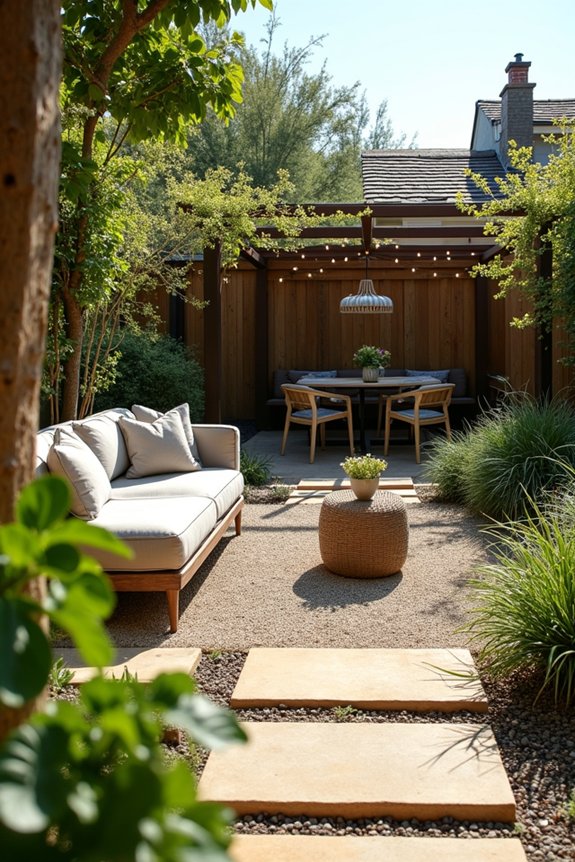
I’ve learned that clear borders bring order to scattered seating arrangements. Use pathways to guide guests naturally between zones. Plant a row of shrubs or lay down pavers to separate your dining area from the lounge space. This creates invisible boundaries that feel planned, not cramped.
Strategic placement matters. Position seating to face focal points—a fire pit, water feature, or view. Create distinct zones using:
- Planters as natural dividers
- Seating alcoves for intimate gatherings
- Gravel or mulch pathways connecting areas
When people understand where they belong, they relax. Your backyard becomes less maze, more sanctuary.
Choose Hardscaping Materials That Tie Zones Together
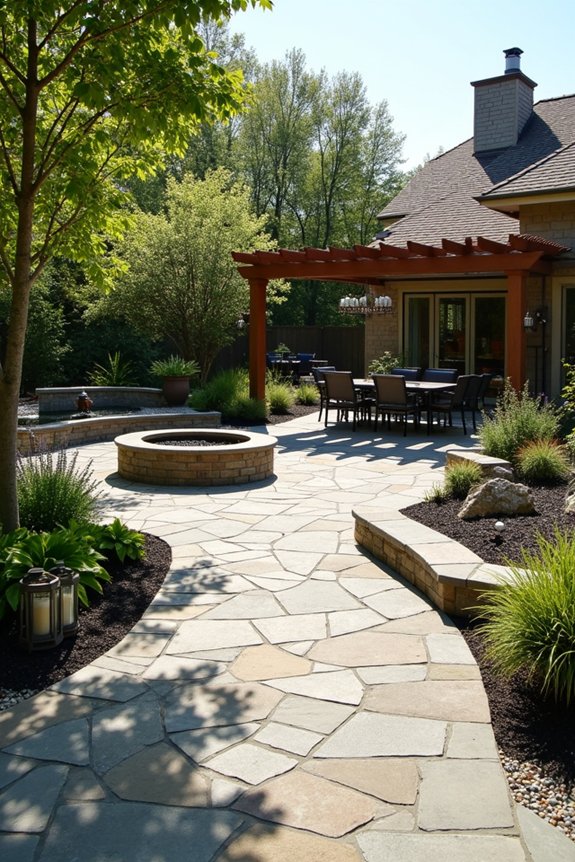
When I redesigned my backyard, I realized that mismatched pavers and random gravel patches made the whole space feel scattered—like someone had decorated without a plan. Consistency emerged when I chose materials that worked together: warm flagstone for the patio, matching gravel pathways, and wooden pergola posts that echoed the deck stairs. By repeating these materials across different zones, I created a visual thread that made everything feel deliberate and connected, rather than like separate islands competing for attention.
Material Selection For Flow
As your backyard develops from a collection of separate spaces into one cohesive outdoor room, your hardscape materials become the glue that holds it all together.
I’ve learned that choosing a consistent palette across patios, walkways, and walls creates natural connection. When I used the same warm stone throughout my yard, everything suddenly felt linked—like rooms in a house rather than disconnected spots.
Your pathways deserve special attention. They’re the highways guiding guests from dining areas to lounging spots to garden corners. I prefer gentle slopes and clear sightlines so movement feels natural.
Focal points—a fire pit, water feature, or sculpture—act as anchors at transitions. They catch your eye and direct attention.
Hardscape materials work best when they complement adjacent plantings. Larger pavers look deliberate next to planting beds rather than overwhelming them. Mix natural textures like stone and wood with greenery. This softens transitions while maintaining that unified feel you’re after.
Creating Visual Continuity Strategically
How do you stop your backyard from looking like a patchwork quilt someone forgot to finish?
A consistent palette brings scattered spaces together as one unified outdoor room. When I chose stone, wood, and gravel in matching warm tones, everything suddenly felt planned rather than random.
What works:
- Create transitions with matching edging or low walls that guide you naturally from dining to lounging areas
- Establish focal points using shared materials—like a retaining wall that connects zones visually
- Layer textures in complementary patterns so each space feels distinct yet related
The difference comes when your pathways, patios, and garden beds use the same material language. You’re not just decorating separate zones; you’re building a cohesive outdoor home where every step feels intentional.
Layer Vertical Elements to Maximize Small Backyards
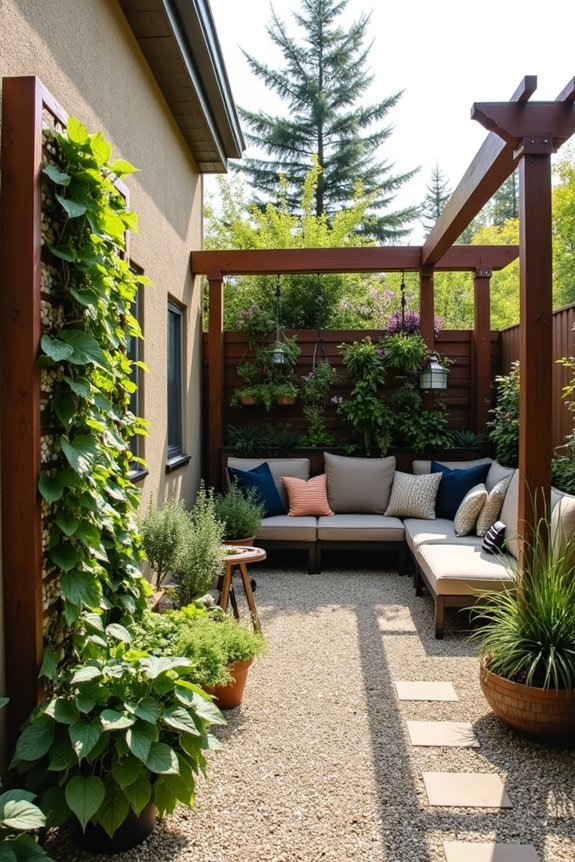
If you’re working with a tight backyard, going vertical is your hidden ace—and I’m not just talking about stacking stuff haphazardly. Pergolas, wall-mounted planters, and trellises pull your eyes upward, which actually makes your whole space feel bigger and more interesting than it actually is. By building upward instead of outward, you’ll free up that precious ground space for a seating area or pathway while creating layers of greenery that turn a cramped yard into a comfortable retreat.
Build Upward With Pergolas
- Plant a pergola on concrete. A solid base keeps everything stable and low-maintenance, perfect for small yards where every inch counts.
- Add built-in seating underneath. This creates your outdoor dining area while maximizing perimeter space for gatherings with friends and family.
- Install pergola lighting. String lights or mounted fixtures extend your evenings, making the space feel warm after sunset.
A dark-stained pergola creates strong contrast with greenery, adding visual depth that makes your backyard feel larger. You’re not just building structure—you’re crafting a gathering place.
Strategic Wall-Mounted Features
When you’re working with a shoebox-sized backyard, you’ve got to think *up*—way up. Wall-mounted features make the most of cramped spaces without eating up your ground area.
Vertical space is your best friend here. Install wall-mounted planters bursting with greenery, and suddenly your fence becomes a living garden. Add climbing plants on trellises, and you’re creating depth that makes everything feel bigger.
Here’s what works:
- Lighting fixtures that draw eyes upward
- Artistic panels adding personality
- Slim shelving for outdoor decor storage
These elements work together well. They hide utilities while keeping your dining and lounging zones completely open. The key? Choose colors and textures that complement what’s happening at ground level.
Your small backyard isn’t limiting—it’s an opportunity to get creative.
Install a Statement Feature: Fire Pit or Water Element
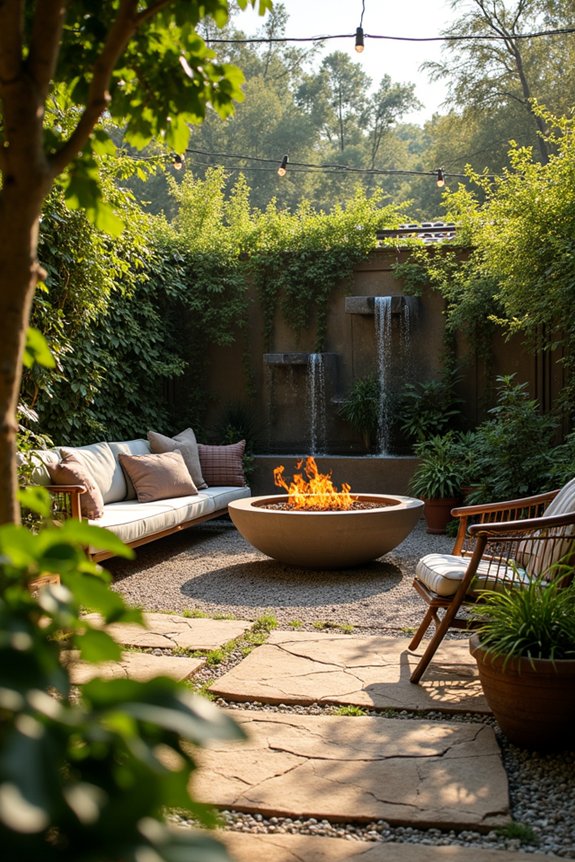
Nothing brings a backyard together quite like a focal point that draws people—and I’ve found that either a fire pit or water feature does exactly that.
I’m talking about creating a gathering spot where everyone naturally gravitates. Here’s what makes these features practical:
- Fire pits with tiered, arc-shaped seating create comfortable evenings where conversation flows naturally
- Water elements add soothing sounds and visual interest that ease transitions between lawn and garden beds
- Durable, all-weather construction means your outdoor space stays functional year-round, rain or shine
When I installed my fire pit with stone surrounds, I noticed how the seating area became our family’s favorite hangout spot. The radial layout maximizes sightlines so everyone feels included. Whether you choose crackling flames or gentle water sounds, you’re investing in memories—not just decoration.
Connect Your Home to the Yard With Seamless Transitions
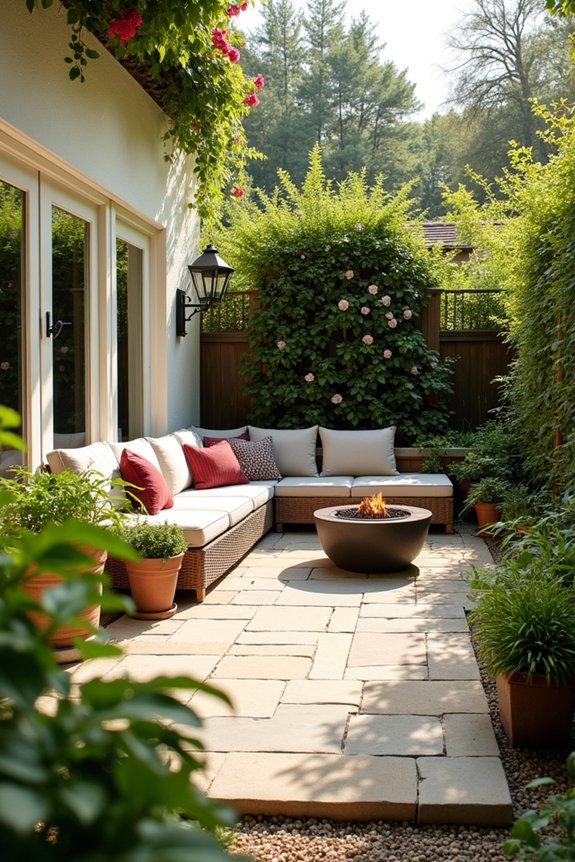
How do you make your house and backyard feel like one continuous space instead of two separate worlds? Seamless transitions are key to creating true *indoor-outdoor flow*.
| Design Element | Purpose | Impact |
|---|---|---|
| French doors | Visual connection | Blends rooms naturally |
| Aligned flooring | Eliminates breaks | Creates flow pathway |
| Container plants | Soft integration | Guides eyes outward |
| Cohesive colors | Unified palette | Connects spaces visually |
I align my patio flooring with my kitchen tile, eliminating that jarring step between spaces. Container plants near my back door act like friendly guides, inviting me outside. I’ve also matched my outdoor furniture colors to my interior palette—this simple choice strengthens the visual connection between inside and out.
When sight lines connect your dining area to your grilling zone, you’re not just decorating. You’re creating *outdoor living* areas that function as extensions of home. That’s belonging in action.
Anchor Color Changes With Perennials and Seasonal Planters

I’ve discovered that building your backyard’s color story doesn’t mean starting from scratch every spring—anchor plants like coneflowers and black-eyed Susans return year after year, giving you a reliable backbone while seasonal planters like petunias and mums add fresh pops of color. By repeating your main hues (think purples, yellows, or soft pinks) across both permanent perennials and temporary containers, you’ll tie your dining area, lounge spots, and play zones together visually without that disjointed, patchwork feeling. It’s like having a wardrobe’s classic pieces that you dress up seasonally—practical, beautiful, and honestly, way less exhausting than replanting everything twice a year.
Choose Perennials For Continuity
When’s the last time you felt that disappointment of watching your garden go from bursting with color to basically bare in what feels like a heartbeat?
I’ve been there. That’s exactly why I discovered the value of perennials for color continuity. They’re the reliable friends who show up year after year, anchoring your outdoor space beautifully.
Here’s what I’ve learned works best:
- Plan bloom times strategically—choose varieties flowering spring through fall for constant seasonal interest
- Layer your heights—tall backdrop plants with mid-range and low-growers create natural rhythm
- Mix perennials with seasonal planters—this combo keeps fresh accents while maintaining long-term appeal
The benefit? You’re not starting from scratch annually. Your perennials do the heavy lifting, while seasonal additions refresh your design. It’s continuity with flexibility. That’s garden success.
Seasonal Planters Add Visual Interest
There’s something special about swapping out your planters with the seasons—suddenly your whole backyard feels fresh and deliberate. I’ve discovered that seasonal color keeps your outdoor landscaping varied throughout the year.
Here’s my approach: I anchor bright annuals with sturdy perennials that provide structure. Spring tulips give way to summer zinnias, then fall mums take center stage. This layering creates year-round interest without constant replanting.
The best part? Your planters become design tools. I coordinate them with your yard’s existing features and lighting, creating that resort-vibe you’re after. When evening light hits those jewel-toned flowers, everything comes together.
Think of seasonal planters as your backyard’s wardrobe—simple switches that make everything feel polished and deliberate.
Color Coordination Throughout Zones
Once you’ve got your seasonal planters working hard, it’s time to tie your whole backyard together with a smart color strategy. Color coordination connects disconnected spaces into one cohesive narrative.
Here’s what I do:
- Choose anchor plants in blues or greens, then layer lighter and darker shades through perennials to create depth
- Rotate seasonal planters with pollinator-friendly blooms in spring, swapping muted tones for fall interest
- Apply color blocking by grouping similar hues in clusters—plants, cushions, and decor work together to guide movement
Your hardscape matters too. I match paving and furniture finishes to my anchor colors, reinforcing zone unity from dining to lounging areas. When colors repeat intentionally across zones, your backyard feels coordinated and deliberate. It’s not complicated—just thoughtful choices that make every corner feel connected and inviting.
Light Your Backyard for Ambiance and Evening Entertaining
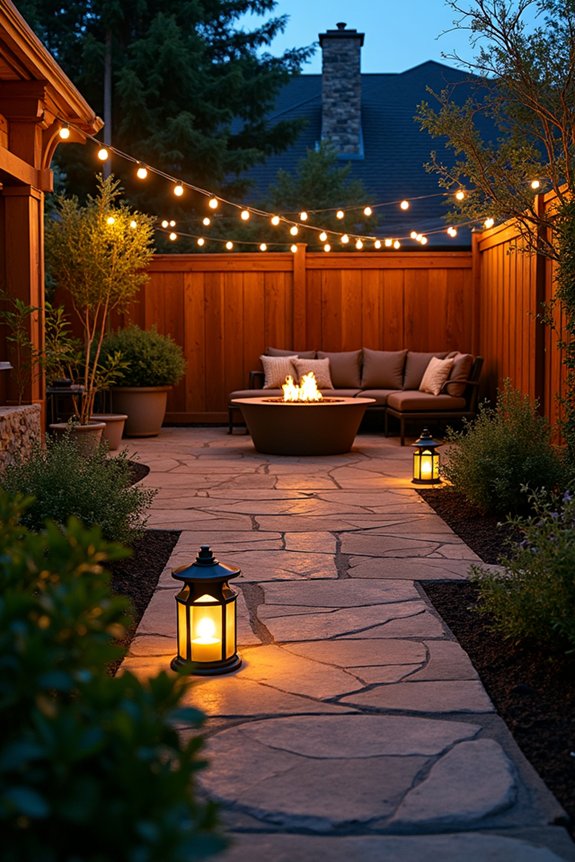
For evening entertaining, consider these approaches:
- Solar pendant lights offer affordable, decorative options
- Highlight focal points like fire pits or water features with spotlights
- Mediterranean-inspired fixtures under covered patios provide warmth
Lighting works best when it connects your seating, dining, and lounging zones together. You’re not just illuminating space—you’re creating an atmosphere where people naturally gather, laugh, and feel welcome.
Create Flexible Spaces for Dining, Lounging, and Play
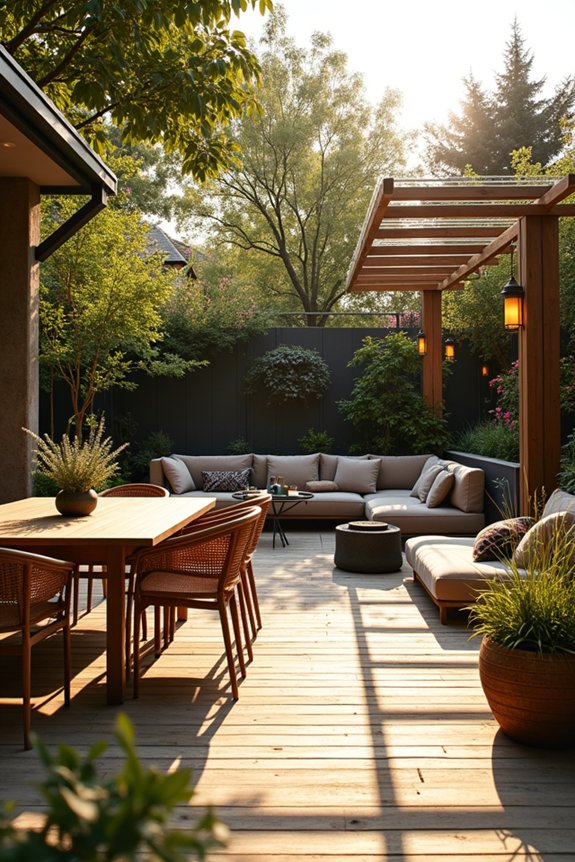
How do you fit a dinner party, a game night, and a cozy fire pit gathering into one backyard without it feeling like a crowded parking lot?
The answer lies in creating flexible spaces that work together. Here’s what makes a small yard functional for entertaining:
- Define zones smartly. Use potted plants or subtle rugs to separate your outdoor dining, lounging area, and play sections while keeping sightlines open
- Build in multipurpose features. A bocce court that doubles as a buffet table saves space and serves multiple purposes
- Plan traffic flow carefully. Clear pathways between zones let guests move easily without obstacles
When you combine built-in seating around your fire pit with a nearby dining setup, everything works cohesively. Your guests mingle smoothly between spaces. You’re not just decorating; you’re creating an invitation for connection. These flexible spaces tell your friends, “You belong here.”
Add Privacy Without Blocking Views or Sunlight
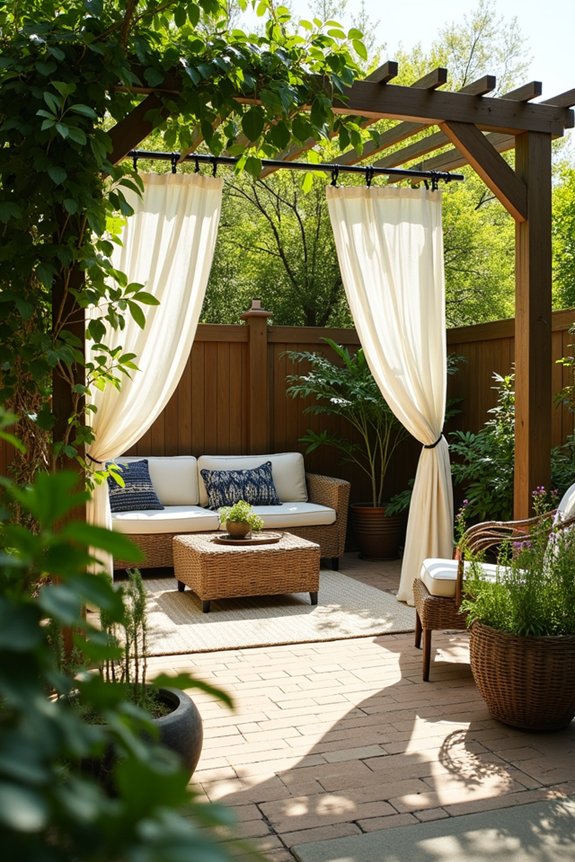
There’s this tricky balance we all want in our backyards—you know, having neighbors who feel like distant acquaintances rather than part of your dinner conversation, yet not turning your space into a concrete bunker.
Pergolas offer a practical solution. They create privacy without sacrificing light or views. Climbing vines soften the structure while still letting sunshine filter through.
Pergolas balance privacy with light, while climbing vines add softness and natural screening without blocking sunshine.
Screening doesn’t have to mean walls. Consider:
- Arborvitae hedges that silhouette neighbors’ views naturally
- Dual-sided fencing that looks good from both sides
- Strategic plantings near entry points
View-friendly solutions preserve sightlines you actually want. Built-in seating creates intimate gathering zones within open yards, giving you enclosure without closure. The trick? Layer your privacy strategically, letting landscape features do the heavy lifting instead of solid barriers.
Hide Storage and Clutter With Built-In Solutions
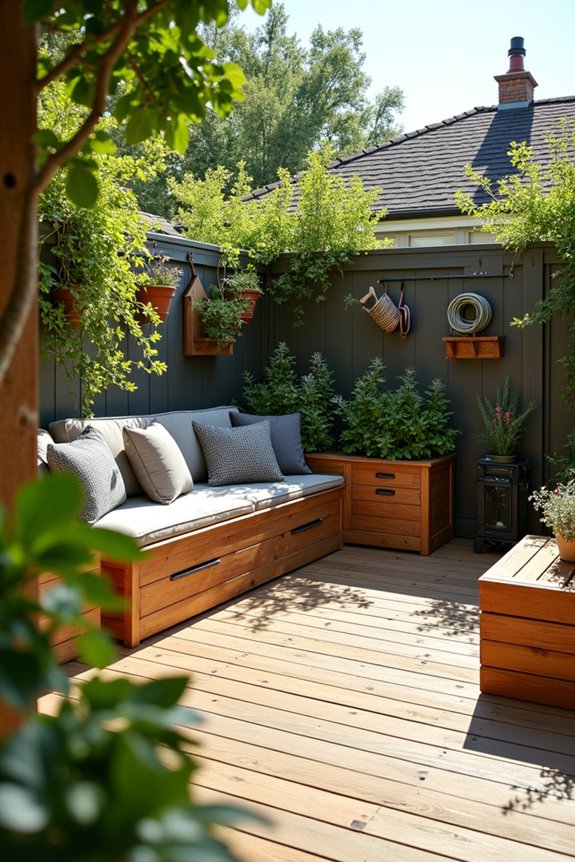
When you’ve got cushions, gardening tools, and kids’ toys scattered across your backyard, that privacy you just created? It disappears under clutter. I’ve learned that built-in seating helps organize your outdoor area.
Here’s what I do:
- Create storage beneath benches – Off-the-ground built-ins hide cushions and tools while doubling as seating
- Use perimeter seating strategically – Tucking seating around your yard’s edges maximizes space without cluttering the center
- Combine functions – Integrated planters and benches merge greenery, seating, and storage into one cohesive piece
The benefit? Built-in solutions look deliberate, not improvised. Your outdoor furniture becomes part of your design, not against it. Coordinated materials and colors keep everything visually calm. You’ll find yourself actually *using* your backyard more when it feels welcoming and organized.