It’s always “living room”—two words. Here’s why: English keeps “-ing” forms separated from nouns, creating open compounds like “running water” and “sitting area.” Every major dictionary (AP, Oxford, Merriam-Webster) backs this spacing. You’ll spot “livingroom” occasionally in marketing or branding, but that’s companies chasing a modern edge, not standard English. The two-word form matches how we actually speak and read naturally. Stick with “living room”—though there’s also a useful distinction between living rooms and sitting rooms worth understanding.
Why “Living Room” Is Always Two Words (And “Livingroom” Isn’t Standard)
Why do we write “living room” as two separate words instead of squashing them together? I’ve wondered this too. Here’s the thing: English doesn’t really combine words ending in “-ing” with nouns into single compounds. That “-ing” ending naturally creates a pause, a separation that feels right to our ears.
When I check dictionaries and language databases, I find “living room” everywhere—never “livingroom.” It’s consistent across sources. Think of it like this: we’d never write “runningshoe” or “sleepingbag,” right? Same logic applies.
The two-word version’s become our standard because it matches how English actually works. We’re following patterns that’ve developed over time. That’s reassuring—we’re not breaking rules; we’re following them naturally.
The Grammar Rule: How ‘-ing’ Compounds Form in English
How ‘-ing’ Compounds Form in English
When we add “-ing” to verbs, we create gerunds or participles—words that describe actions or states. These “-ing” forms resist combining into closed compounds. English speakers keep them separate because “-ing” endings feel active and dynamic, not like stable noun roots.
-ing forms resist closed compounds because their active, dynamic nature requires separation from other words.
Consider the pattern: we don’t say *”runningwater”* or *”sittingarea.”* We space them out. The “-ing” ending requires separation, so our language naturally preserves that distinction.
The living room follows this exact pattern. That “-ing” keeps the compound open, maintaining clarity and readability. It’s not arbitrary—it’s how our language functions with active verbal forms.
Where You’ll See “Livingroom”: Marketing, Informal Writing, and Exceptions
While “living room” dominates standard English, you’ll actually spot “livingroom” creeping into marketing copy, website URLs, and casual online chats—places where brands want something snappier or where people type fast and don’t sweat the rules. I’ve noticed furniture companies especially love cramming it into product descriptions and domain names because, honestly, one word feels more modern and punchy than two. Regional variations and niche communities (think design blogs or international English speakers) sometimes use it too, though it’ll never show up in your English textbook.
Marketing And Branding Usage
How often do you flip through a furniture catalog or scroll past a home design ad and notice the exact words they’re using?
I’ve noticed that most brands stick with “living room”—two words. They’re playing it safe because that’s what we expect. But here’s where it gets interesting:
| Context | Word Choice | Why? |
|---|---|---|
| Furniture stores | Living room | Matches what customers search for |
| Design blogs | Living room | Follows style guide standards |
| Modern brand names | Livingroom | Creates trendy, compact feel |
Major retailers know we’re comfortable with “living room.” It feels familiar, trustworthy. Yet occasionally, you’ll spot a sleek design studio or avant-garde furniture brand using “livingroom” as one word. They’re deliberately breaking the rule to feel fresh, different, modern.
That’s smart marketing psychology.
Informal Digital Communication
Now here’s where things get real: most of us aren’t writing formal letters or checking style guides when we’re texting a friend about where to meet, posting on social media, or crafting a quick email. In these everyday moments, I’ve noticed we naturally write “living room”—two separate words—without thinking twice. It’s what feels right when you’re saying, “Come over, we’ll hang in the living room.” That’s the form that flows naturally from our fingers. You won’t find “livingroom” plastered across Instagram captions or casual texts because, honestly, it looks off. The two-word version dominates informal digital spaces because it matches how we actually talk. We’re not being formally correct—we’re just being ourselves.
Regional And Niche Exceptions
Where exactly does “livingroom” actually show up in the real world? I’ve noticed it appearing in specific places that traditional dictionaries don’t quite cover.
You’ll find “livingroom” used in these contexts:
- Interior design blogs that embrace minimalist aesthetics deliberately drop the space for modern appeal
- Marketing materials use “Livingroom” as branded product lines to feel distinctive and memorable
- Regional furniture catalogs employ one-word styling to suggest contemporary design sensibilities
- Social media content adopts casual spacing to match informal, relatable communication styles
What matters: when you’re quoting source material or product titles, the exact spacing reflects each brand’s unique house style rather than a universal rule. The living room remains standardized everywhere else. Understanding these exceptions helps you navigate different writing contexts with confidence and flexibility.
From Parlour to “Living Room”: Why This Term Won Out
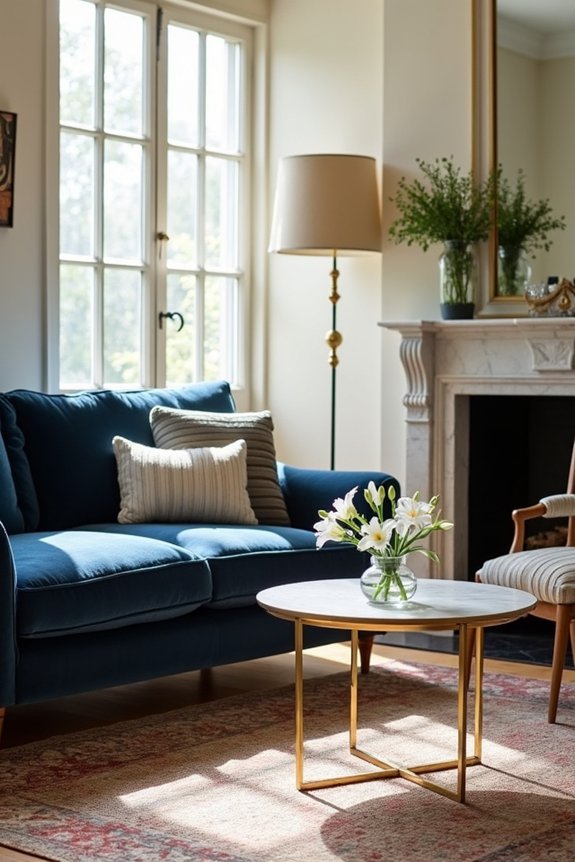
When’d you last hear someone say they’re relaxing in the parlour? Exactly. That word feels ancient now.
Here’s what happened: in the late 1800s and early 1900s, homes shifted dramatically. Old parlours were stiff, formal spaces where you’d entertain guests on special occasions. You wouldn’t dream of putting your feet up there.
Then Edward Bok and *Ladies’ Home Journal* changed everything. They promoted a new idea: what if your main room was actually *for living*? For families. For everyday comfort.
The living room won because it promised belonging. Not formality. Not pretense. Just real life happening in one welcoming space. We wanted rooms that worked for us, not against us. That’s why we’re still using “living room” today.
Living Room vs. Sitting Room: Which Do You Actually Have?
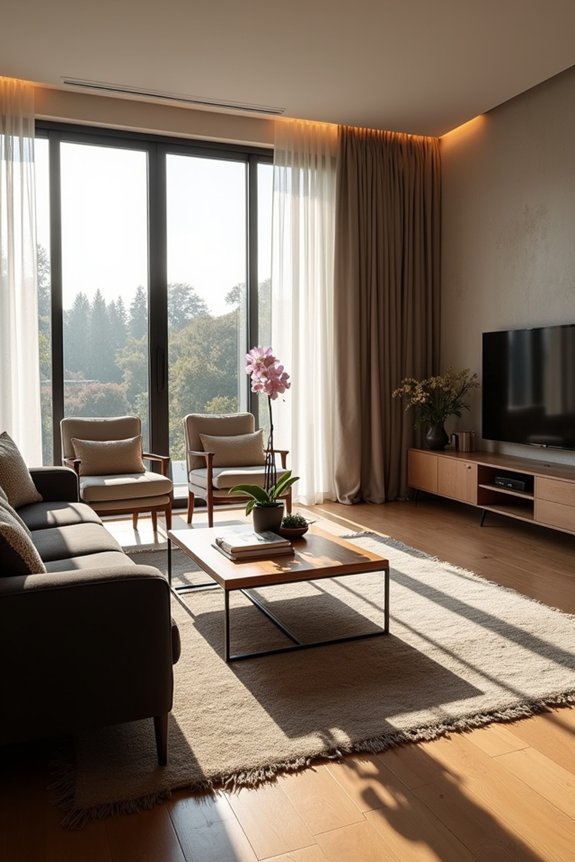
I’ve realized that figuring out which room you have really comes down to how you actually use it—and honestly, most of us blur those lines anyway. A sitting room is traditionally that pristine, formal space you save for guests (think doilies and “don’t touch the couch”), while a living room is where real life happens: kids sprawl on the floor, snacks migrate between cushions, and comfort beats perfection every single time. The size, formality level, and whether you’re genuinely ready to host someone matters way more than the name on your floor plan.
Purpose and Functional Differences
Purpose and Functional Differences
I’ve learned that purpose matters more than the name on your floor plan. Your living room serves you daily—it’s where messy happens, where life actually unfolds. Here’s what distinguishes how we use these spaces:
- Daily lounging vs. formal hosting – My living room’s got crumbs on the couch; a sitting room stays pristine
- Entertainment focus – Living rooms embrace TVs and casual comfort
- Conversation-centered – Sitting rooms emphasize face-to-face connection
- Flexibility – Living rooms adapt to whatever we need that day
The truth? Most of us live in our living rooms. We don’t save them for special occasions. They’re messy, comfortable, and genuinely *ours*—and that’s exactly right.
Size and Layout Distinctions
How’s your room actually laid out—and does that tell you what you’ve really got?
I’ve noticed that size really matters here. My living room sprawls across the open floor plan, hosting our TV, oversized couch, and family game nights. It’s built for *living*—messy, comfortable, real.
Compare that to a sitting room? Those are compact spaces near the front entrance. They’re designed for guests, not Netflix binges. Formal. Tidy. Almost untouchable.
Here’s what I’ve learned: newer homes typically feature one expansive living room that does everything. Older houses? They often have that separate, formal sitting room tucked by the foyer.
The layout reveals function. Does your space sprawl or sit neatly? That’s your answer. Your room’s design tells your home’s story.
Formality and Guest Considerations
Your living room screams casual comfort. Mine definitely does. But a sitting room? That’s a whole different vibe. Here’s what distinguishes them:
- Daily wear vs. guest-ready – Living rooms show lived-in mess; sitting rooms stay pristine
- Furniture choice – Comfy couches for relaxation versus formal seating for conversation
- Purpose – One’s for your family; one’s for impressing visitors
- Atmosphere – Relaxed energy versus polished hospitality
The sitting room whispers elegance and control. Your living room expresses comfort and belonging. Understanding this difference helps you design spaces that actually match your lifestyle instead of stressing over perfection.
The Style Guide Consensus: AP, Oxford, and Merriam-Webster All Agree
When you’re trying to write something important—maybe a cover letter or a school essay—you want to get the details right, and here’s where it becomes clear: the biggest names in English language standards all agree on this one.
AP, Oxford, and Merriam-Webster all back the same spelling: living room as two separate words. No single-word “livingroom” exists in their dictionaries. This consensus matters because these organizations set the standard for how we write formally.
Think of it this way: when major authorities speak with one voice, you can rely on it. Using “living room” in your writing aligns you with professional standards. You’re not just choosing a spelling—you’re following the conventions that value clarity and correctness. That’s something to feel confident about.
Furniture, Layout, and Design: Making Your Living Room Work for You
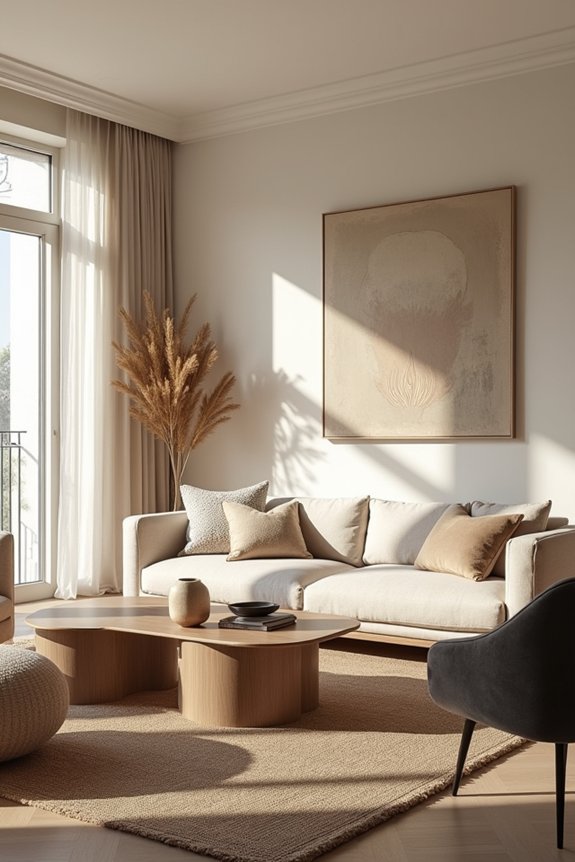
Where should that couch actually go? I’ve learned that your living room works best when you arrange furniture for *real life*—not magazine spreads. Here’s what I’ve discovered:
- Position seating to face each other, creating natural conversation zones
- Choose adaptable pieces that shift if your room’s purpose changes
- Add layers with rugs and lamps for warmth and functionality
- Keep pathways clear so movement feels effortless, not cramped
Your living room should work the way you *actually* live. I ditched my formal setup and embraced comfort—a couch that’s genuinely sinkable, chairs you’ll actually sit in. That coffee table? Mine holds remotes and magazines without apology. Design works best when it serves your family’s daily routines, not some perfect ideal.